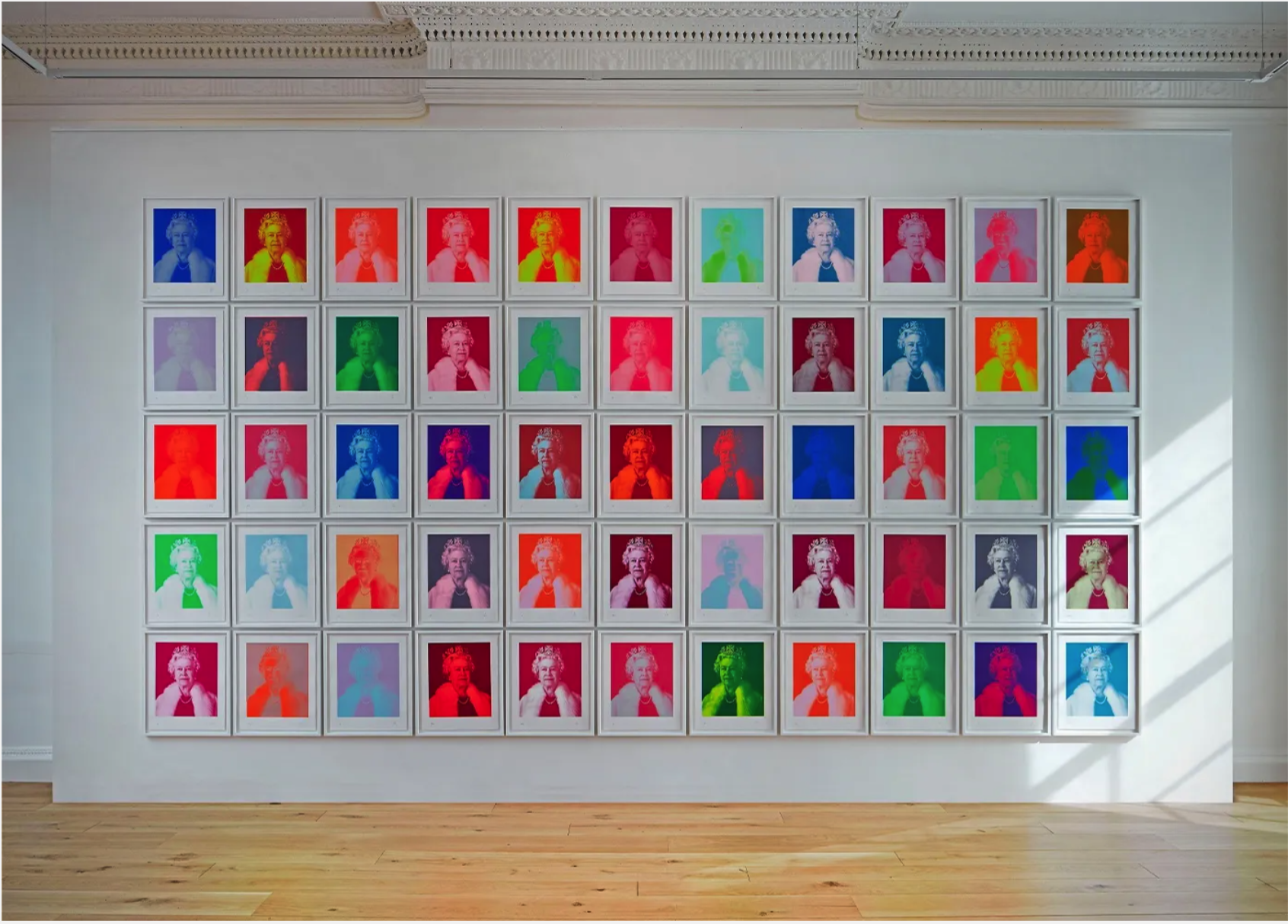
Chris Levine
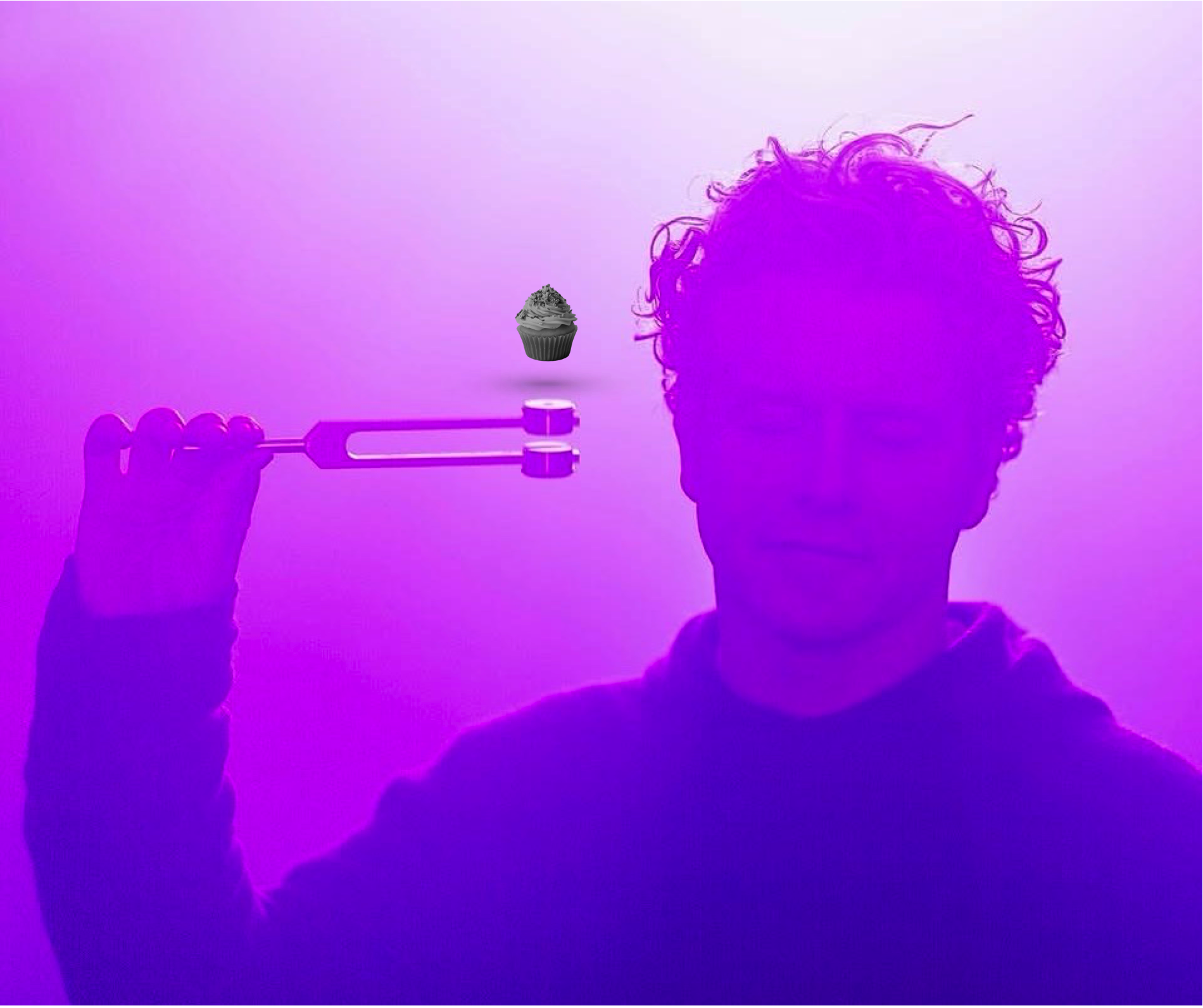
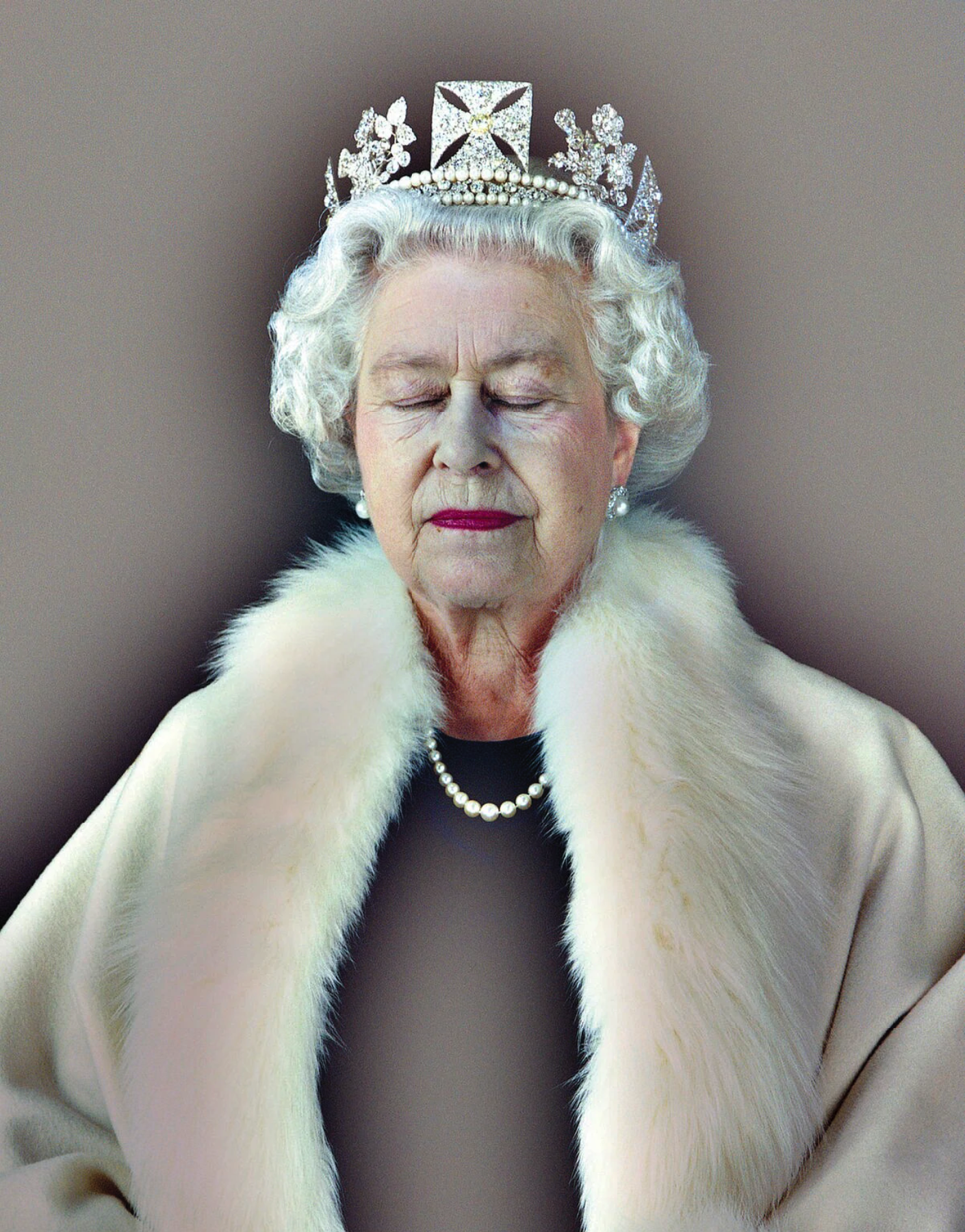
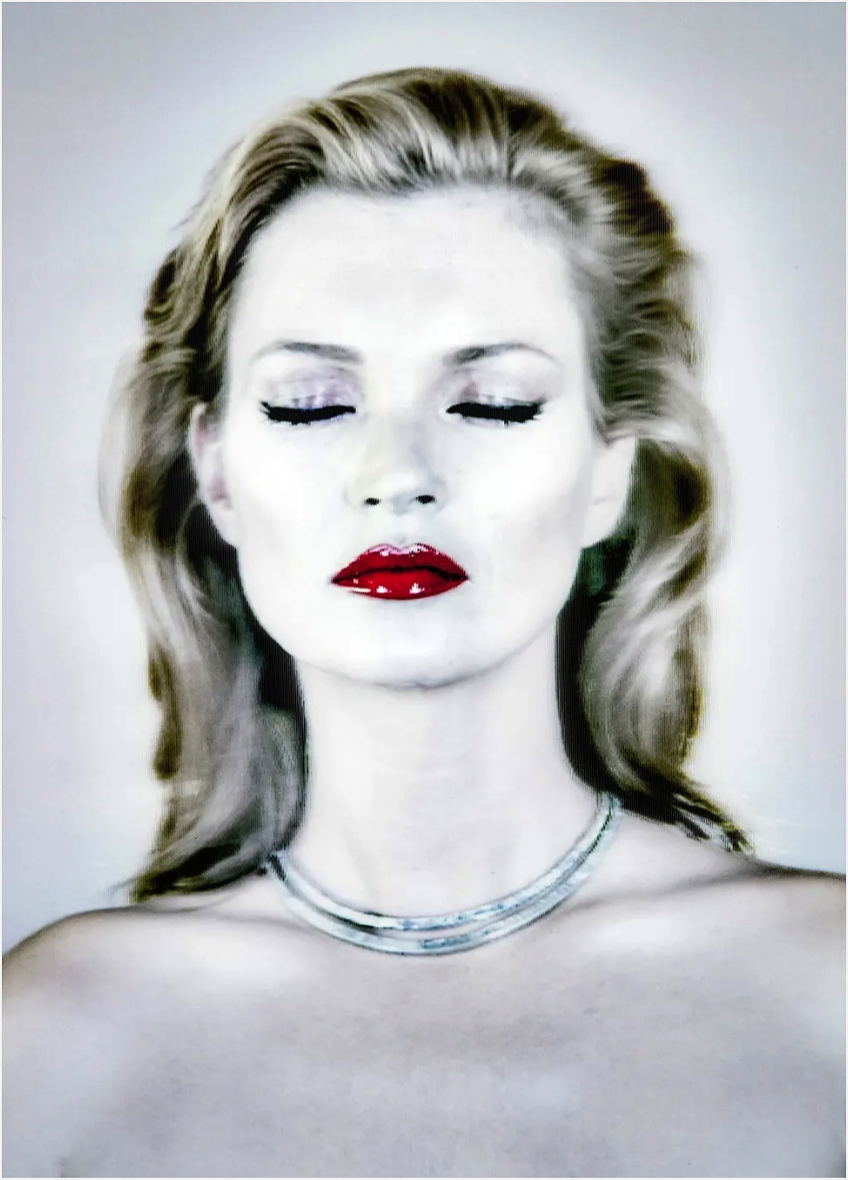
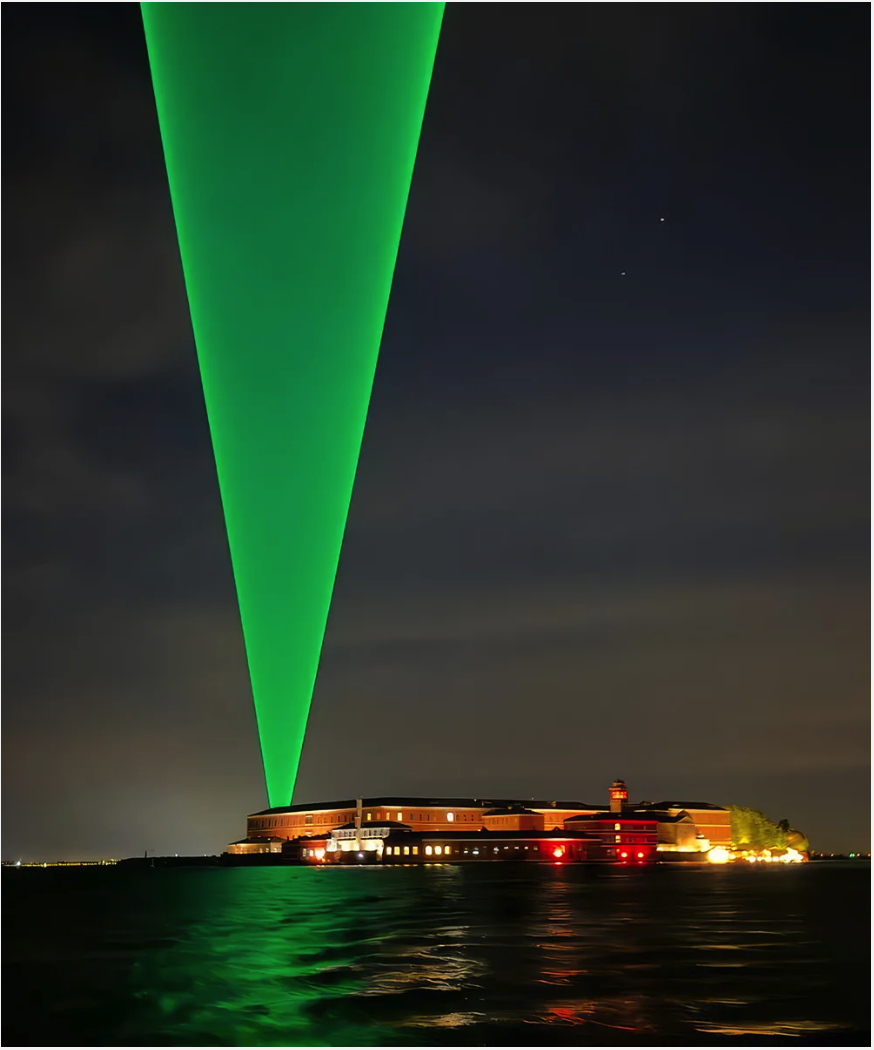
There is almost a divine core that projects from Chris Levine’s portraits that we have all come to know of Elizabeth II, Lightness of Being, and Equanimity; they resonate the spirituality and elusive calm and tranquility in the depth of this legendary figure that we all got to know but never really knew. Following his hologram portrait of the monarch, he has collaborated with some of the modern greats, including Massive Attack, David Bowie, U2, Mario Testino, ANOHNI at MOMA, including further portraits of iconic heroes and celebrities we have come to love and respect the Dalai Lama, Sir Elton John, Deepak Chopra, Naomi Campbell and of course Kate Moss taken whilst she is in a meditative calm, her eyes closed, and the luminosity of spirituality seeps out of the image. Levine’s holographic portraits and his laser art sculptures explore a whole new revolution in modern art that surpasses anything we may have thought that the digital age could embellish. His recent light sculptures are majestic light installations, including ‘Higher Power,’ a projected military grade laser from San Clemente Island, at the Venice Biennale surpassing the realms of outer space. The green projected laser beam that surprised and lit up Venice during the opening days of the 2026 Biennale. It shot straight up ad infinitum whilst also expanding itself into a luminous funnel, seen from great distances miles across the city. “That laser is something else”, Chris tells me. He started a revolution of taking art into space. “You know, it’s a very positive healing signal going out into space, and as we’ve been talking, that beam is still propagating. Some of those photons will have left the Earth’s atmosphere, and that artwork is literally getting bigger at the rate of 186,000 miles per second. And that is on a cosmic scale. Literally!” he emphasises. “You know, and it’s still going, the beam is still going”. The plan with ‘Higher Power’, they had to get permission. “You can’t put a laser in the sky, let alone do this level of laser, without getting aviation clearance.”
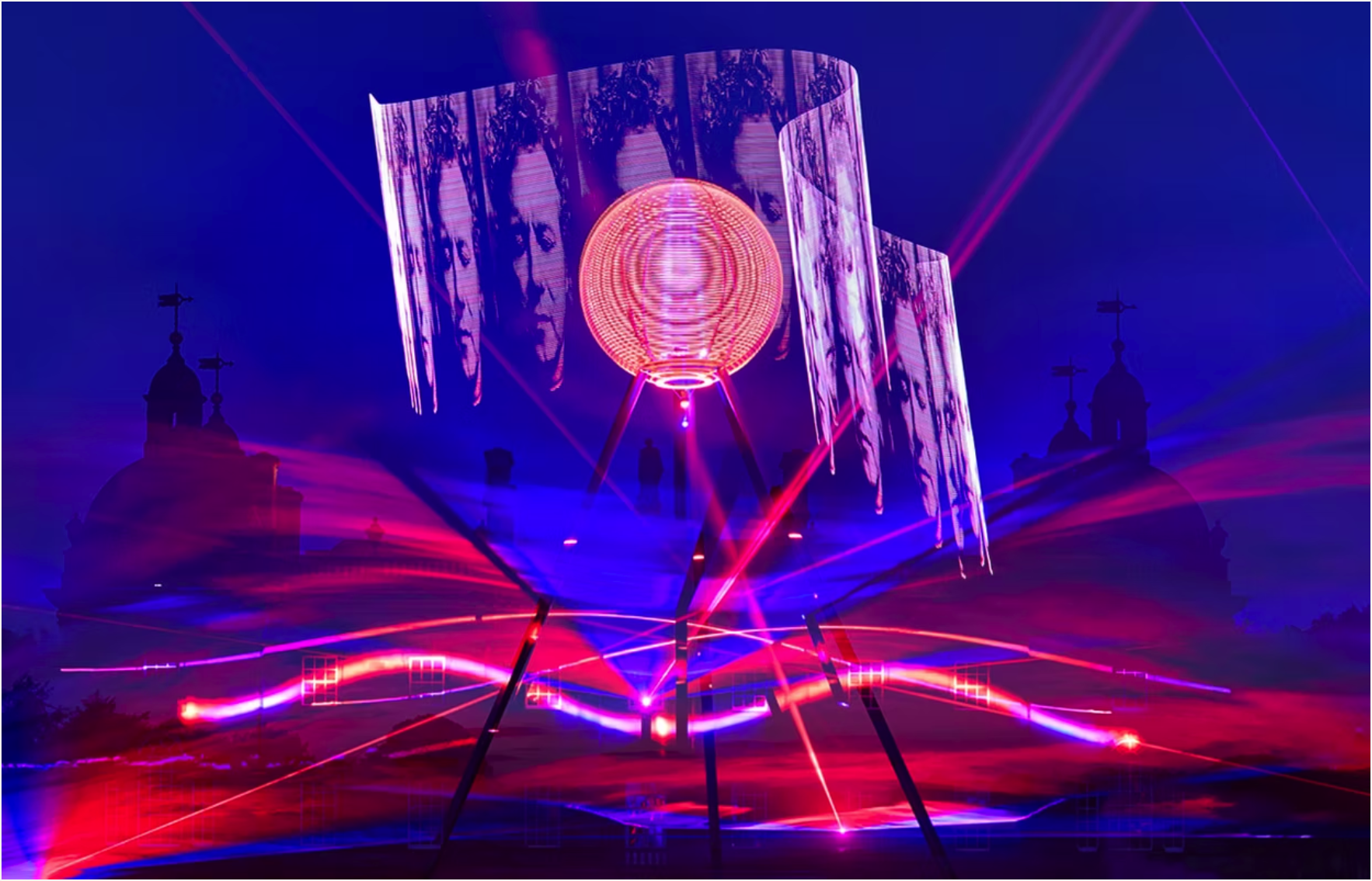
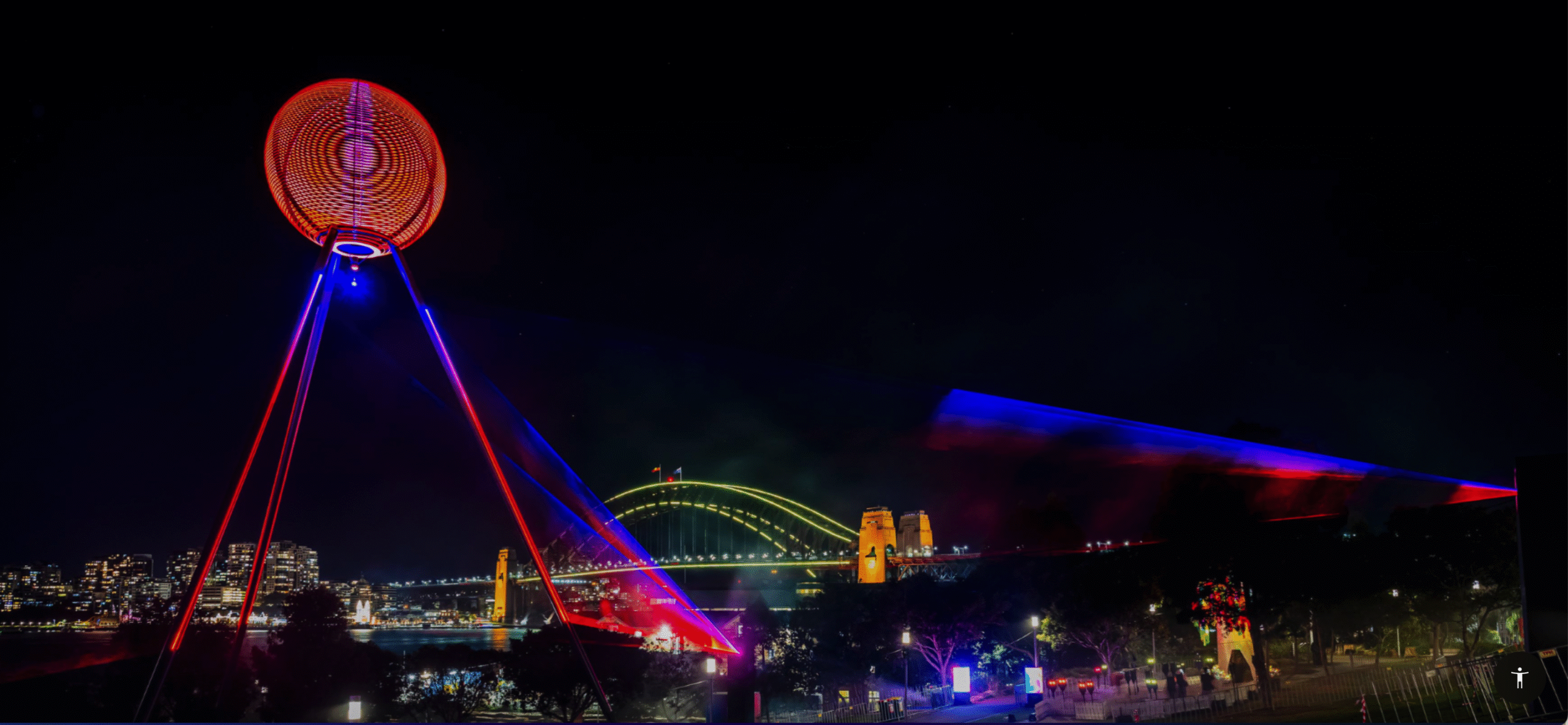
This was followed by an installation work, ‘Molecule of Light,’ in the city of Sydney, which also hit all the news channels, as part of Vivid Sydney 2026. The installation reaches 25 meters in height and weighs 6.5 tons.”I do have a vision of where else I want to take the work, and I do want to take it into unusual new uncharted territory,” Chris is talking to me from his studio, a houseboat in New Hampshire, 85 meters long he tells me. His backstory is diverse, born in Ontario and moving to the UK when he was just two years old. Losing his father at the age of just 18 to alcoholism, and Chris’s own journey with addiction, and being clean for 37 years. He is open about this and has spoken publicly about addictions, and his lifelong journey discovering light and sound and transforming meditation and light into an incomparable art form. Working with military lasers and holographs with his innate sense of spirituality to communicate on the world stage. This involves highly skilled holographers that he directs, and working with engineers and scientists. Levine’s knowledge in maths and science, along with his creativity and own engineering background, is not only what is present in his work. It’s the sacredness that he lives, the meditation, the higher self that lives in his portraits, and what he captured in Elizabeth II. Yet rooted out of his fascination with holograms as a boy aged 11 and lasers at school, to being a drummer in a rock band. He attended the Royal Grammar School in Guildford, where he did A-Level art, alongside Maths and Physics. “I think I have a good grasp of physics principles, enough that I can kind of work with them and can collaborate,” he explains.
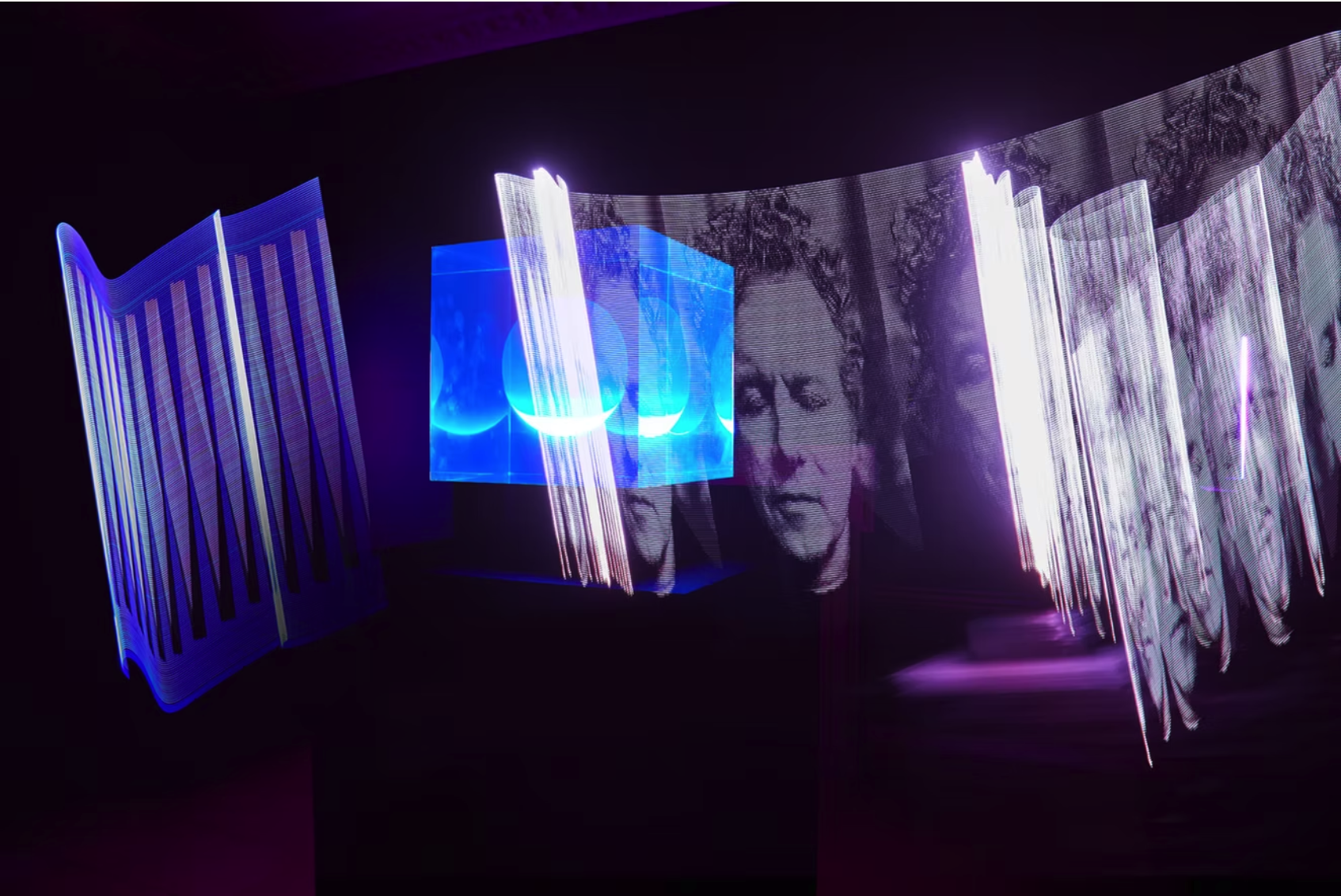
Chris tells me about how his interest in holograms first developed as a boy.”I saw my first hologram. That was, like a real eureka moment, it was at school, visiting the science museum.” It was a hologram of Dennis Gabor, who was awarded the Nobel Prize for it, as he had realised, theoretically, that you could create three-dimensional holograms if you had a coherent source of light, Levine explained. “This was before the laser was invented, this was in 1948,” he confirms. “You pressed the button, and he would appear, you took your hand off the button, he would disappear, and that for me was a real moment,” he tells me. When the rest of the kids moved on, he was still captivated. “I can remember it today, like it was yesterday,” he exclaims. “My dad was an engineer, a very talented engineer, and there’s a lot of engineering background in the family, including Thomas Newcomen, contributor to the invention of the steam engine” so Chris was interested, “And I had a good head for numbers, but I was also quite artistic” he explains “So bringing it together, holograms and lasers into my works, did seem very natural for me”. Despite planning a career as a drummer, his great passion at the time, with his band, he chose a course in graphics at Chelsea College of Art. He grins as he recalls that he was thinking, “I am only going to do this till the band takes off”. However, he tells that he believes it would have killed him, as he went into recovery.
In order to understand more about holograms, he decided to base his thesis on the subject, following a course at Goldsmiths School of art. “I needed to know enough about it that I could work with the best holographers in the world and direct them more about holograms,” Levine explains. “I wanted to collaborate with them”. So he found out who the very best people were in holography, and then straight out of college, went and had his first commission for a drug company. “I’ve never had a job since I left Chelsea, it’s always been project, project, feast and famine, you know, one commission to the next!” Going straight from art school to a career in holography, “But at a really advanced level,” he explains “a lot of it’s collaborative, whether it’s with structural engineers, holographers, and electronic engineers” he emphasises “I found out who the very best were, and I would work with them and direct them. So I had to have enough understanding that I wasn’t wasting anyone’s time”. After many commissions in the corporate world, and a period of work for record companies. “I got commissioned to do the portrait of the Queen, and that was a real moment for me that I transitioned to artists” he exclaims.
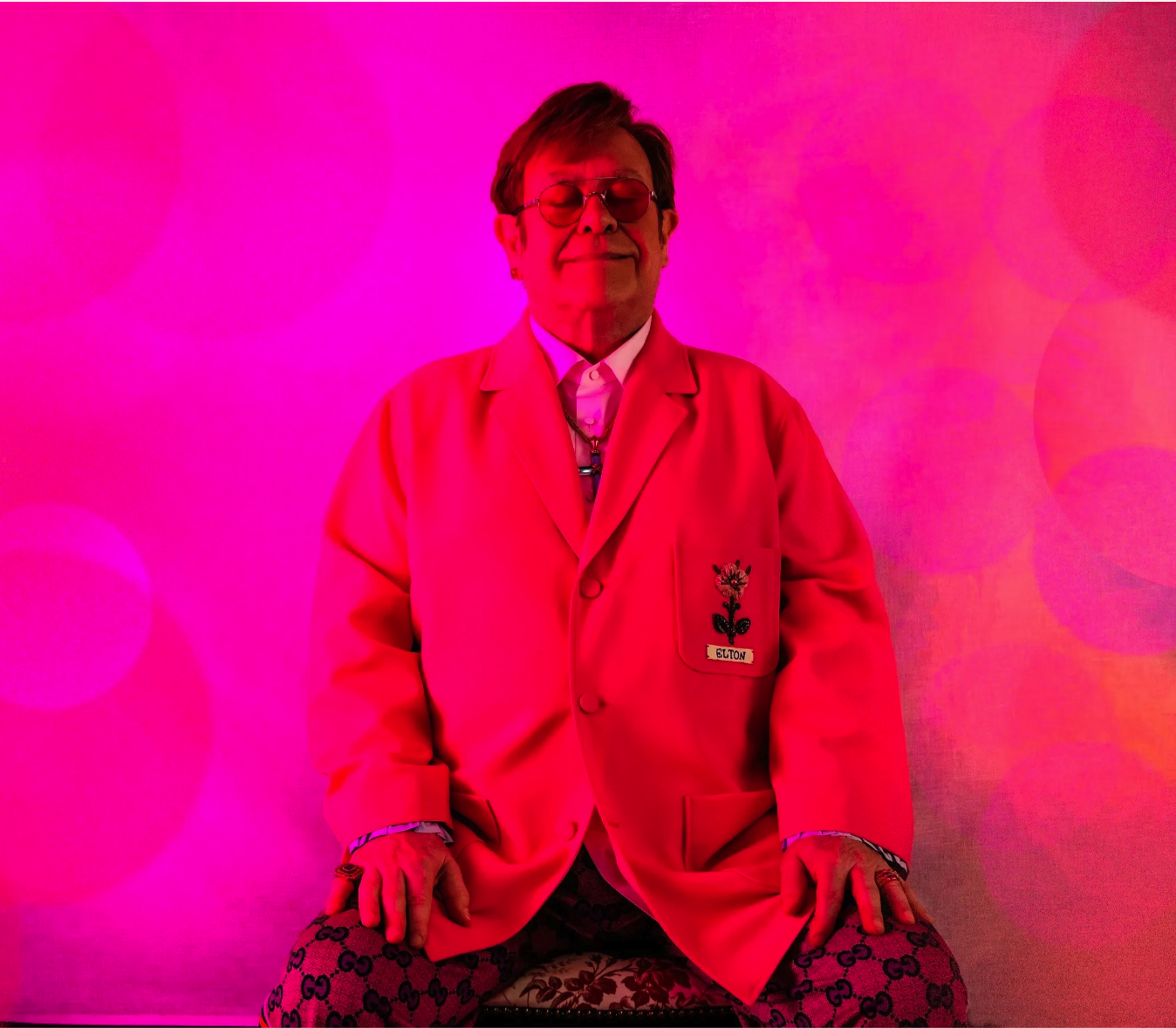
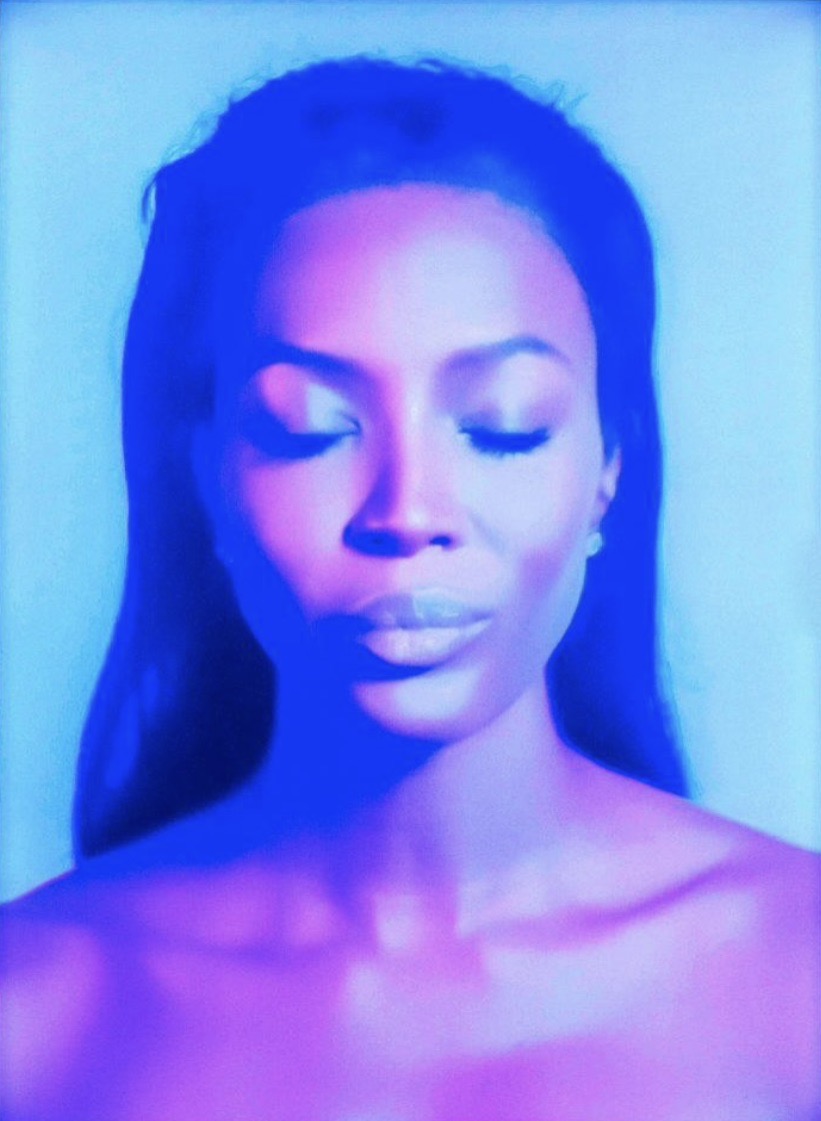
It was this pivotal time in his career that the work put him on a platform. How this all came about was his first holographic portrait of the musician Seal, commissioned by Warner Brothers. “I’ve been doing a lot of work with Rob Munday, doing a lot of holograms”, and Levine took the commission and art directed Munday to create the hologram of the portrait. Further portraits were created, and a joint exhibit with photographer Jill Fermanovsky, a collaboration with some holograms, the exhibition called Hypervisual. This was picked up by the British Council, touring 11 countries, and featured on the cover of the Sunday Times Style magazine, by Isabella Blow. It was from that exhibition, that Gordon Young, curator and sculptor, was appointed by the island of Jersey for their 800th anniversary, since breaking away from France. They wanted to mark the celebration with a modern portrait of Queen Elizabeth II, choosing Chris, who might take it into the future. “Gordon thought I was doing interesting things with light,” he tells me.
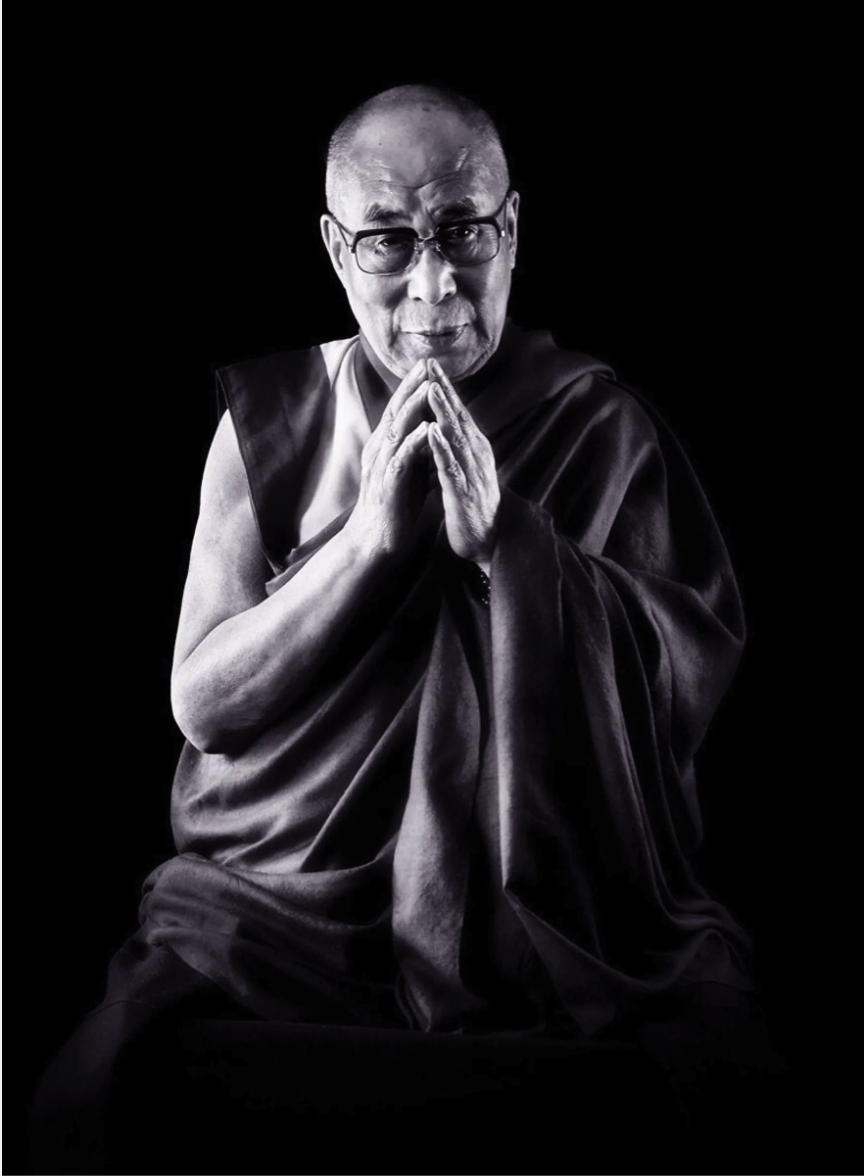
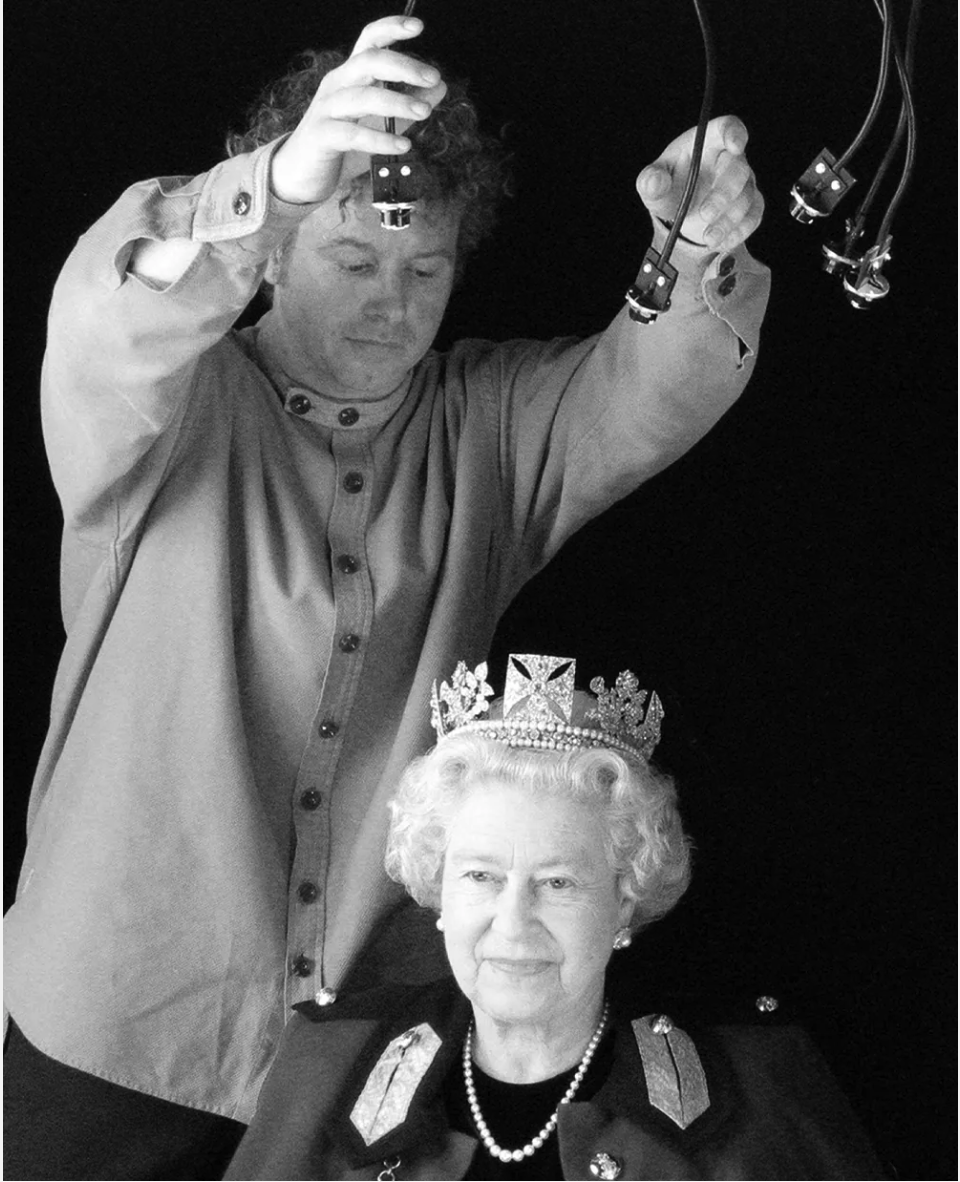
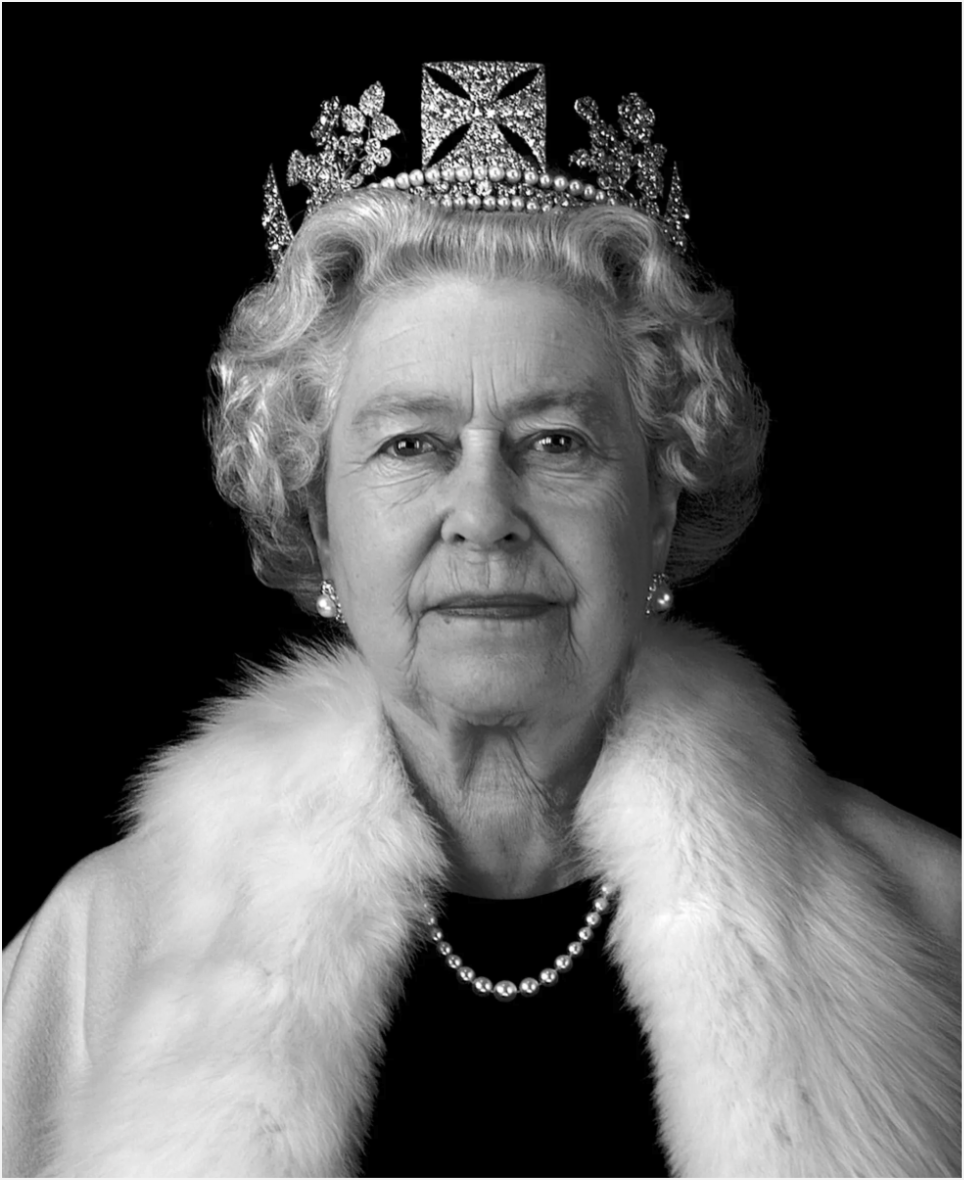
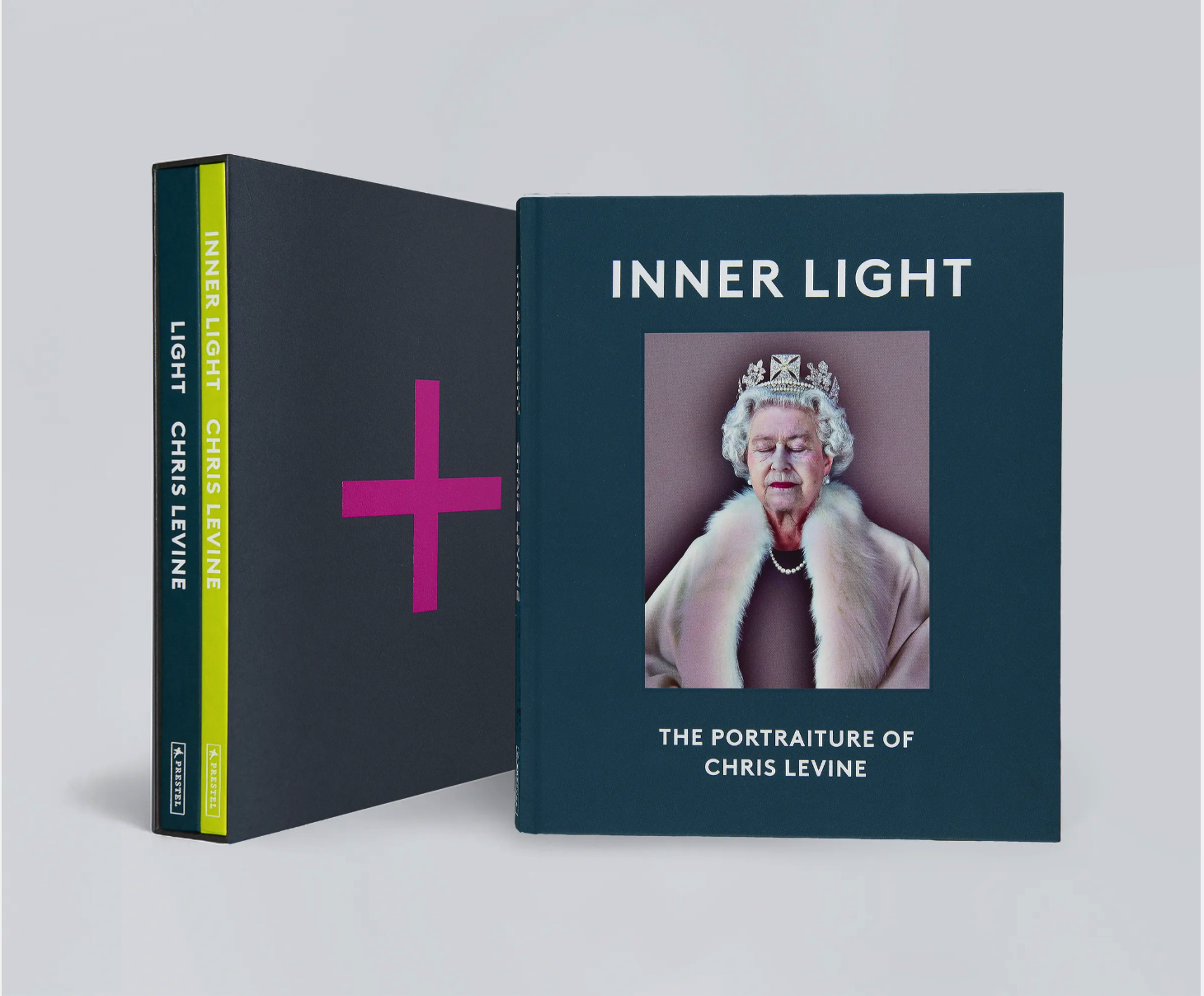
“So I got the gig,” Chris exclaims, “And that was a historic commission”. This entailed sittings with the Queen with two private audiences. There was supposed to be only one sitting, “And the pressure I had to get it right,” he emphasised “I got it, it was in the can, I was confident, I could work with this, I had about six months to develop the final work”. Yet within an hour, he was offered the second sitting “Then I could look at what I did on the first sitting. I took it to my friend, Mario Testino, the fashion photographer,” who gave Levine some advice. “I made some tweaks” So the first sitting turned out to be just a practice run. “And then all the magic happened in the second sitting”. Chris recalls a phone call from Angela Kelly before the first sitting, the Queen’s dresser at the time “And up until then I had been thinking, the Queen; she’s going to turn up wearing what she wants to wear, and I’m going to take that portrait.” But they wanted to know what Chris wanted her to wear, “So I got to style the Queen, a week beforehand” he exclaims. “I got to go through her wardrobe, and I literally styled with Angela, styled the Queen”. He went in knowing exactly what he was going to do. “I asked for a selection of capes, because that way I could change the look very quickly.” One of the capes was a military cape, and the look was very different. We chat about how interesting it would be to see those comparisons of both sittings at some point. All the other portraits that followed, “Literally, they’ve come to me” including Elton John, Kate Moss, Naomi Campbell.”Some of them in the most bizarre kind of synchronicities, Like the Dalai Lama” he tells me “I mean, that’s the story itself, only myself and Annie Leibovitz, who have shot formal portraits of the Dalai Lama. But that came to me, you know, in an extraordinary way. I mean, I get goosebumps”. He explains what he is really doing with his subjects including the Queen when he takes their portraits “I am really conscious of their breathing and stillness, it’s about getting the subject still. And then that reveals a kind of inner truth, or inner light” he clarifies “Einstein said, we’re all compressed, everything is frequency and vibration, everything is light, then capturing the inner light, that inner beauty, and my way to do that is to get them still.” He explains the different ways using sound and light and getting them into a meditative state and capturing their inner light, how that has become his signature. This is the essence of two books, in two-part volumes: Light and Inner light.
It’s Levine’s Venice installation,’Higher Power’ that has me curious, the message behind it ‘Make light not War,’ the green laser beaming limitlessly above Venice, against the night sky, and occasionally switching to a radiant cone as it dissolves and mingles with the clouds, creating a mythical illusion. I ask him what the idea behind it is. “My thoughts on that are really exploring light as a fundamental aspect, you know, the nature of reality,” he explains “That’s something we take for granted. Light is part of how it all works, we’re only tuned into a very narrow bandwidth of light,” Chris expands. “The visible spectrum, light goes up octaves, it goes down octaves. Then atomic structures start to form,” he expands this theory “A stone is like light in slow motion, but then if you go higher, beyond the visible spectrum, into higher frequencies, higher realms, and then you get into, potentially angelic realms, we can only understand a very limited bandwidth of our perception,” Chris clarifies. “We have a filter through our five senses of reality that any, more than that, would literally blow our minds.” He continues, “It would be too much for us to deal with. So we’re tuned to like an octave of reality, a bandwidth of the electromagnetic spectrum. And with laser, well, I think what fascinates me about laser, I know I’m taking it to quite extreme levels”.
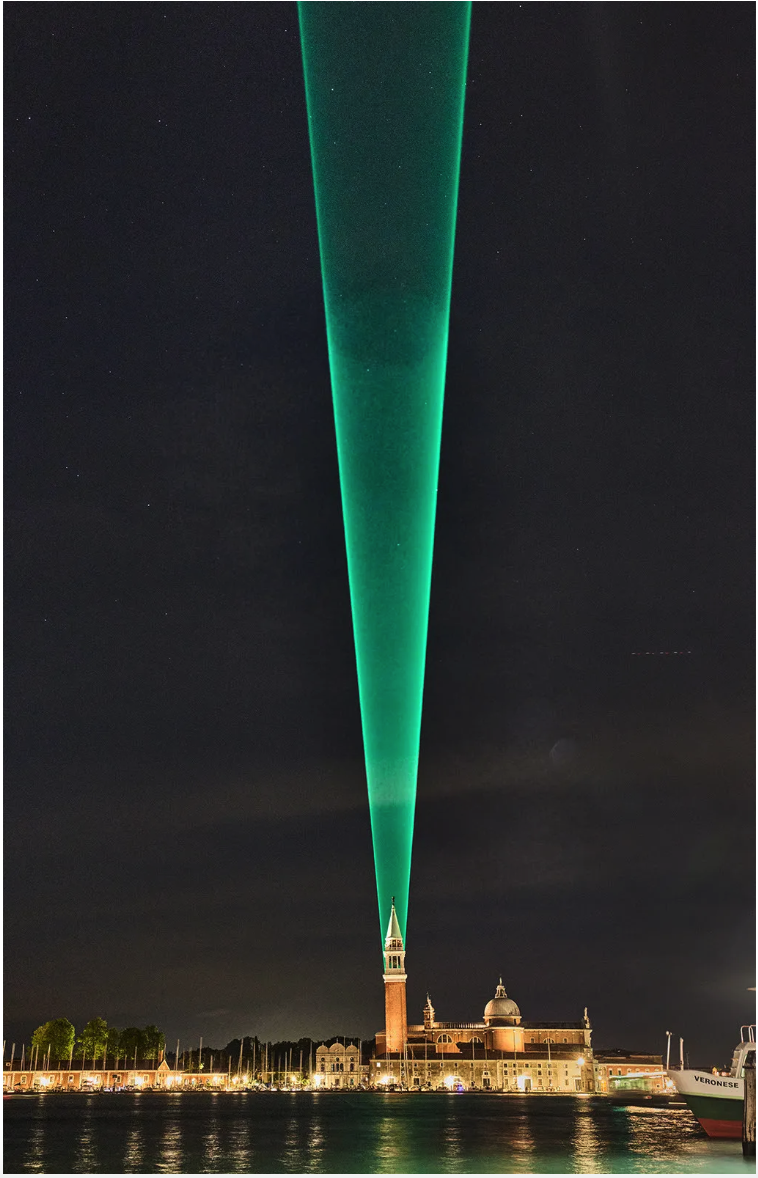
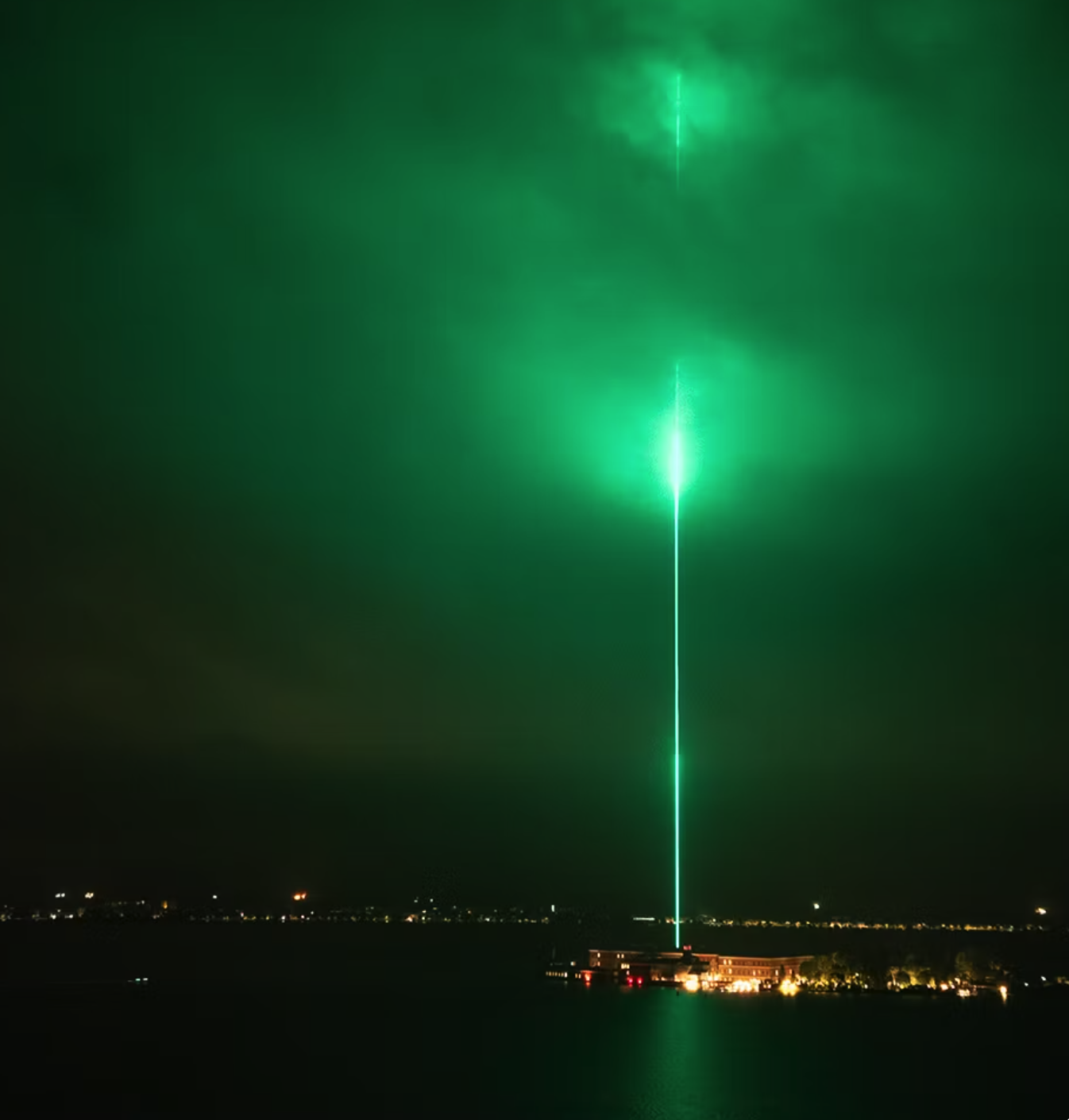
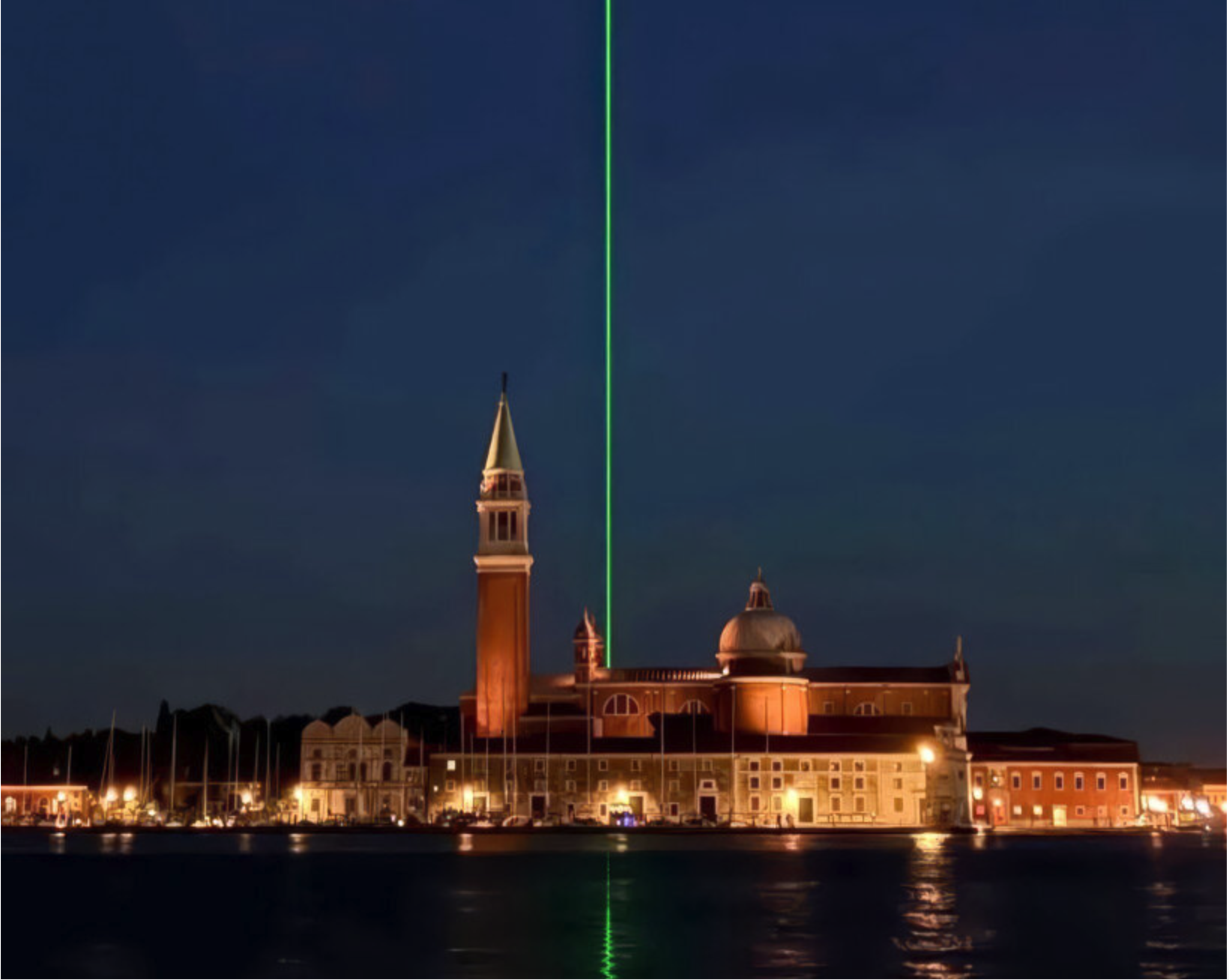
Chris recalls the first laser he saw as a boy ,”I loved that red dot, because it was so pure. You look at a laser, and that’s just one wavelength of light, a single frequency, something that’s so fundamental to everything, and how it all works”. He draws his arms open to explain, “As I’m looking around now, I’m looking at water, the sky, the clouds, the trees, it’s all built, but bombarded with different frequencies and wavelengths”. If one puts them all together, we get a spectrum of colour and sensory input, he explains, “When I looked at that little red dot, so pure, so intense. A very pure tone of light”. He expands, “What I did in Venice, is taking it to a whole other level. That laser is something else.” He emphasises “I’ve seen it cut through inch thick steel, that’s a lot of energy”. Working with his engineers in Germany, they have modified it “It’s actually an industrial laser, it’s like a military grade laser”. Chris explains “There’s an enormous amount of power, there’s a whole new generation of weaponry, using lasers, direct energy weapons, DEW, Star Wars, technology, but the beams were invisible”. Whereas, what Levine and his engineers have done is modified it to give a visible light output “This is a green colour and a certain frequency, we did tests in Germany last year and it was spotted by the International Space Station, that’s 400 kilometres in space.” His enthusiasm continues “And it’s still going, the beam is still going!” But also, what people did realise, that it was actually going on and off very quickly at the rate of 432 hertz. That’s a sacred, one of the solfeggio frequencies, like sacred geometry applied to sound. So the golden ratio, Fibonacci sequence, is a numerical order, which kind of underpins the physical realm, like one of these tones on this ancient solfeggio scale, and a lot of Gregorian chant music is on solfeggio.”
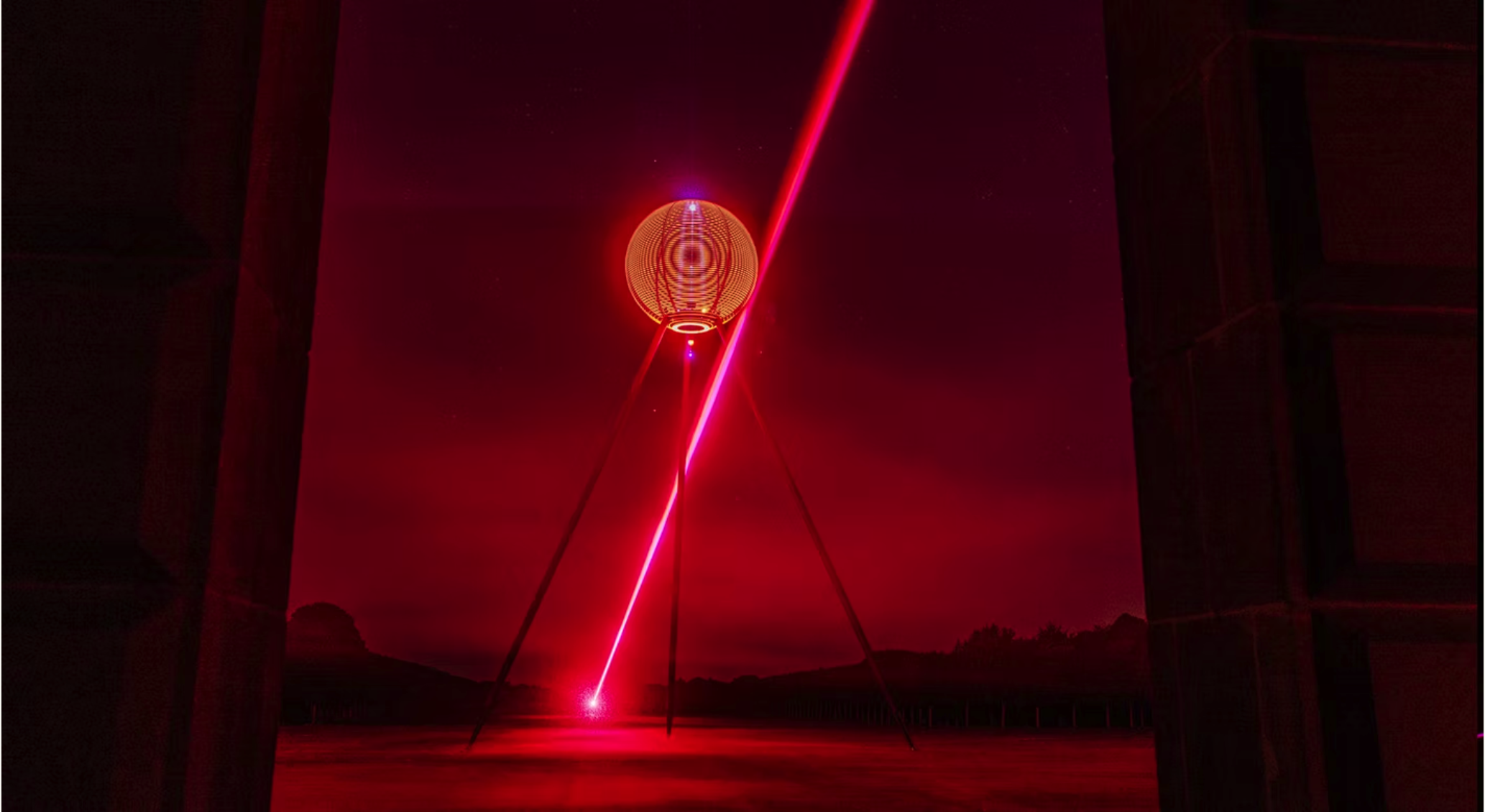
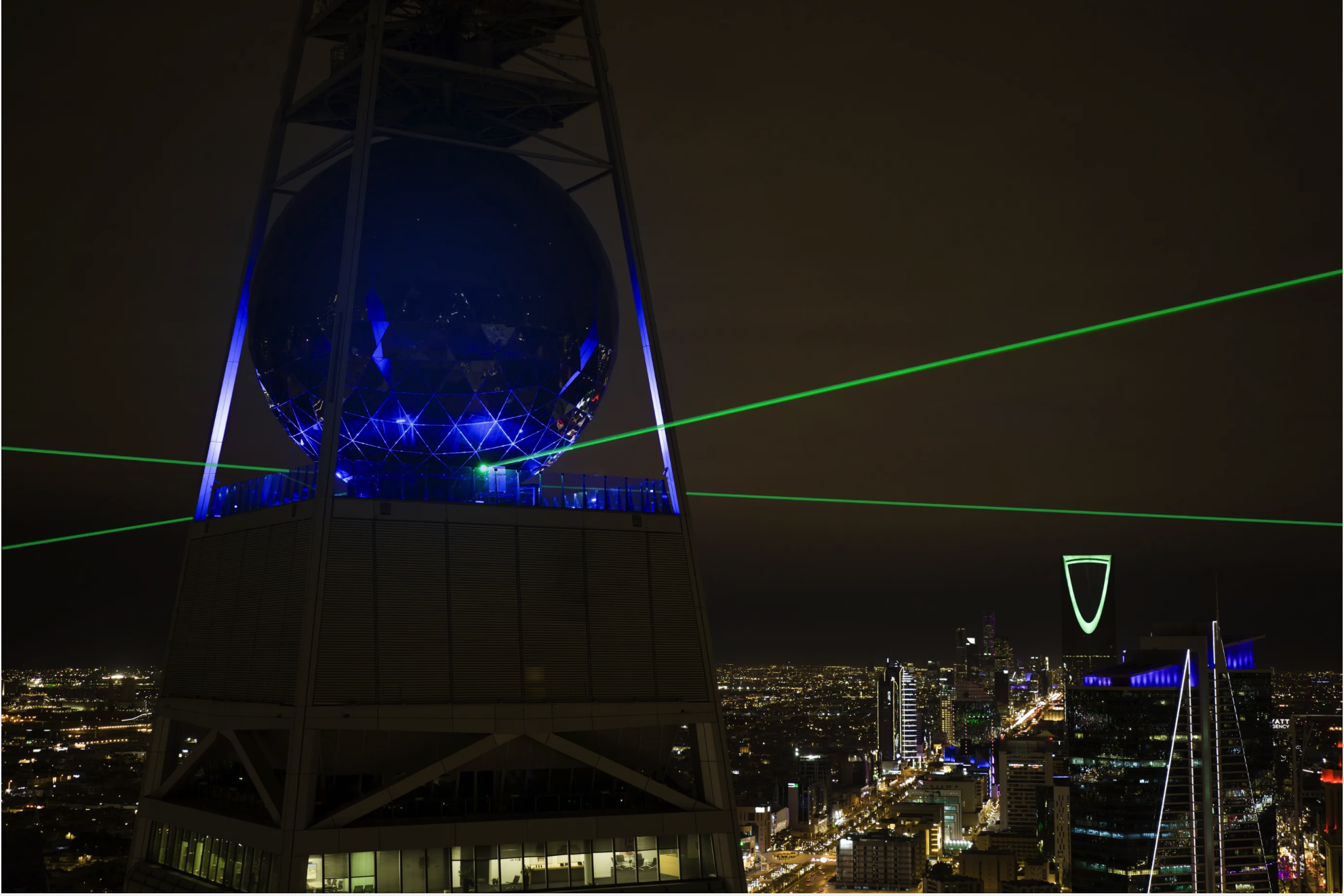
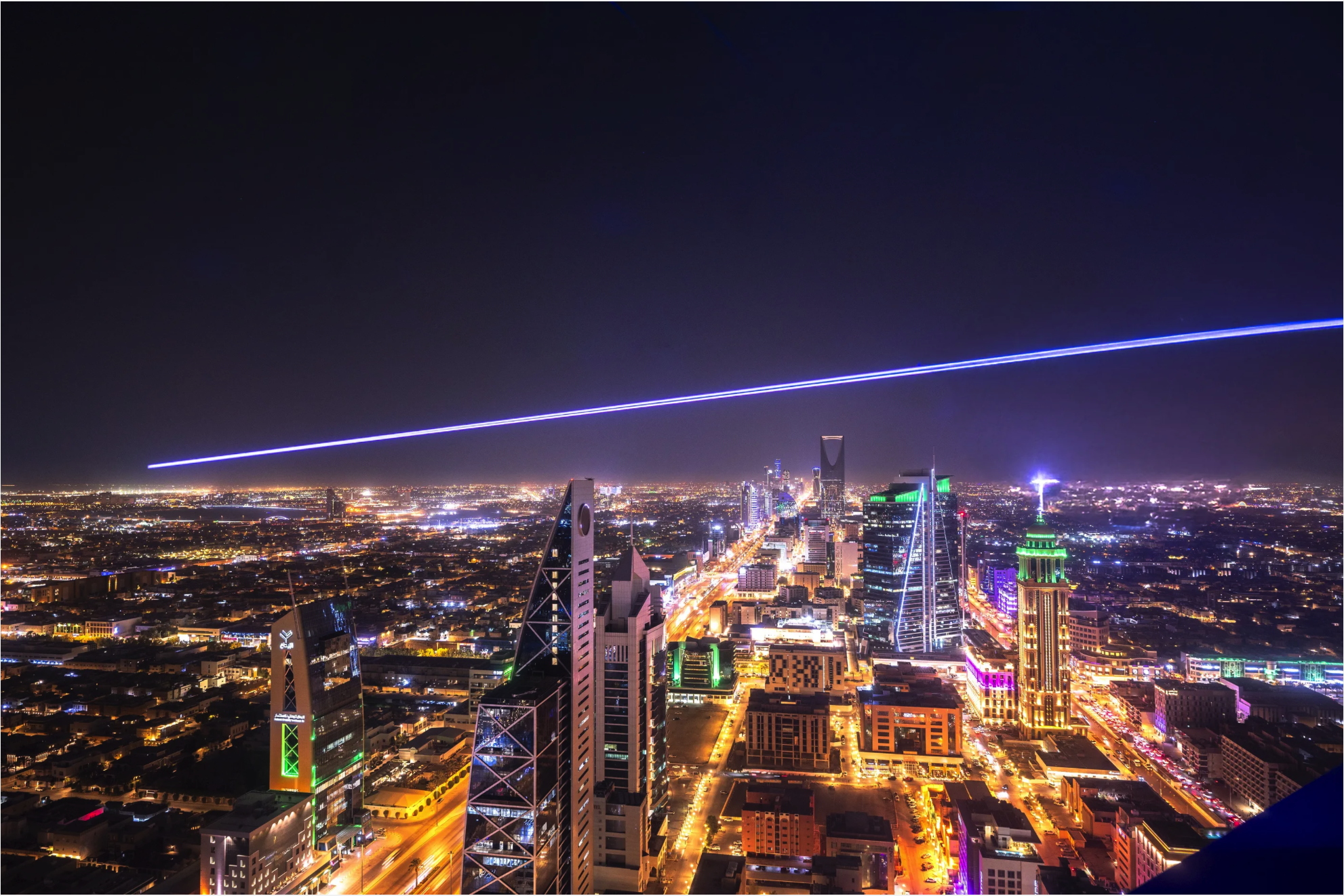
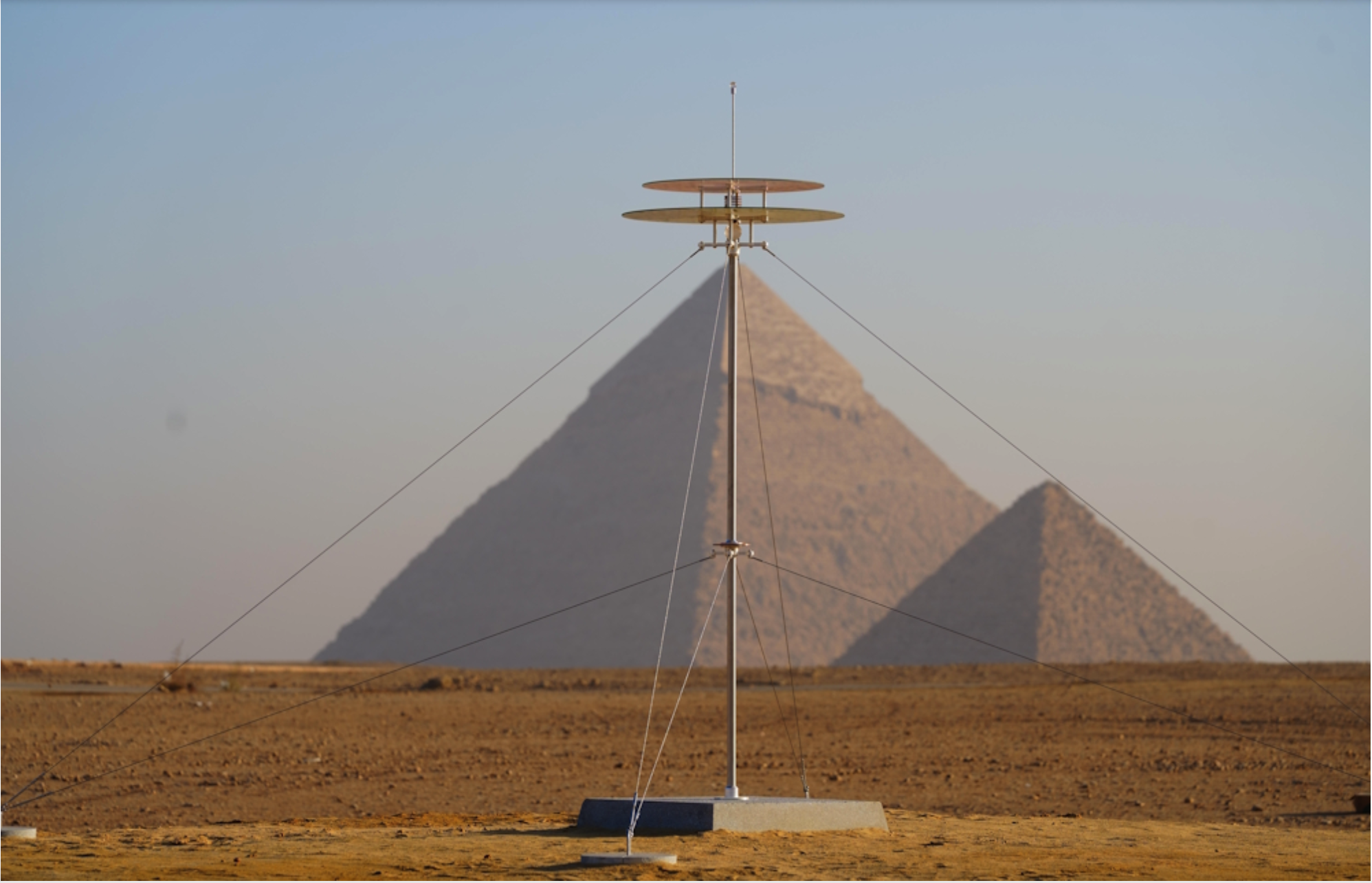
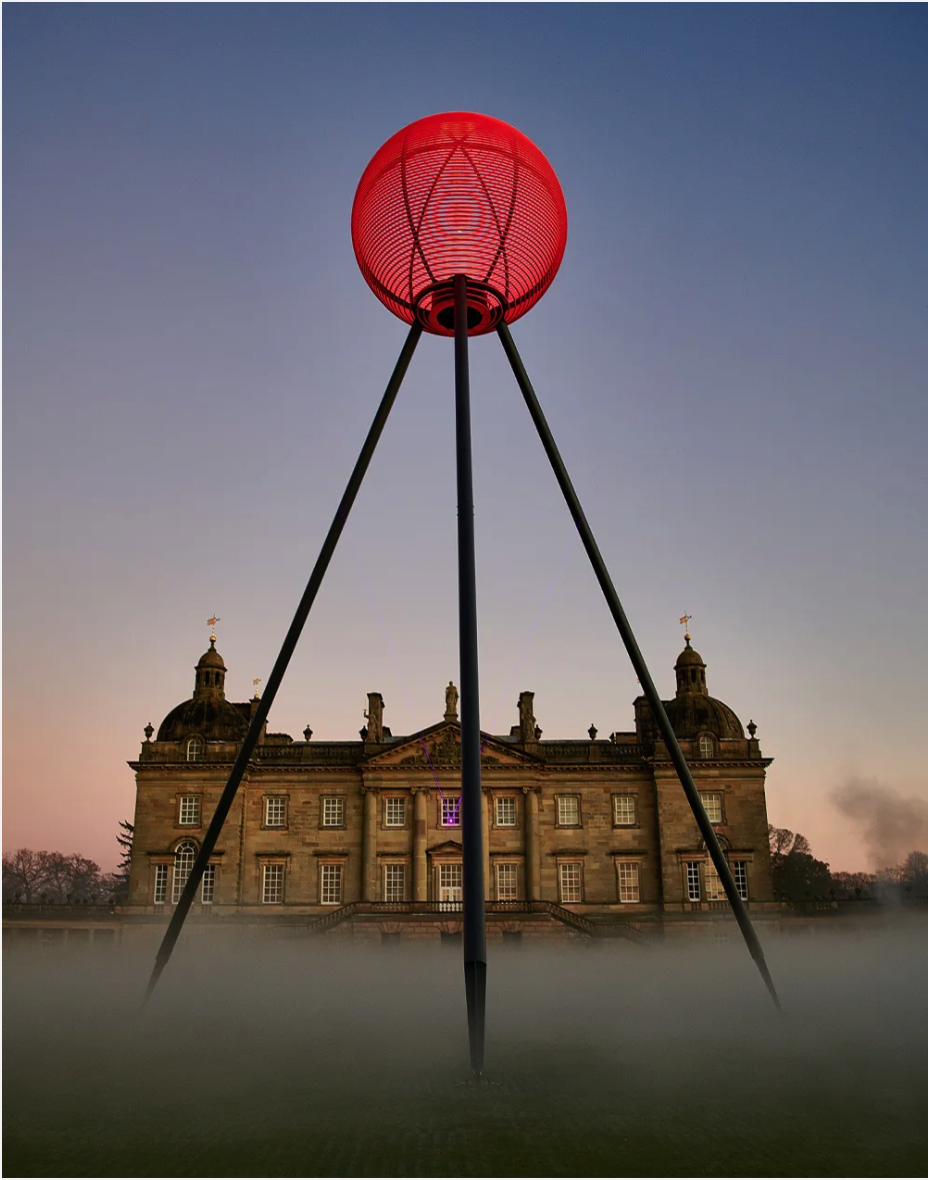
Levine’s installation ‘Molecule of Light’ a 25 meter tall sculpture also uses lasers “But it also emits a 528 Hz sound frequency, a musical scale that correlates the energy system in the body, the chakra system, the middle note, on the third plexus, sometimes called the love signal, so if you stand underneath it, and this sound beam goes through you, it literally makes you feel good” Chris emphasises. First exhibited during the Melbourne festival in 2015, and again at his solo show ‘Love Frequency’ at Houghton Hall, and recently at Vivid Sydney 2026, the same principle applies. ‘Molecule of Light’ was additionally exhibited in the Wadi Namar desert in 2023 for the Noor Riyadh light festival. Then, in 2024, the first presentation of Higher Power was installed from the top of the 267 meter Norman Foster designed skyscraper, the Al-Faisaliah Tower, setting a record 1 kilometre projected laser. The installation with four beams extending across Riyadh “This was what I did two years in a row, projecting 4 high power lasers north, south, east, west.” A Morse code signalled ‘Salaam’ which means Peace in Arabic. In October 2024 his installation Quadrivium, was installed in front of the Great Pyramid, on the Giza Plateau. “When I developed that, creating this sculptural form, to have a harmonic relationship with the design of the Great Pyramid, the numbers that were involved, like the ratios, the proportions,” he had everything extrapolated from the design of the Great Pyramid. “As I was, allowing this form to take shape. It was trying to be, trying to manifest it in as lucid a way as possible, and to let the work reveal itself, just by being open, and to manifest. Sunlight is integrated into the artwork, and like the Great Pyramid, is aligned with true north.
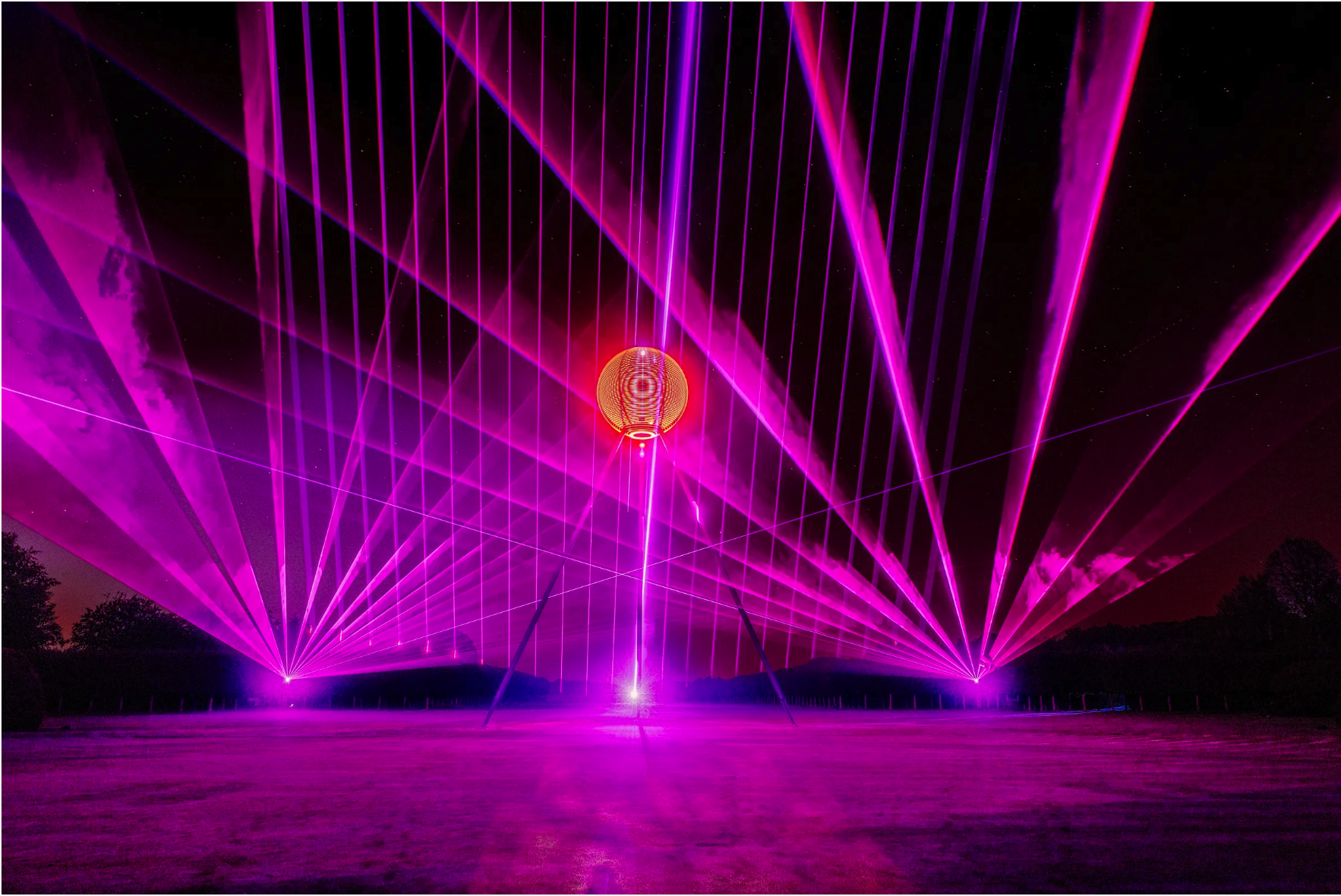
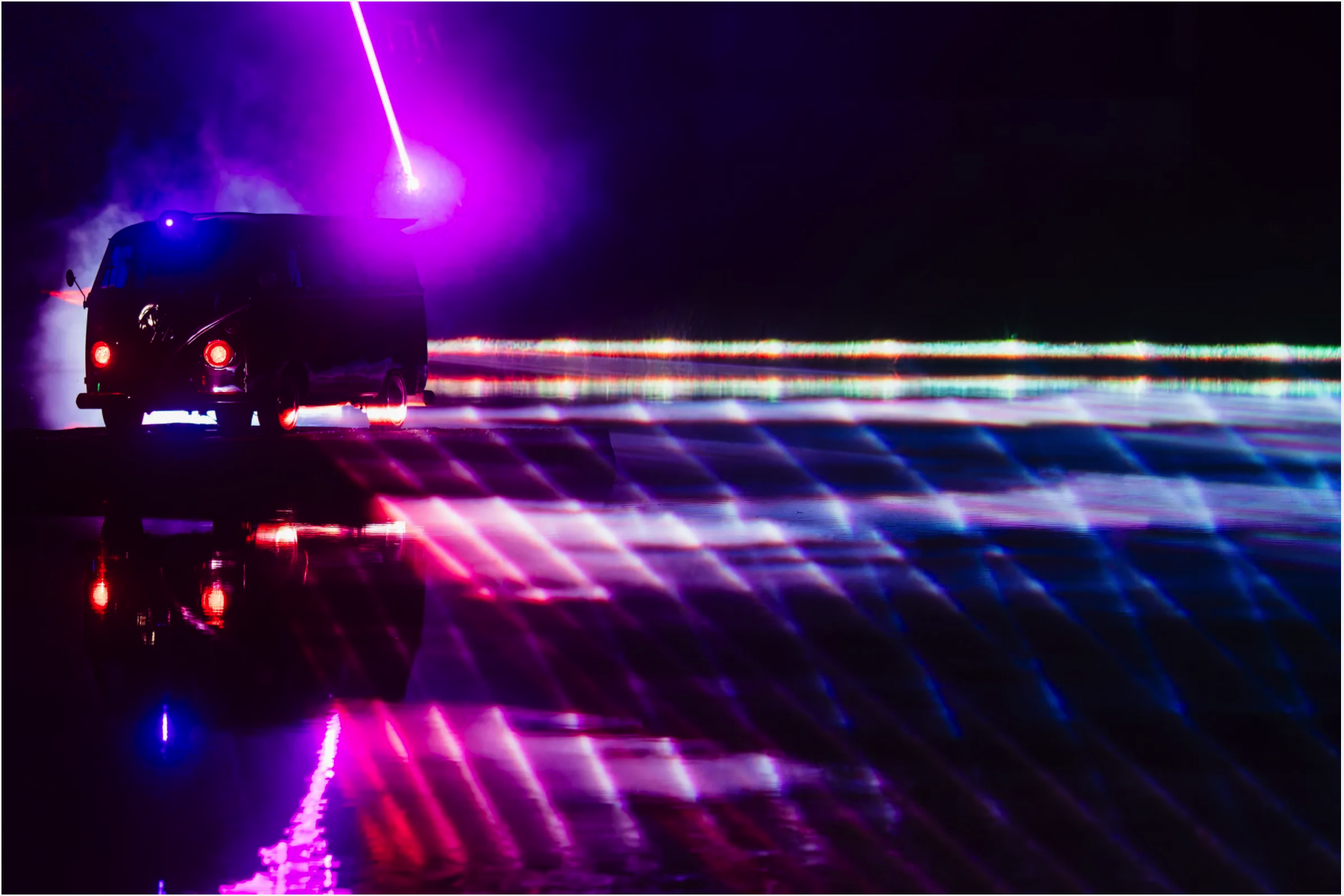
“But there’s another healing frequency, 432, so that beam in Venice, projecting into space. A very pure signal of light, oscillating at a sacred frequency. It’s a very positive healing signal going out into space”. I ask Chris about the concept to have a laser going up into an indefinite place in space, he answers honestly about getting into recovery, “Looking for my highs in ways, getting a real kind of sensory, full-on sensory experience” he recalls doing lasers at raves and peak experiences “I’ve always been, you know, a person of extremes and I wanted to take that; the most powerful laser, I could get my hands on”. The laser is more powerful than any other laser that anyone has ever used in an art project he explains “And to take that and project it into space out of, beyond the earth, it’s just really, how far can you crank the dials, to how extreme can you take it”. He expands “So a beam projecting out into space, oscillating, that beam has an intelligence to it, that frequency, that oscillation, has meaning to it. So it’s an intelligent signal propagating in space.” How Levine’s four children feel about his work, I anticipate how proud they must be, he laughs, as he describes their response to their father’s work, “I remember when I took both two eldest, 23 and 26, when I did the portrait, as it first showed at Buckingham Palace, they were leaning against it, like, it’s just what dad does. It’s sort of like, no big deal”. Although recently his exhibit at Houghton Festival, “Which is a techno festival, curated by Craig Richards, the guru of techno. I had a chrome plated VW camper van, and I floated that on the lake, projecting lasers onto it, and they said Dad, that is cool. I think I went up in their estimation.”
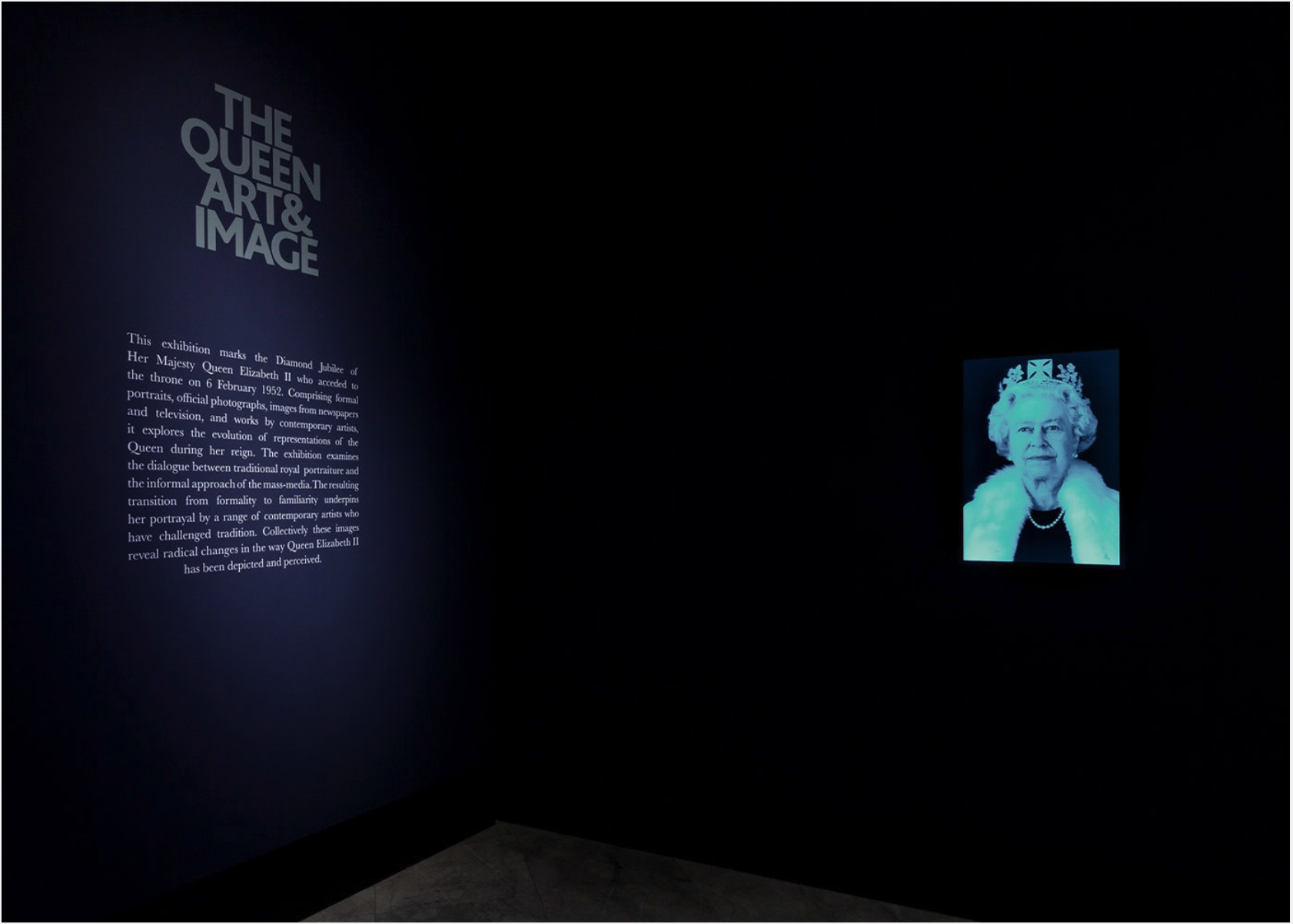
When I approach the question what he considers his greatest achievement in his career so far, I realised the question was difficult considering the body of his work, however he considers the question for a minute “I think looking back on it, that really was, a meaningful and in a way that I think that was, a calling card for, for people see my portrait of the Queen, so they’ll take me seriously, so then I can take my work. I could do things as I did in Venice. Projecting beams into space, more outlandish, more things like Molecule of light”. He continues to explore his thoughts, “That’s more really what I set out to do. I didn’t set out to do a portrait of the queen at art school. I wanted to be a drummer in a rock band, now the portrait of the Queen hangs in rock stars’ houses”. He did it in 2004, then in 2012, it received further critical acclaim with the Diamond Jubilee. It hangs in the National Portrait Gallery, and their official statement was: It’s the most evocative image of a royal by any artist.
Who is his biggest influence artist or otherwise? Panayiotis Vassilakis, also known as Takis, “A lot of his work would be inspirational, the electromagnetism and work with light. I thought he was really original in his whole approach to his art”. Then he pauses, “And of course James Turrell”. Levine tells me about meeting James on the lawn at a summer dinner at Houghton Hall, and recalls that coincidently his first installation of ‘Molecule of Light’ was at the exact spot where they met by chance, and the significance of the casual encounter, on that lawn just before sunset. It was the assembling of the concrete under each leg and the three cranes erecting the work “That I realised, oh, that’s the spot where I met Turrell. That’s the spot where I shook his hand, the master of light.” I am intrigued at what the factors that allow Chris to love an artwork “I think something where you enter into mediative state, the space between thought, you’re just in the present moment, enjoying that work, appreciating it for what it is, whether, you know, it’s the colour, the form, however it is, you’re just in the moment with that piece.” If he could have any artwork what would it be? “Actually Tadao Ando’s, The Church of Light, I think it’s really a brilliant, experience of light in the form of this cross, there’s the negative space creating the experience, it is absolutely masterful” he explains.
I try to delve into what Chris is currently working on. He is mostly drawing and working every day he tells me, he explains his sculptural installations are complex, they involve more people, they’re expensive to make, and they usually have an end destination. How long do they normally take to create from concept to completion? “It can be years, really, because I often think that all my work is work in progress. You know, everything you do kind of informs the next thing that you do and the next step and it’s all a sequence of events”. He recalls of what a revelation he had the day before, “Connecting something I’ve been thinking about for a long time, suddenly aligned itself with this idea I’m working on and the two things came together and just it becomes more a thing.” He gives an example “I can think of things that, that I did at art school, that I talked about writing up those holograms under stroboscopes, revolving blocks under a stroboscope, so the block is revolving at high speed, but the stroboscope freezes its motion”, he explains further “But because the different facets of the block are different holograms, you get, a holographic animation on this static block, I haven’t done that! To see that, eventually, manifest or transpire into a work”. So he is not, not really answering it, he explains, “Because it’s like, it’s all connected.” He recalls working with Bjork a while back, “But I’d love to do something with Bjork again.” He also recalls the Icelandic-Danish artist, Olafur Eliasson’s Sun installation in the Turbine Hall and how that inspires him to have an installation in the Turbine Hall.
Interview: Antoinette Haselhorst