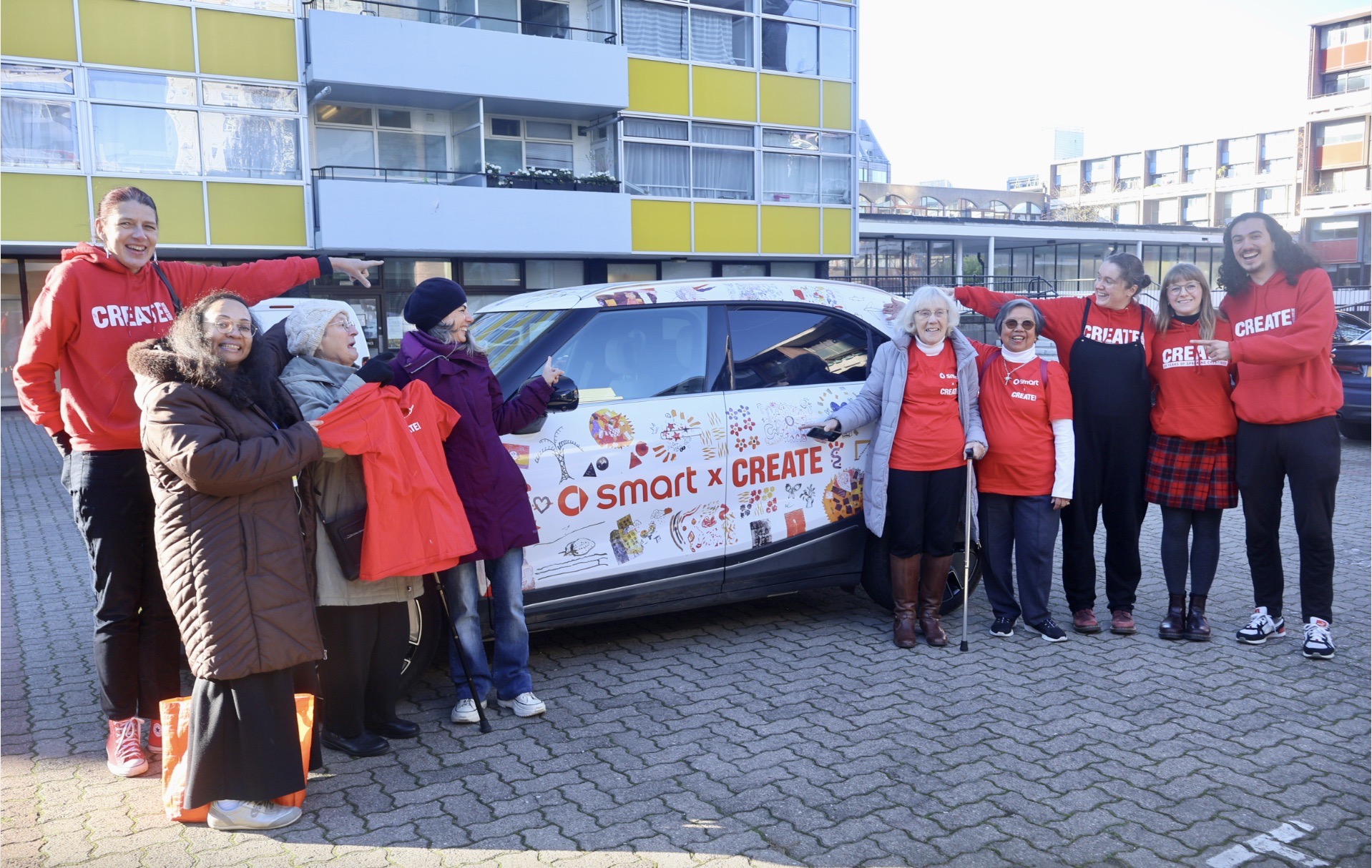
Nicky Goulder MBE – Create arts charity
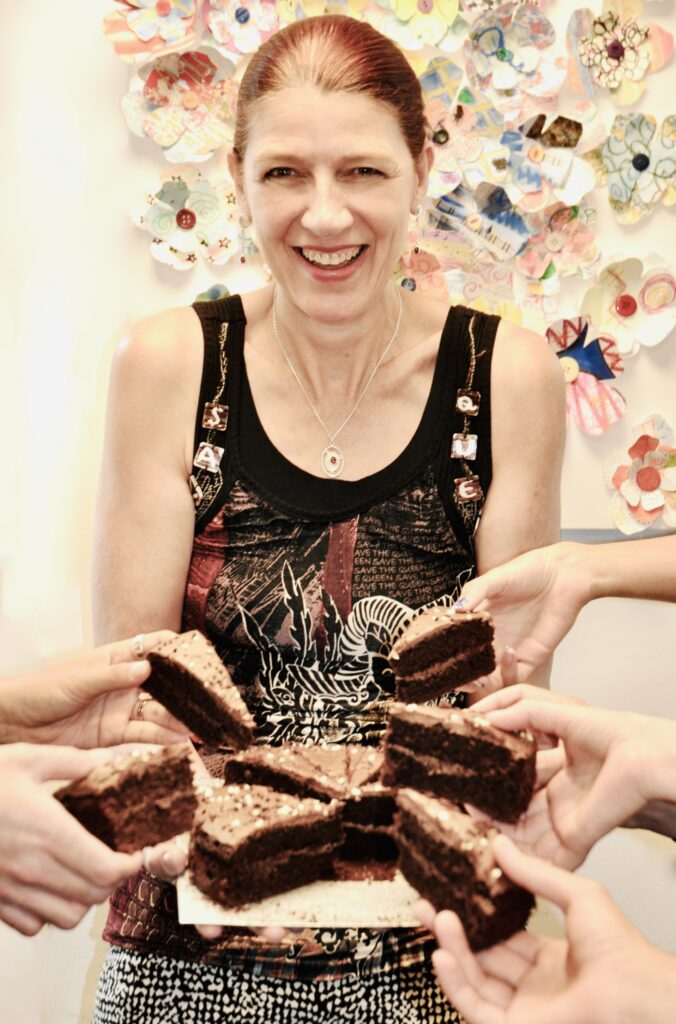
A Different Conversation: Meet Create
For this feature, C-A-K-E turns its attention from the artist to the organisation, looking at the story of Create and the ideas behind a charity built around access to art and creative expression.
I met Create at Fresh Art Fair at the beginning of the year, in North London. I was interested in the charity’s ethos, People Need To Create. Creativity is a human need and everyone should have access to it. Recently whilst I was introducing some artists to a local school, I did some research on the necessity of art education and discovered that art teaches us to problem solve, by training us to manoeuvre uncertain terrains, embrace experimentation and view challenges from multiple angles and perspectives. When I meet Nicky in her office for our interview it’s one of the foremost things I bring up, the relationship between art and problem solving. She is a firm believer in the importance of creativity. “It is central to everything that we go through in life and it’s at the heart of Create,” she explained. In 2010 IBM, did a piece of research with 1,500 CEOs, and creativity was identified as the most important factor for future success. “Create makes the creative arts accessible. Creativity offers so much: it builds skills, brings joy, builds resilience, enables you to express your feelings, brings people together.”
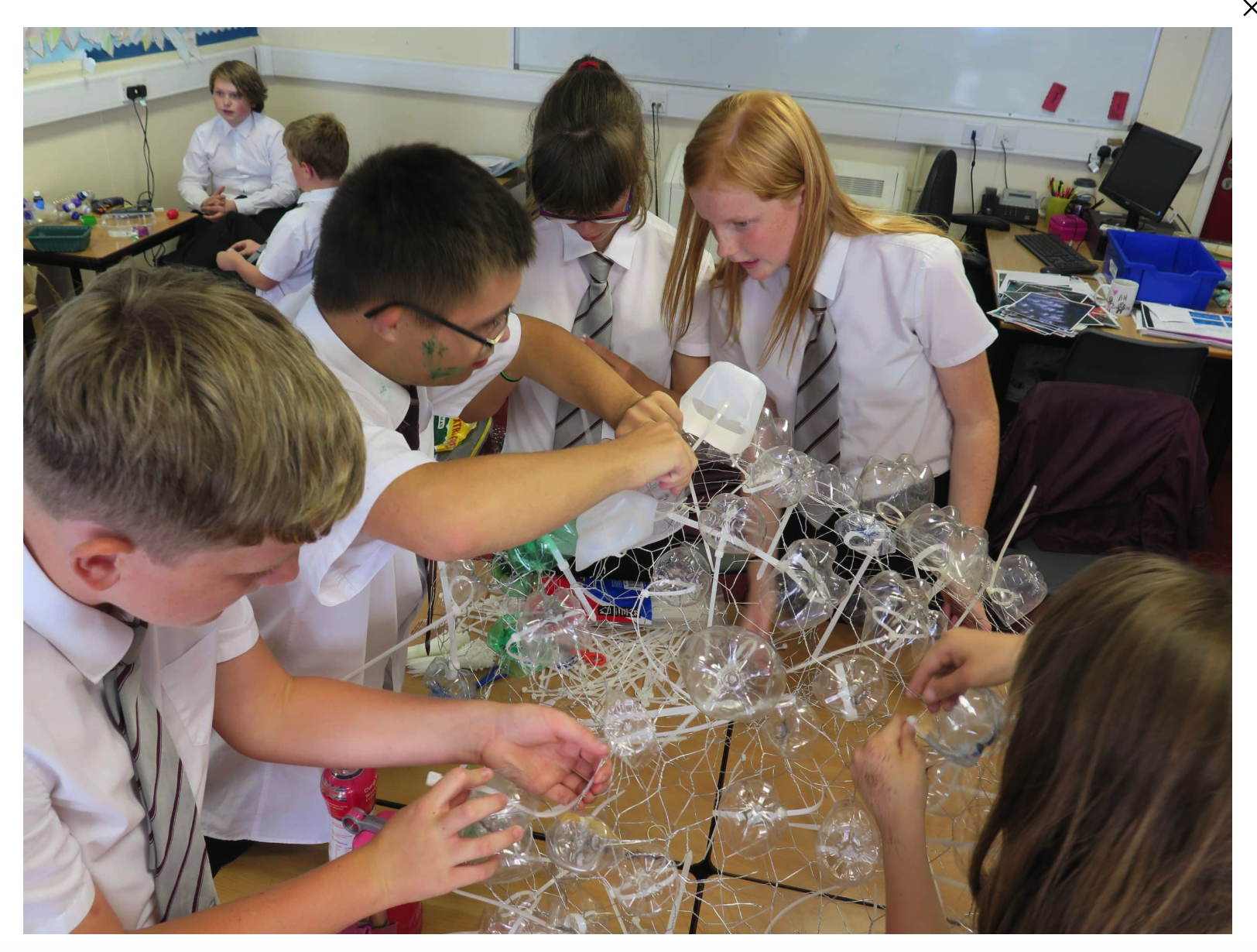
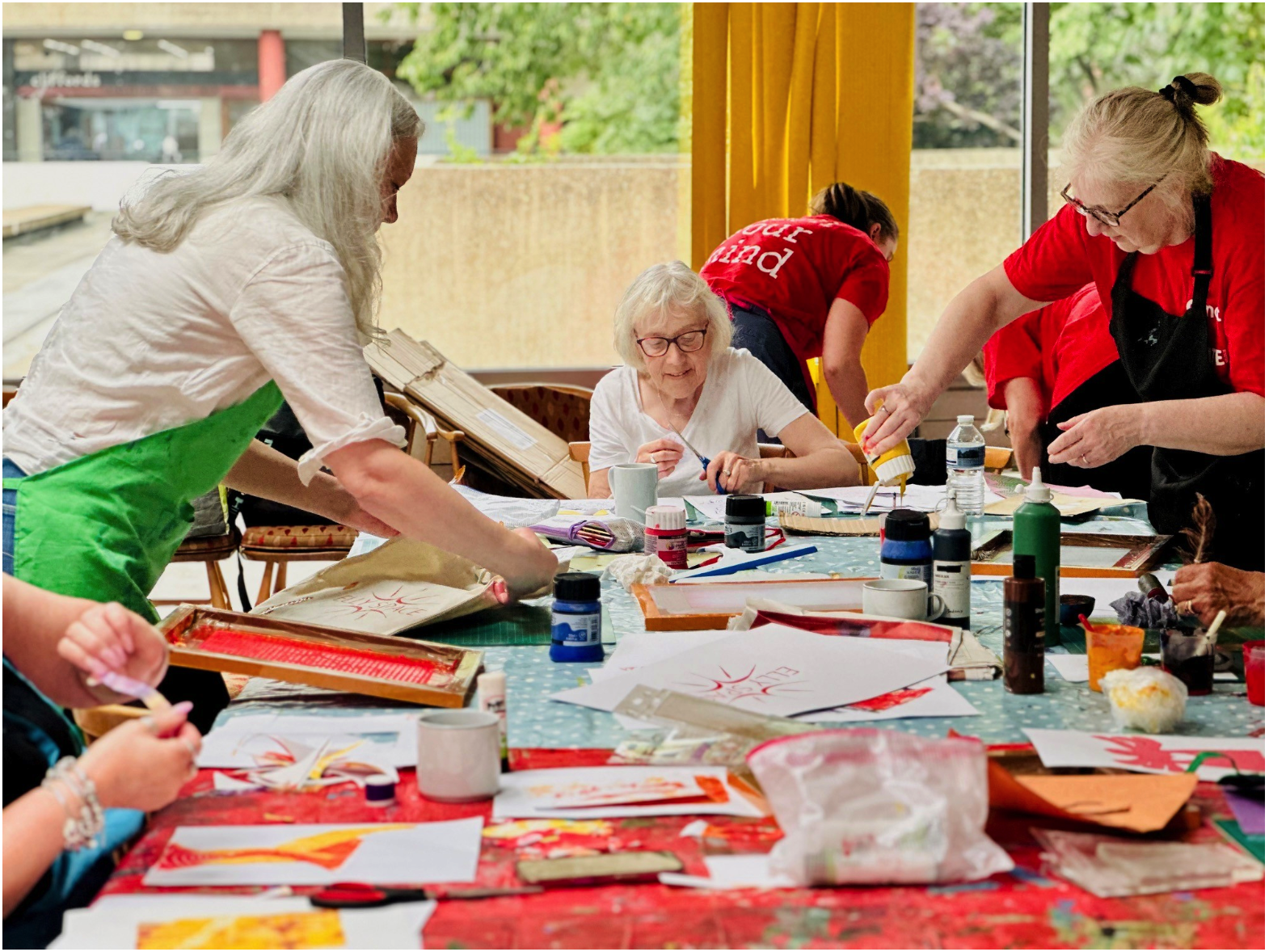
“Connectivity is a vital part of this and reducing isolation is at the heart of our work,” she emphasises. “Creativity enables people to see themselves and the world in a new way. People are often told that they’re not creative. But everyone is creative: it’s just how to unlock one’s own particular forms of creativity; and there are so many health and well-being benefits,” she explains. “There’s so much research going on now around the impact and value of the arts for physical and mental health. It makes society more connected, reducing isolation,” she explains. “And in 2023, the World Economic Forum identified creative thinking as the second most important job skill. So when we run projects with our participants, we’re giving them opportunities to build skills that are valuable both for life and for work.”
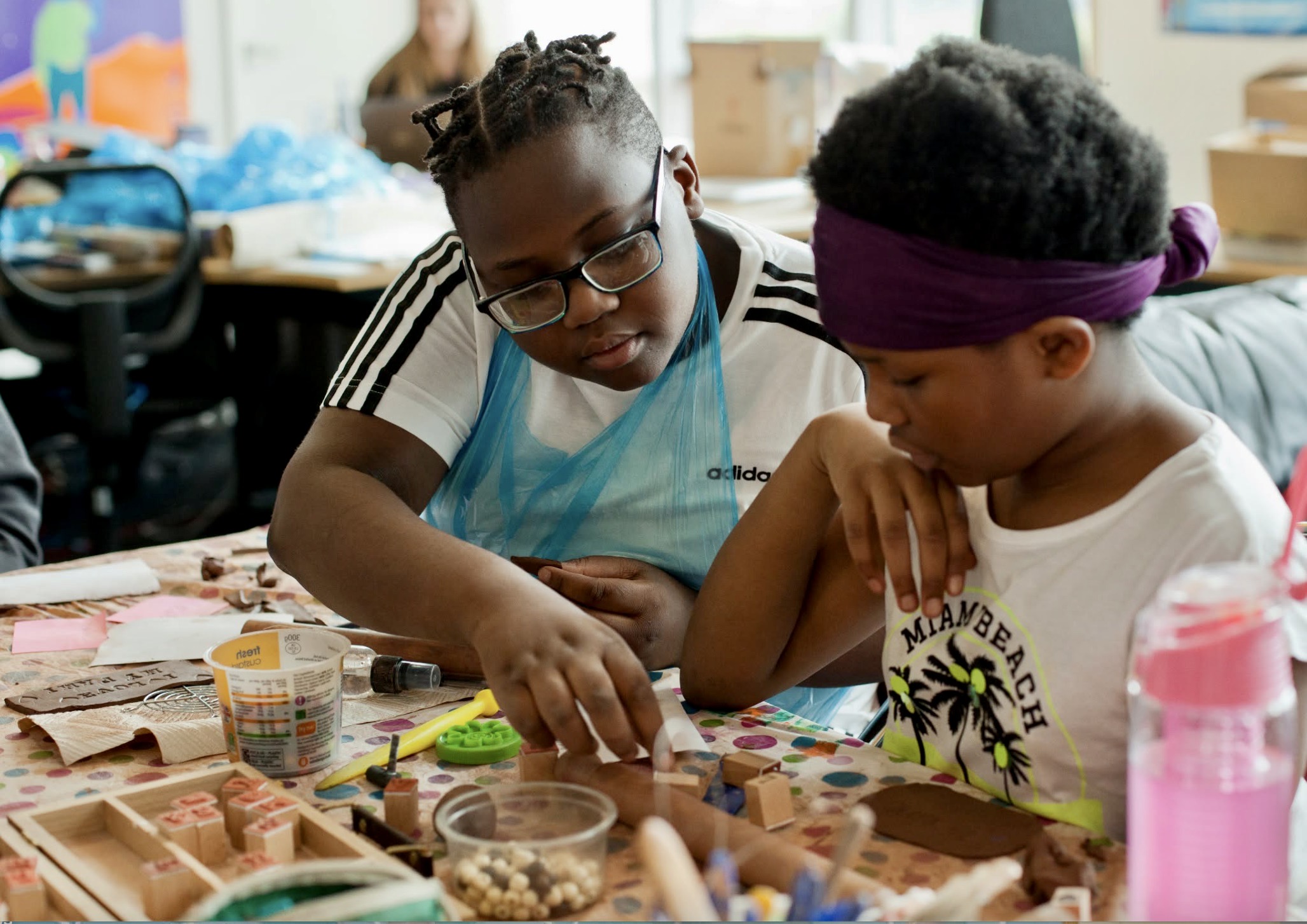
Since 2003, Create has delivered more than 17,000 workshops with vulnerable children and adults across the UK, and worked with its 50,000th participant earlier this year. “I think that’s one of the things I’m most proud of. It was just amazing to reach that milestone during our 23rd anniversary year,” she told me. “Our mantra that people need to create is at the heart of everything. This applies to everyone, but as a charity our focus is on empowering the most disadvantaged, vulnerable, and isolated people.” Create’s work has been recognised with an incredible 146 awards since 2012, including Charity of the Year in 2020 and a prestigious Mental Health Award in 2024.
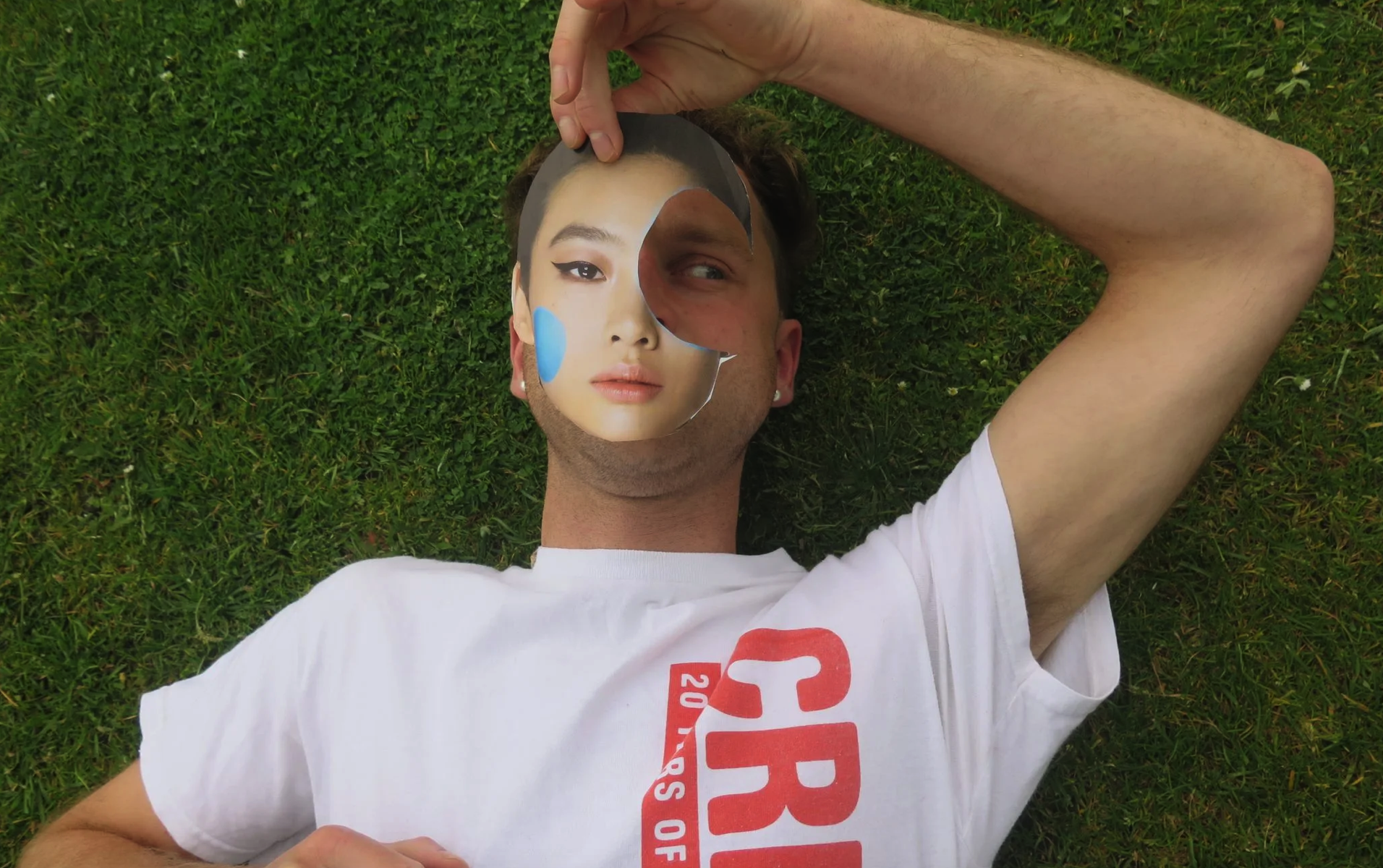
So where did Nicky’s passion for the arts come from? When she was a child, her Dad took her to the library every week and she became immersed in stories. She also went to the theatre, when money allowed, and loved the new worlds that this opened up to her from an early age. Then, when she was in her late teens, she was invited to a classical concert. Expecting it to be boring, she instead discovered a magical new world. “I was walking on air when I left, and knew I wanted other people to know about this world”, she enthused. As a result, she went to university to study marketing with arts. Following her degree, she relocated to Manchester as an orchestra’s first fundraiser. “It was an amazing experience, and one of the big blocks of funding that I secured was for the orchestra’s first education project.” She saw the impact of giving children access to professional musicians early on in their lives, that they could interact with, create with, and play alongside.
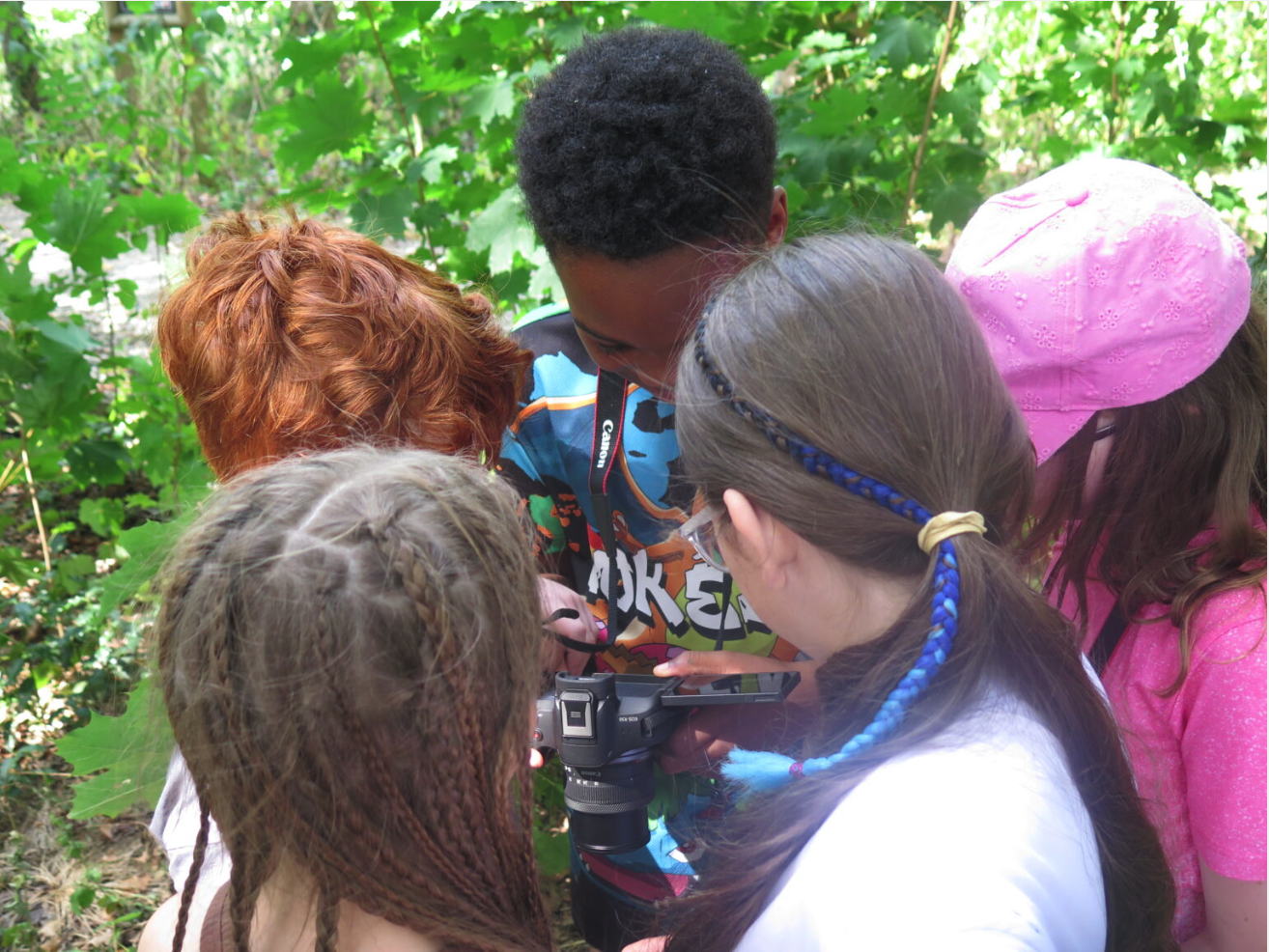
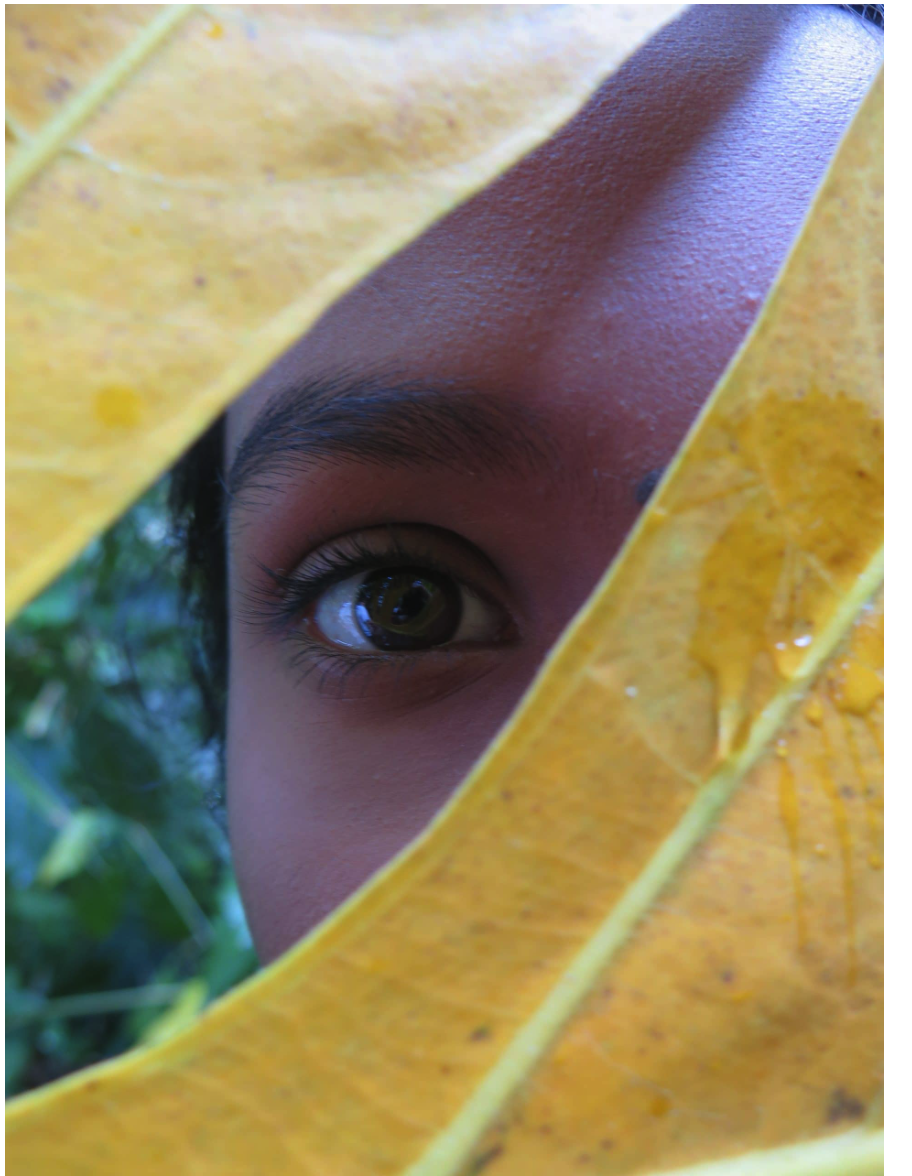
“Several years later, in a new role as Chief Executive of one of London’s orchestras, I set up music projects in prison, where prisoners got the chance to create new music and then put on a gig, and in a homeless shelter, bringing connection and a sense of self-worth to so many amazing people. I experienced the power of bringing people together through creativity and all the benefits that that brought.” Then in 2002, Nicky had a vision of a charity that would work across all the arts across the UK, focusing particularly on disadvantaged and vulnerable people. “So I wrote a business plan, went to Companies House to buy a company, and gave myself a year to make it work. During that year, I earned nothing. It was a huge step because I was already doing a job that I loved.” Create was born on the 7th of July 2003 and is now a leading charity doing exceptional work that changes thousands of lives each year.” In year six of an ambitious development plan, which included opening a hub in Manchester – achieved in 2021, Create’s current target is £1.7 million income and 1,500 workshops a year by 2028. And Nicky is already starting to think about the next five-year plan and where the greatest impact can be made in the future.
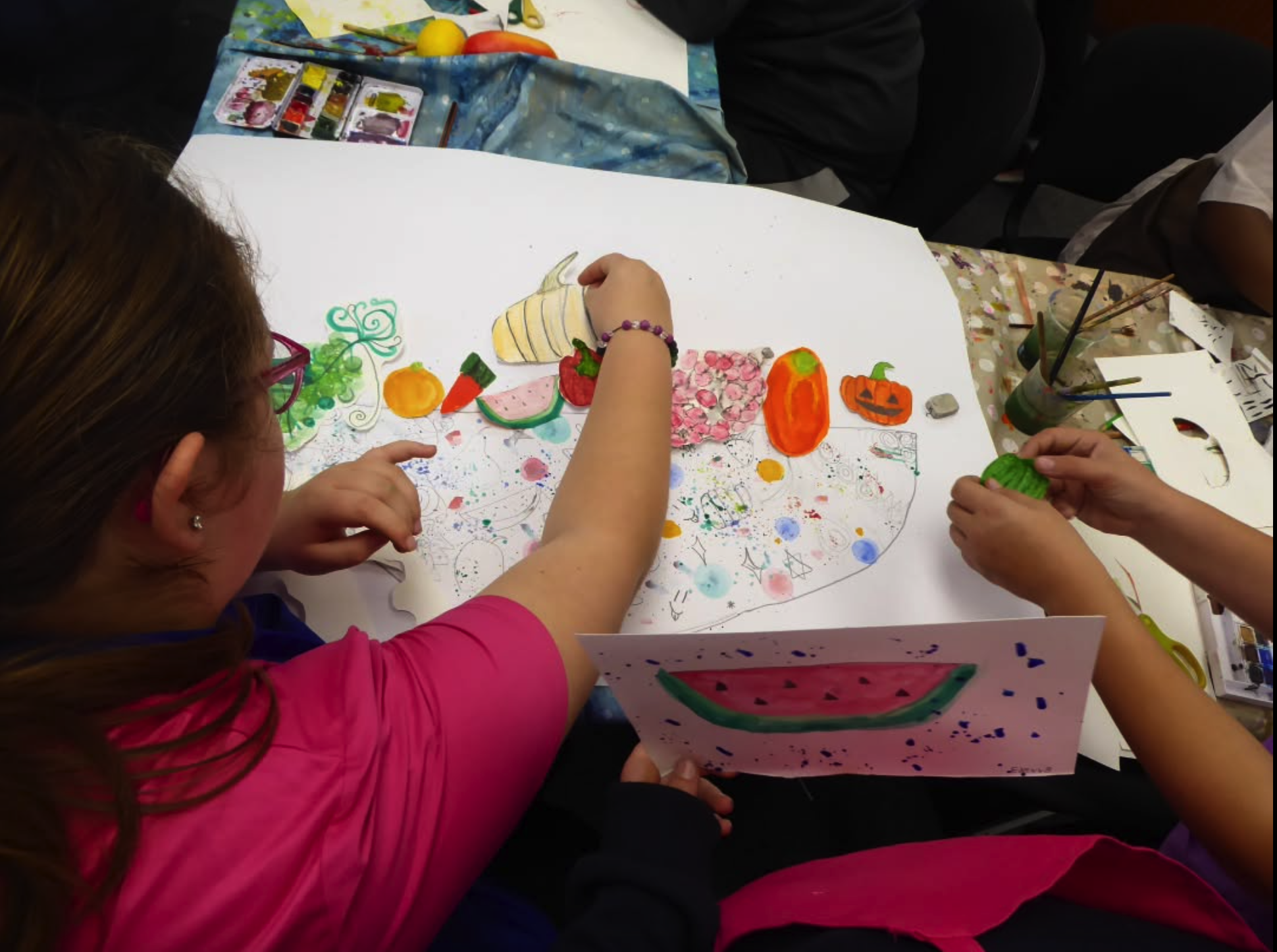
“In the early days of Create, when we were running 10 projects a year, I visited each of these. Last year, we ran more than 1,350 workshops across the UK, so I have to be much more selective!” she laughs. “But visiting the work is the most important part of my job, whether that’s sitting with a young carer making jewellery, taking a funder to see what they’ve made possible or introducing a journalist to what we do. It helps me understand the challenges our partners and participants face, the impact our projects make, and the incredible way in which our artists and project team deliver our programmes. I’m always inspired and usually deeply moved,” Nicky explains. “We’ve invested from day one in evaluating the impact of our projects, so we know what works and the difference they are making to participants’ skills and quality of life. And with artists and partner organisations represented on our board of trustees, their ideas, experiences and skills are at the heart of the decision-making.”
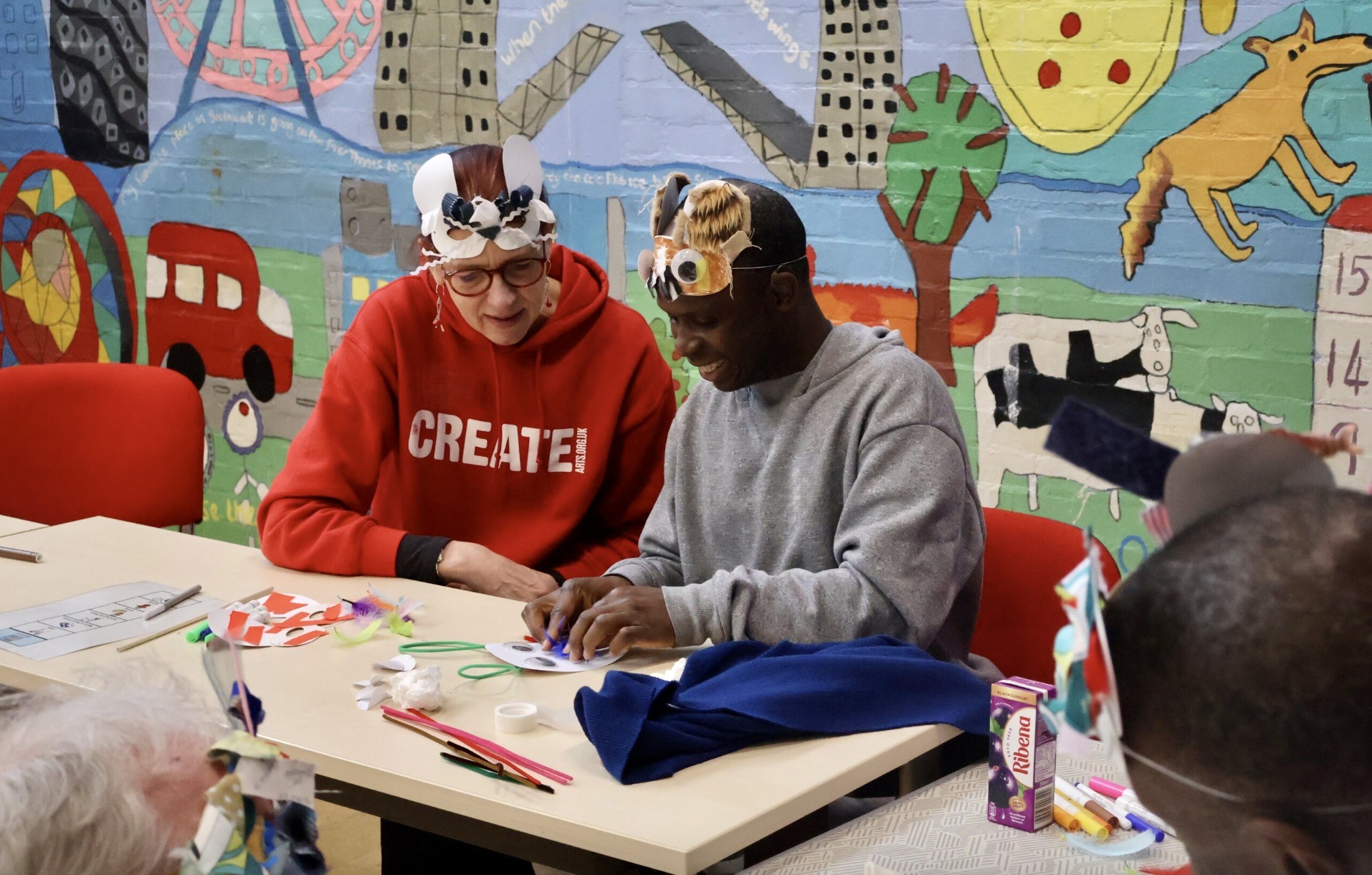
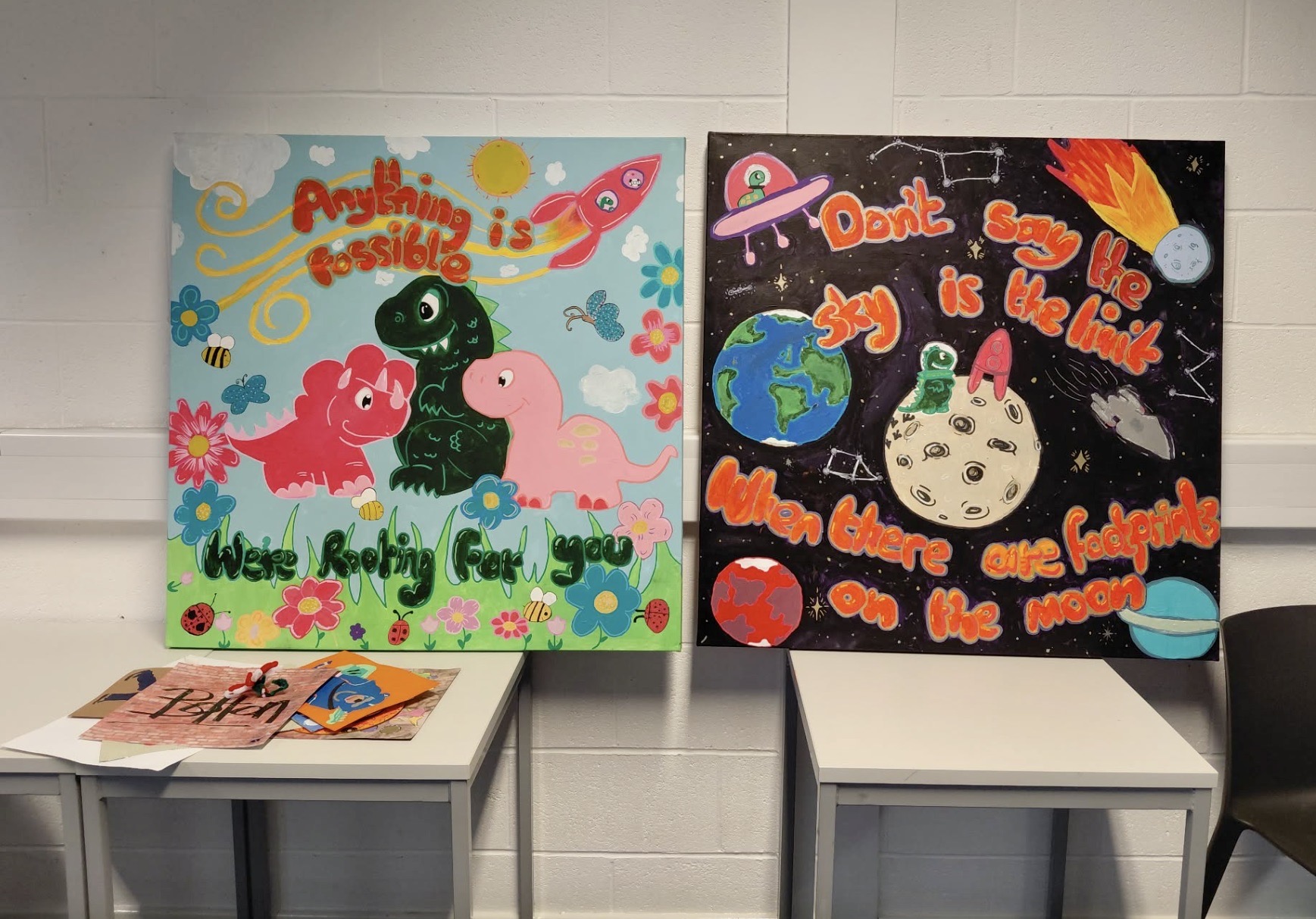
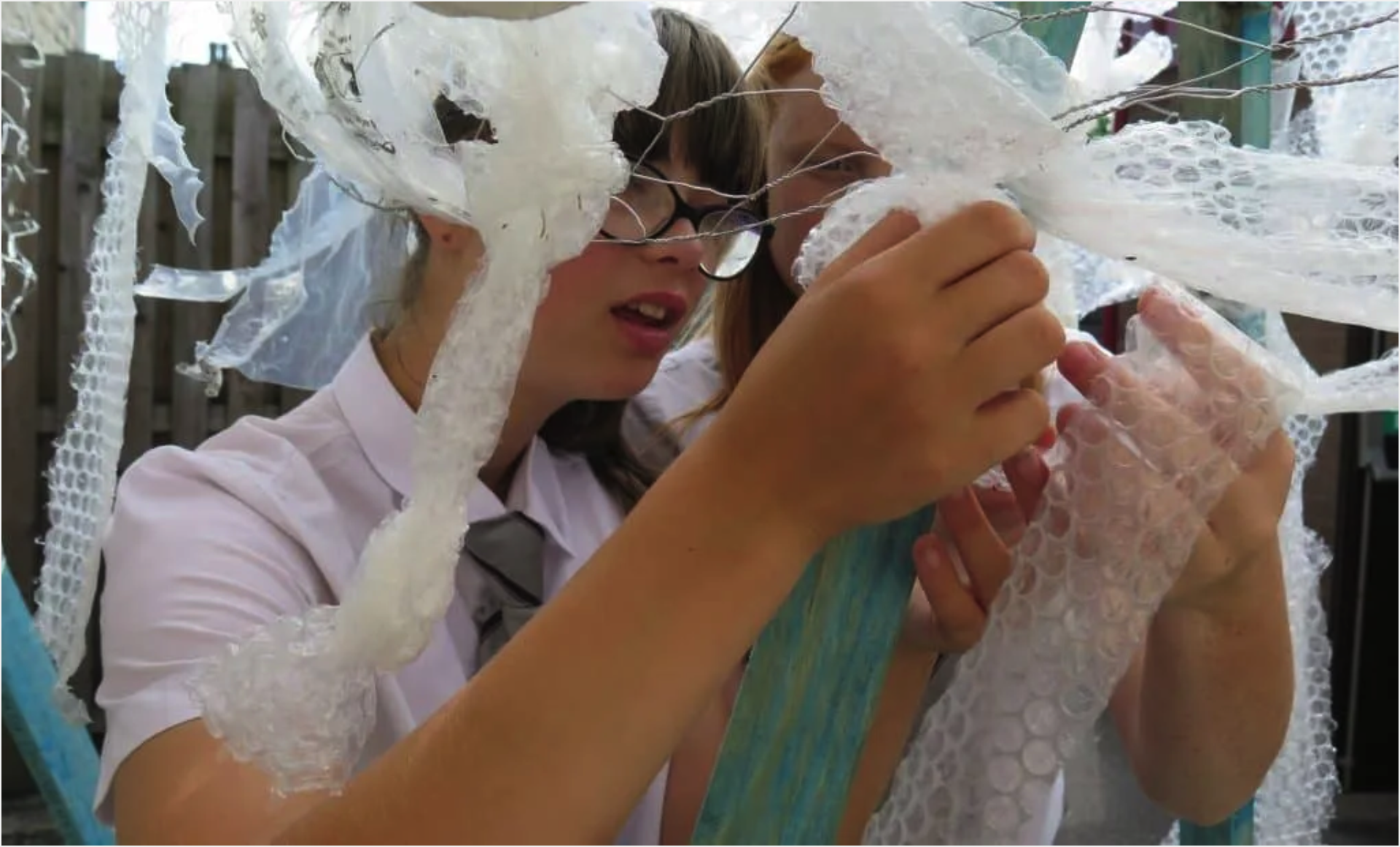
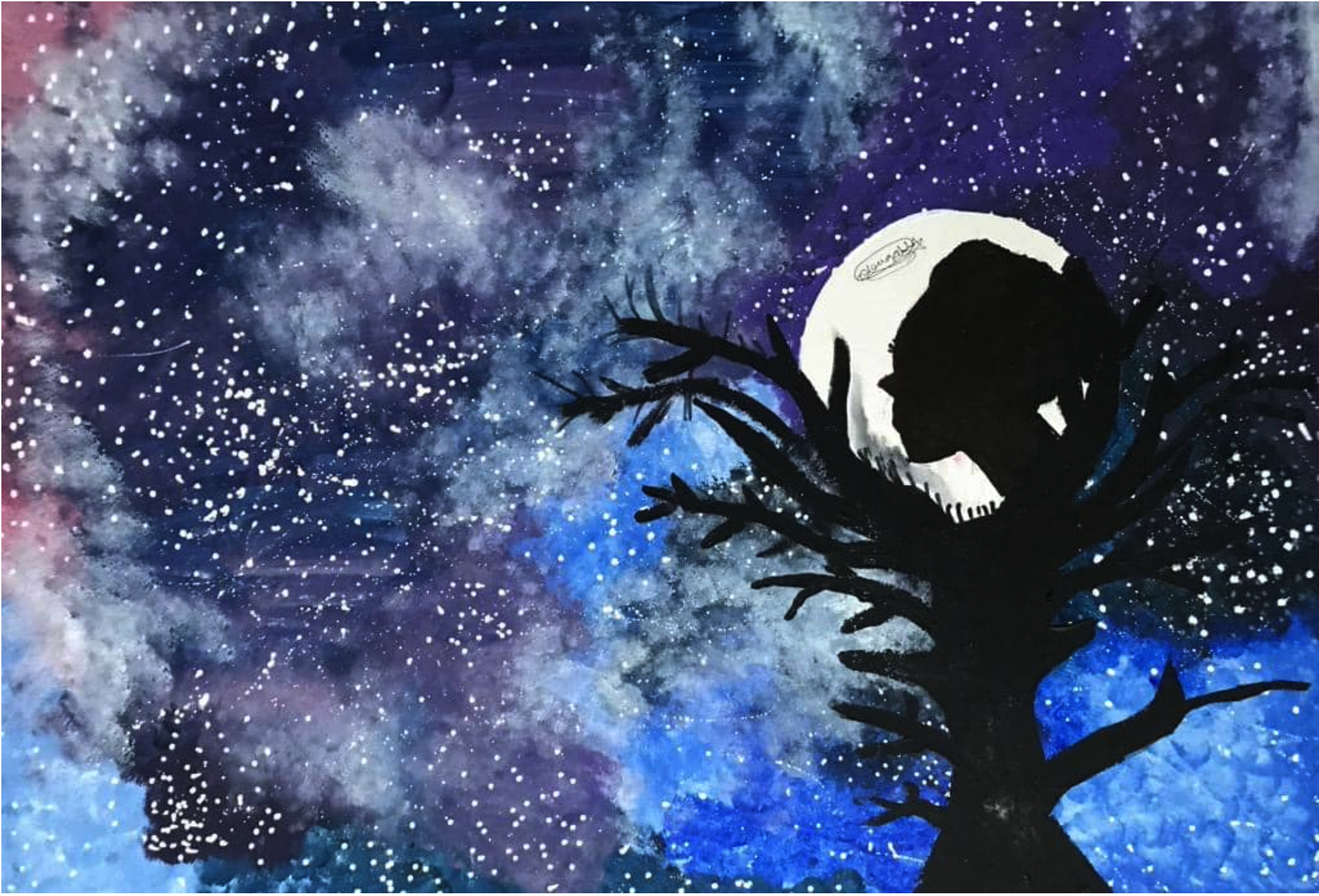
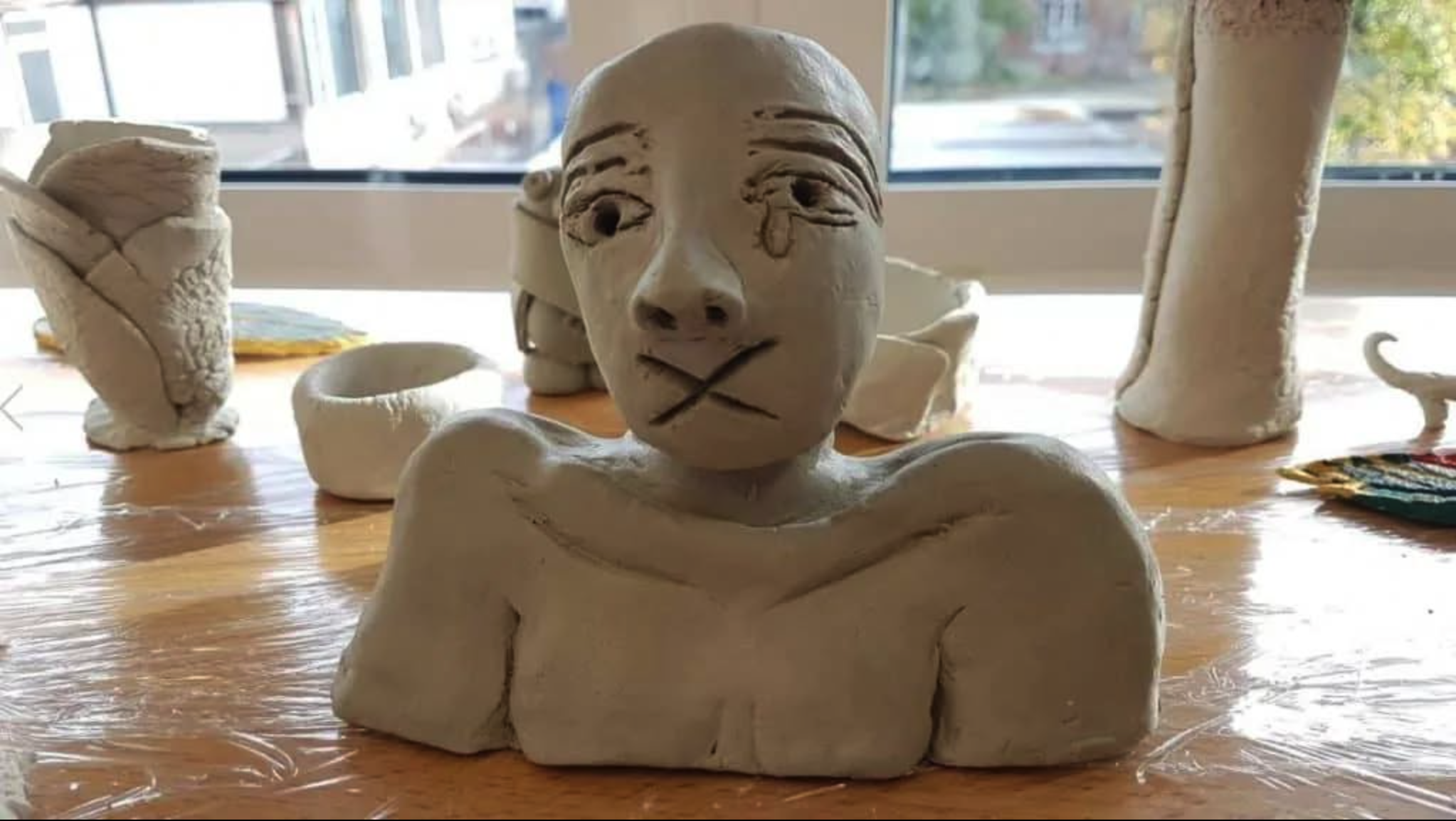
The charity’s artists combine a professional artistic practice, for example a sculptor, a circus artist, filmmaker, animation artist or musician – with extensive experience of working in challenging community settings. “Each project is run by our professional practising artists who work across 26 different artforms. We usually appoint artists to our pool who have an advanced professional practice and a minimum of five years’ experience working in challenging community settings. So our participants get to work with inspirational, person-centred artists who put them at the heart of the creative process,” Nicky emphasises. “Creativity, skill building and wellbeing are at the centre of every project, and sometimes we’ll make a specific topic the focus. ‘environment:matters’, for example gives disabled children an opportunity to explore the climate crisis through a creative lens, giving them a voice about something that matters to them. We also give young carers a voice each year on Young Carers Action Day”, Nicky highlights, “when they present their creative work during a national online showcase. This raises their self-esteem and spotlights their talents.”
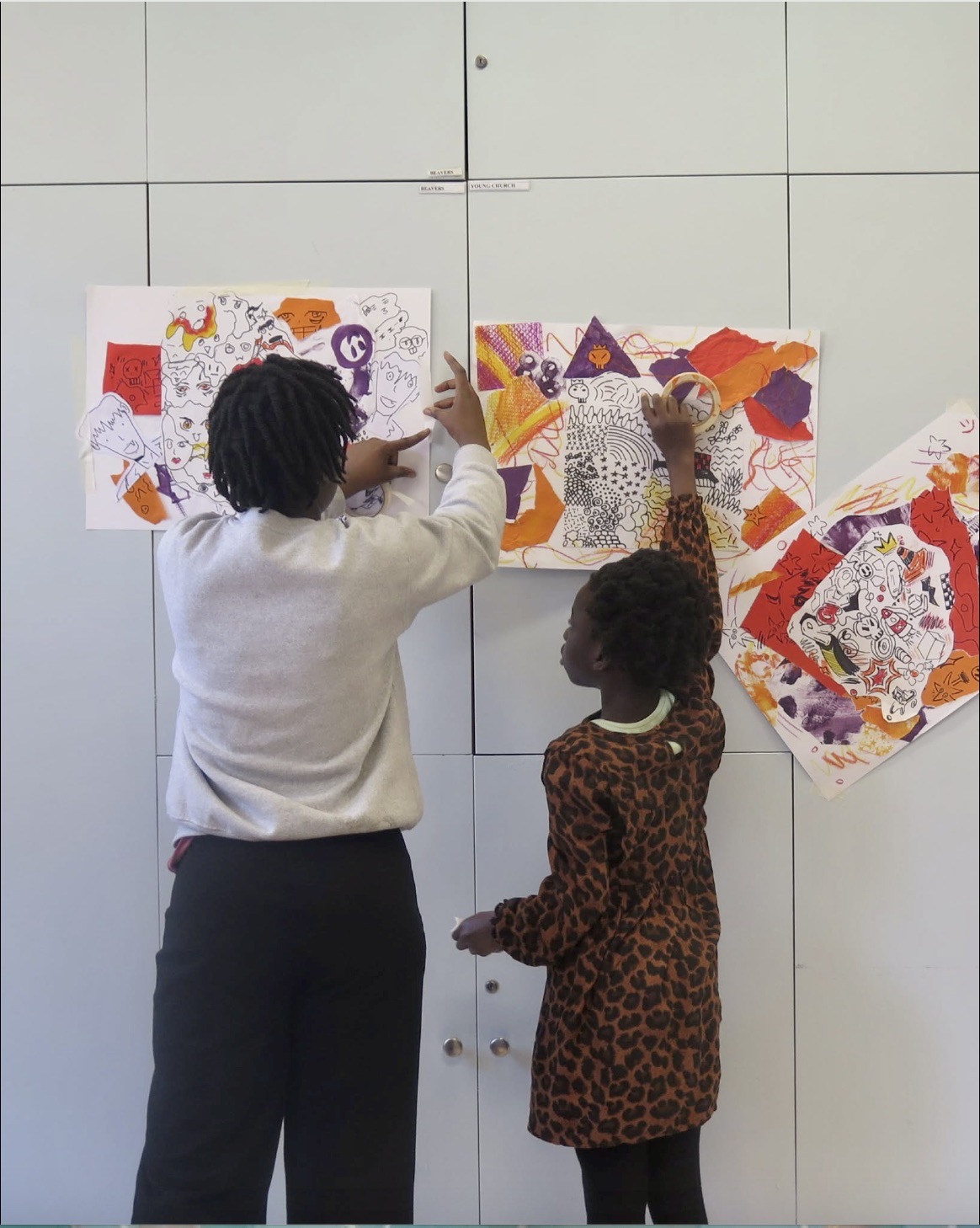
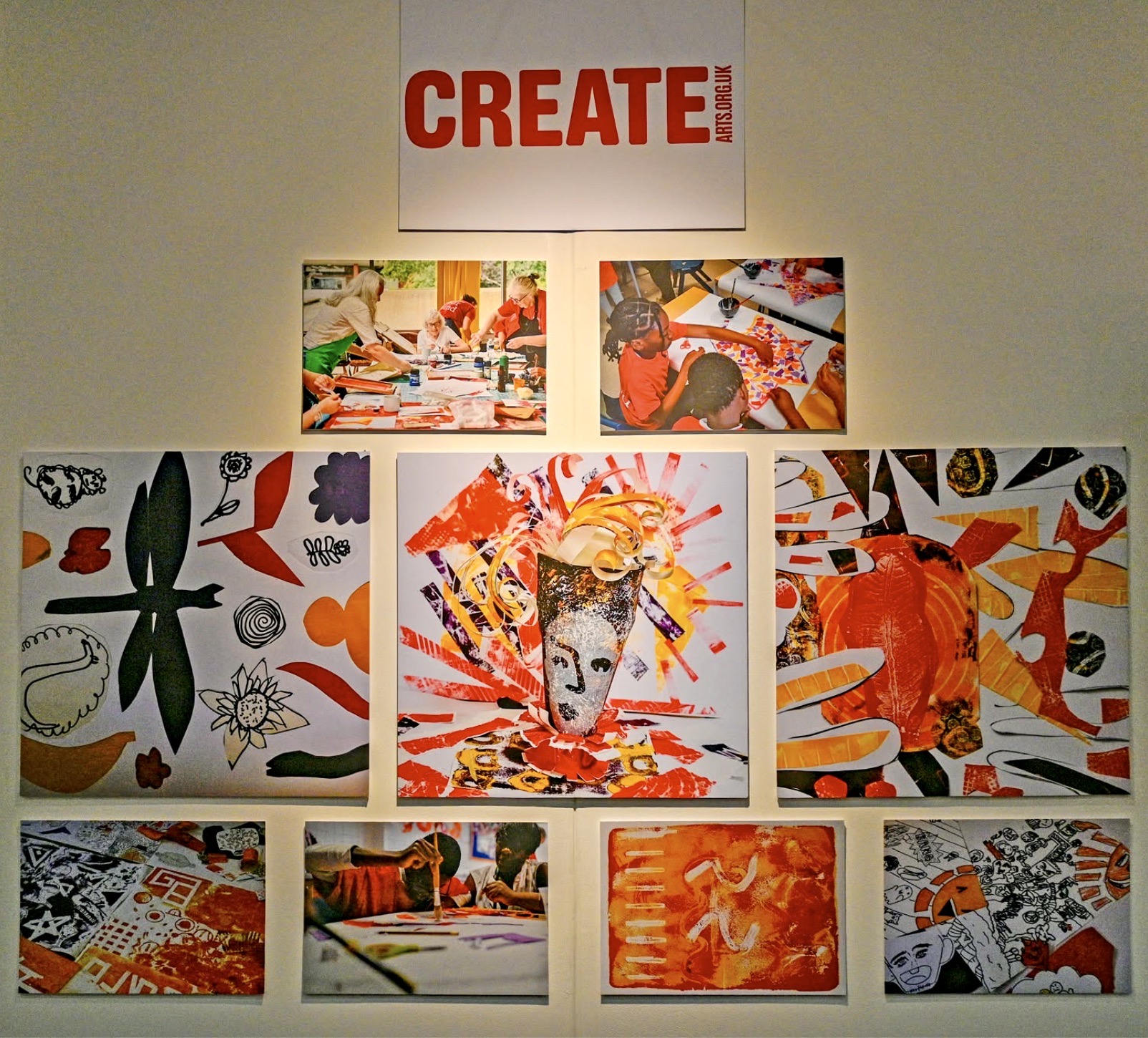
I ask Nicky about her thoughts on narrative in art and she tells me about a course she studied at university, “Aesthetics and the arts, which was basically philosophy of art.” One of the things that came up, she explains, was intentionalism: understanding the meaning of a work of art. “It was really interesting because I had studied Futurism earlier in my degree,” Nicky explains. “When I first looked at Futurist paintings, they felt very strange, I didn’t really know what was going on.” She persevered and “I just fell in love with Futurism because I learnt about the Futurist Movement and the paintings then made sense”. Nicky expands further, “On the one hand, I think it’s amazing when you can look at a piece of art or listen to a piece of music or watch a piece of dance and instantly enjoy the way it makes you feel. But then, if you think of the arts as storytelling and understand the story, that can bring out a whole new meaning and enjoyment.” She continues, “If you think about Vivaldi’s ‘Four Seasons’ and didn’t know it was called ‘Four Seasons’, would you hear the flies in the summer and the skating in the winter? I think you can listen to that piece of music and be transported by it. But if you understand the story Vivaldi is telling, you perhaps get something deeper. I think both are important.”
I ask Nicky what she would say is her biggest influence, artist or otherwise? “I love this question. I think if I had to pick one person it would be my late dad. He was incredibly hard-working and was passionate about treating everybody equally.” She describes his passion for charity work and for hospitality. “I could turn up with six friends unannounced, and he and mum would always just go, ‘oh, what have we got in the fridge?’” She explains his amazing influence. “If I think about who I am as a person, those qualities underpin that. I could pick lots of people, but my dad was very, very influential.” I then ask her what she considers perfection? “There are things that just give you that inner sense of joy, such as seeing an incredible sunset.” She reflects on how she loves bird song, things that are natural that just surprise you. “You’re out for a walk and suddenly you hear a beautiful bird.” But also art. “Probably every piece of artwork is flawed in some way, and that’s the beauty of it. You walk into a gallery and you see a piece of art, or you’re in a concert and hear a piece of music, or you’re at a dance performance, and you get that incredible sense of either serenity or excitement. Beyond that, I think for me perfection would be going to visit a Create project where the magic happens for our participants.”
This leads me to ask what factors allow Nicky to love an artwork? “I love art where it’s accessible to everybody, such as when you walk out into the street and suddenly there’s something that wasn’t there yesterday.” She references a Banksy or an art trail. “A favourite place is Museo di San Marco in Florence”, a preserved 15th-century Dominican monastery where Fra Angelico and his assistants lived and worked. “Every single cell has an original painting by Fra Angelico and assistants, painted uniquely for that exact space.” Then she mentions Giotto’s Frescoes in the Basilica of St. Francis of Assisi: A UNESCO World Heritage Site. “I love seeing artwork in the setting for which it was intended.”
We talk about the best and the worst in the art world. Nicky smiles when she tells me, “I suppose you’d expect me to say that Create is the best in the art world, when it empowers people and creates inclusion.” She repeats the Create mantra. “Whether that’s visiting or creating, where the arts are really inclusive and enable people to be self-expressive and come together to share new experiences and all the things we’ve talked about.” The worst in the art world: “I’m not a fan of anything that’s excluding. Sometimes things exclude because the price is too high, for example. And many of our participants feel that major institutions are ‘not for them’. We try to give them some of those experiences and when they’re there, they realise that they absolutely are for them.” She clarifies by mentioning a book she is reading ‘There Are Rivers in the Sky’ by Elif Shafak, set in 1840. She describes one character, who wanted to visit the British Museum, but thinks he won’t be allowed in because he doesn’t have the right jacket. “I think elitism can be problematic. I think one of the worst aspects of the arts is when people are told they’re not creative when they’re young.” Nicky recalls being excluded from the school choir because her voice ‘wasn’t good enough’ only to be given the lead in the school musical when she changed schools. “So many people are told that they can’t paint or they can’t sing, and so a whole magical world is just cut off from them. Or they can’t afford to buy the art materials that they need.”
As we begin to close our conversation, I ask her who her favourite artists are, “So I’ve got a few favourite artists! David Hockney was constantly innovative.” She lists his paintings, photography, tablet art, and collaborations with the music world by designing elaborate sets and costumes for operas and ballets. She then mentions artist and designer, Yinka Illori, having met him recently; and non-visual artists, Nils Frahm, a German musician and composer, and dancer and choreographer Akram Khan. “I love his work, he is very experimental,” She recalls the first ever contemporary dance she went to see. “I was just converted.” A collaborative show at Sadler’s Wells, ‘Zero Degrees’ with Khan, sculptor Anthony Gormley and musician Nitin Sawney. “I loved it so much I bought tickets to see it again the following night!”. I finish by asking her if she could own any artwork, what would it be? “It would definitely be a Hockney!”