Abigail Leach
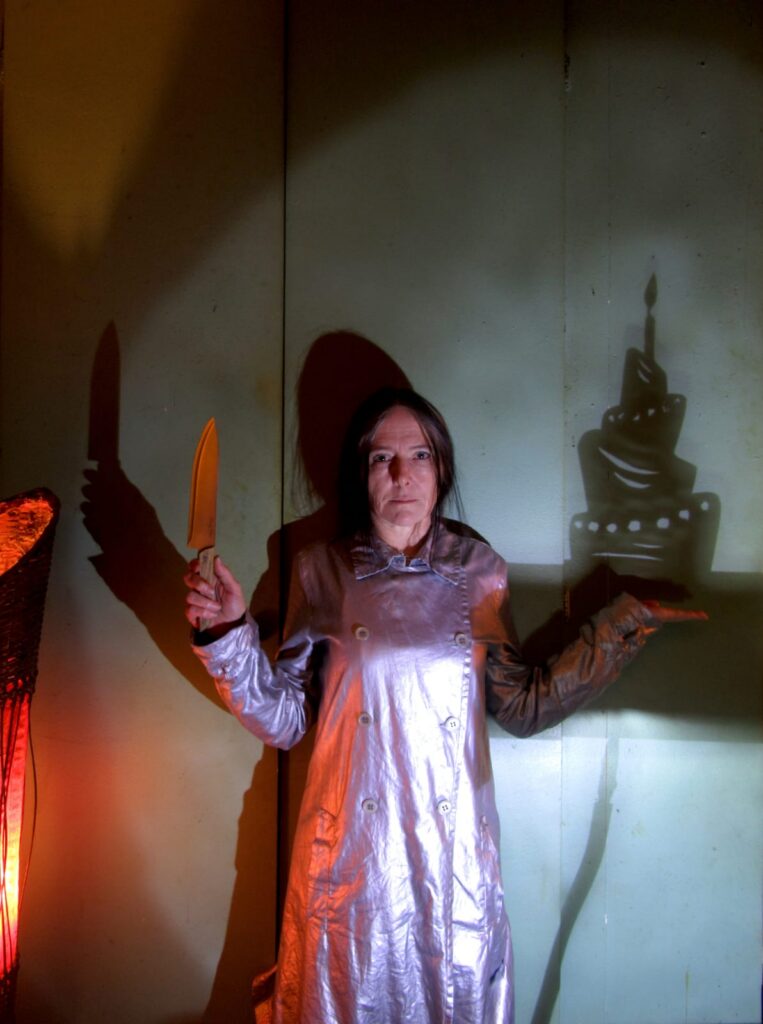
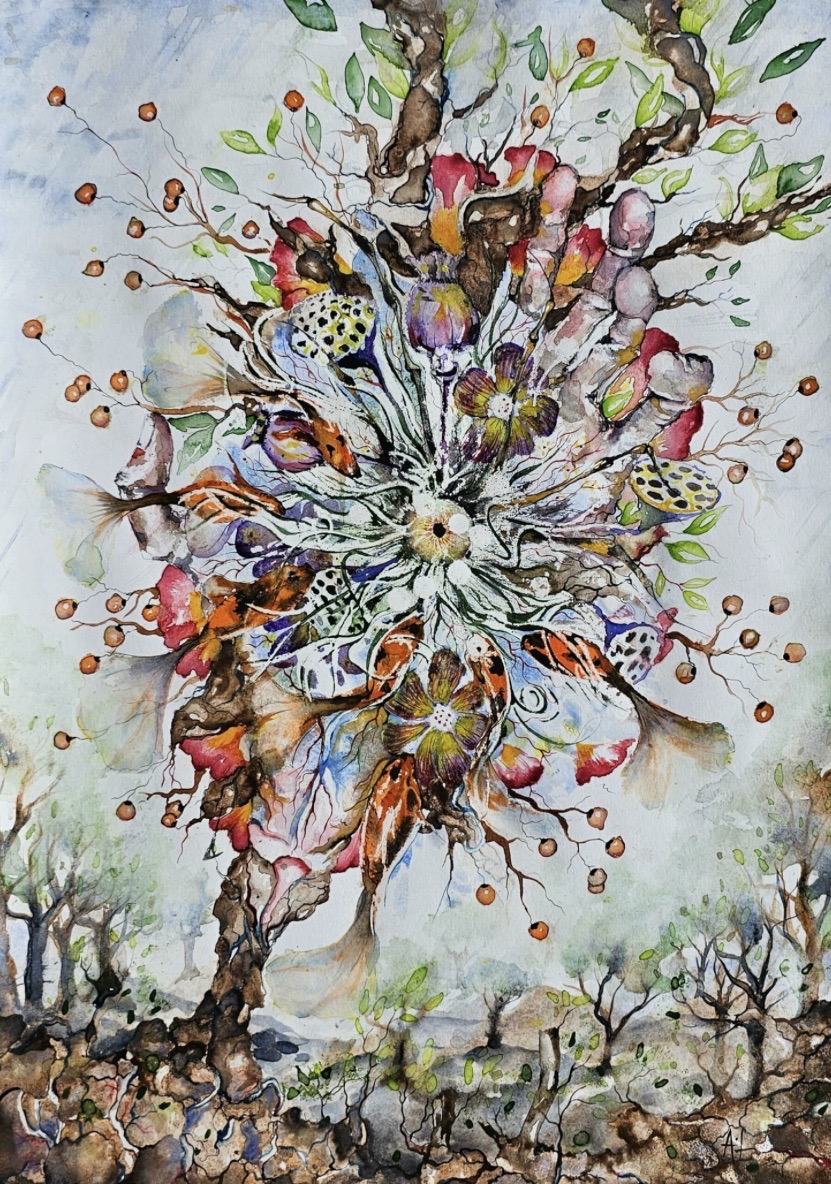
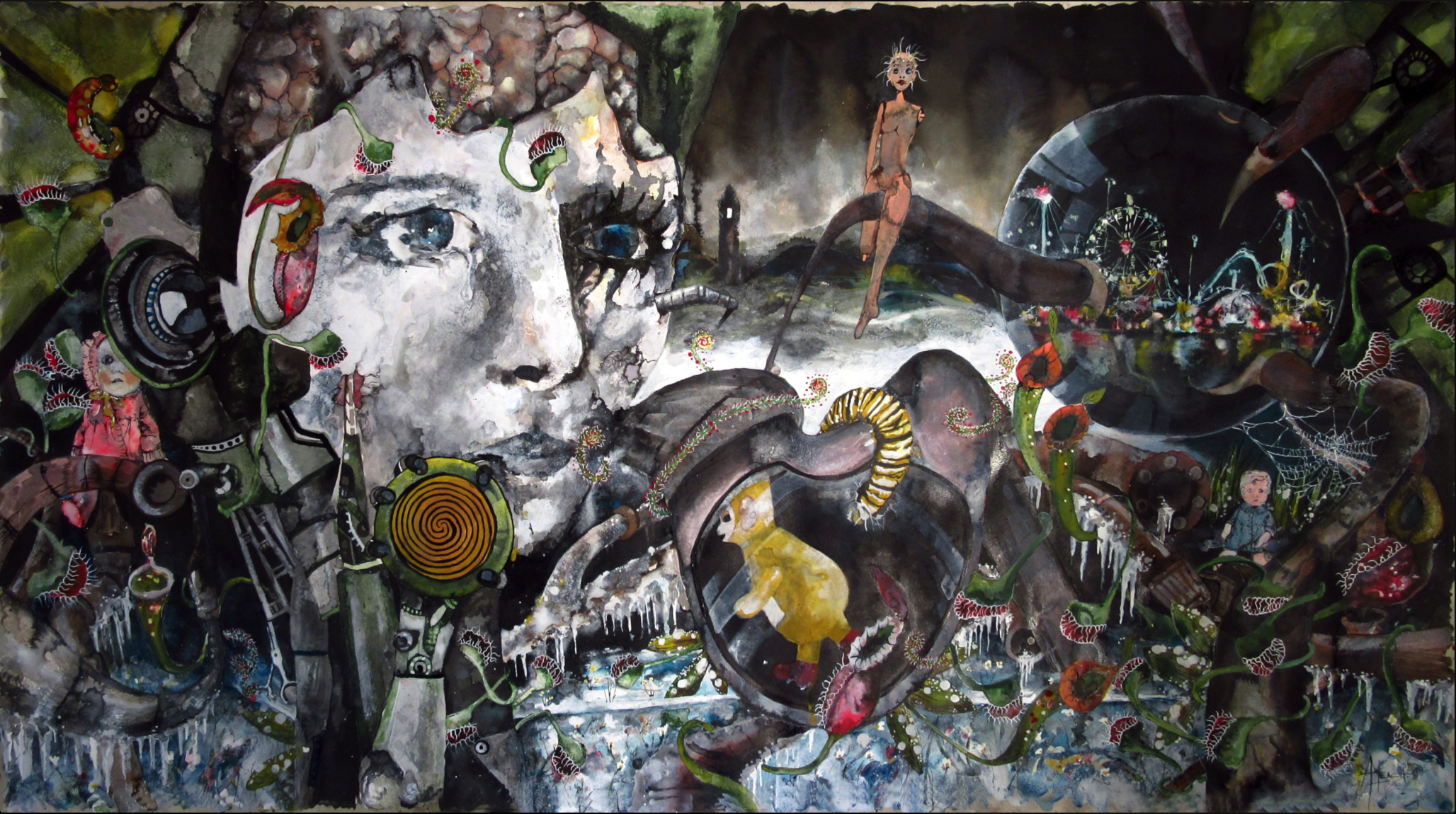
Abigail is a mixed media artist working with watercolour, gouache and gesso. She described her work as constantly evolving, and metaphorically, that’s what one experiences when viewing her paintings. Her paintings depict a sort of post reaction to something, portraying the chaos of thought, and as we try to rationalise, so do we try to analyse our thoughts to make sense of them, unravelling a logic of things. That has become an evolution, much like the quest to understand things goes further and further, with missions to travel out into space. Conquering countries and starting wars, the consequences are what sometimes misalign humanity, and with everything, there is an act of rebellion. Abigail’s paintings emphasise this puzzle of humanity, not just for herself but for us, with our own interpretation. Her paintings may be depictions of her own subconscious dreams or psyche however, when perusing her works, one can’t help but notice how they also allude to what has been referred to as Fantastic art, how it depicts the non-realistic and mythical, which is representational and depictive instead of abstract. “I’ve always paid attention to my dreams; as far back as I can remember,” she elaborates. I do remember, even in my early teens, having a dream diary,” she tells me. Abigail then defines how she is fascinated by how a dream world is so surreal, “How our minds play things back to us, this element of explaining things to itself in such a surreal way” she tells me.
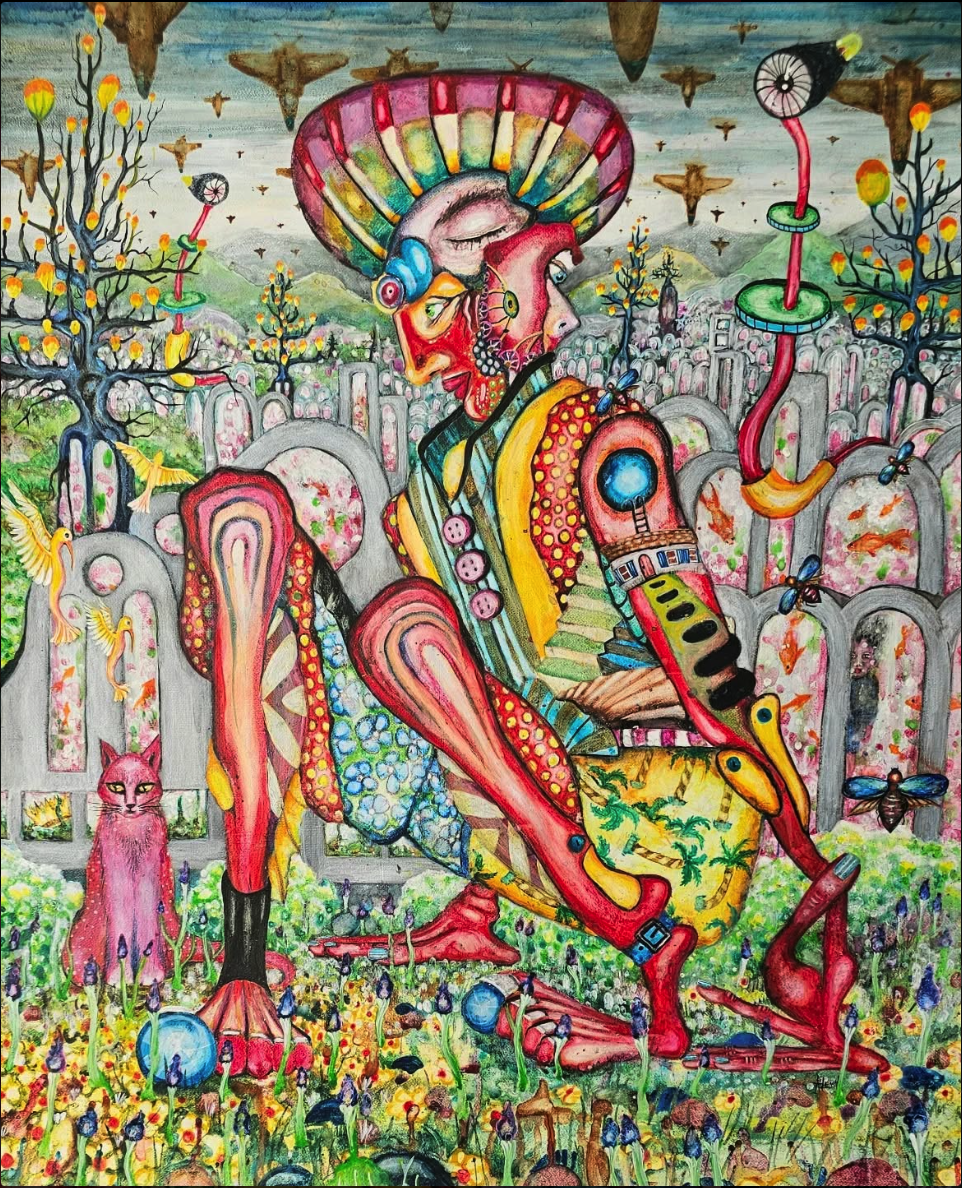
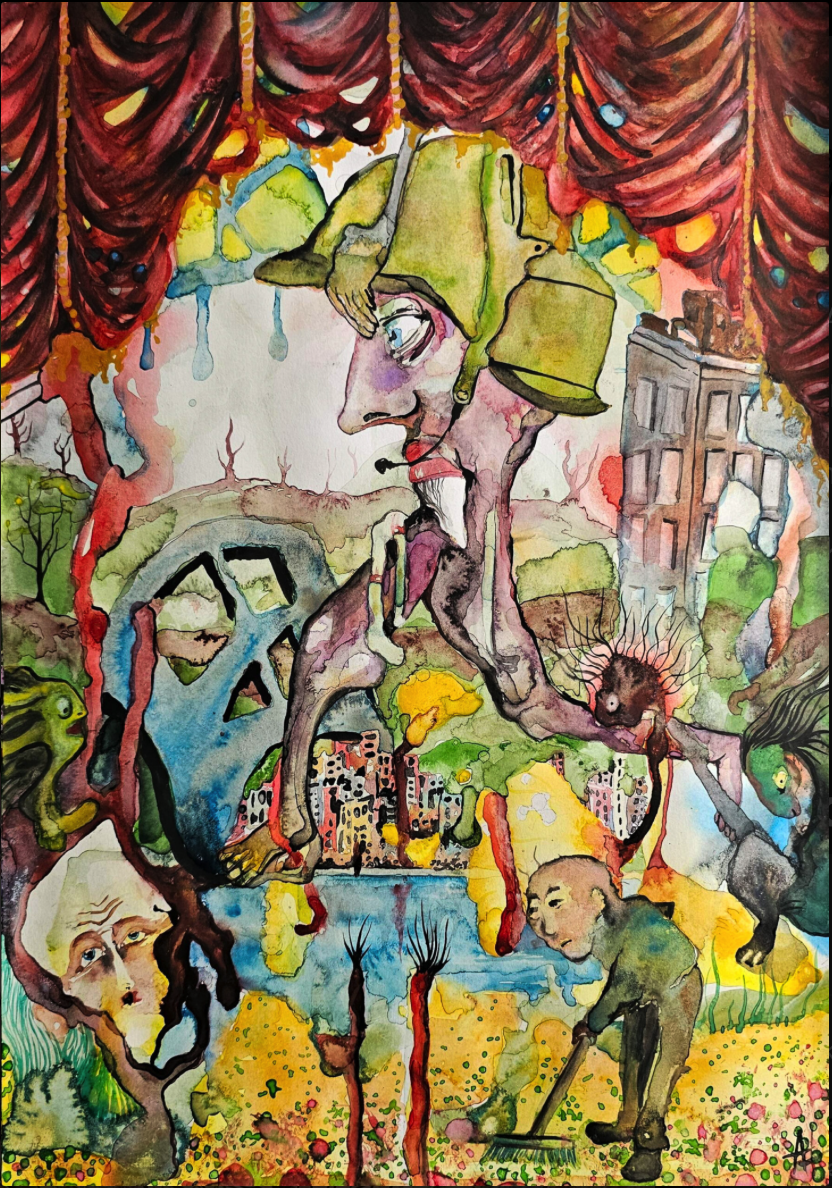
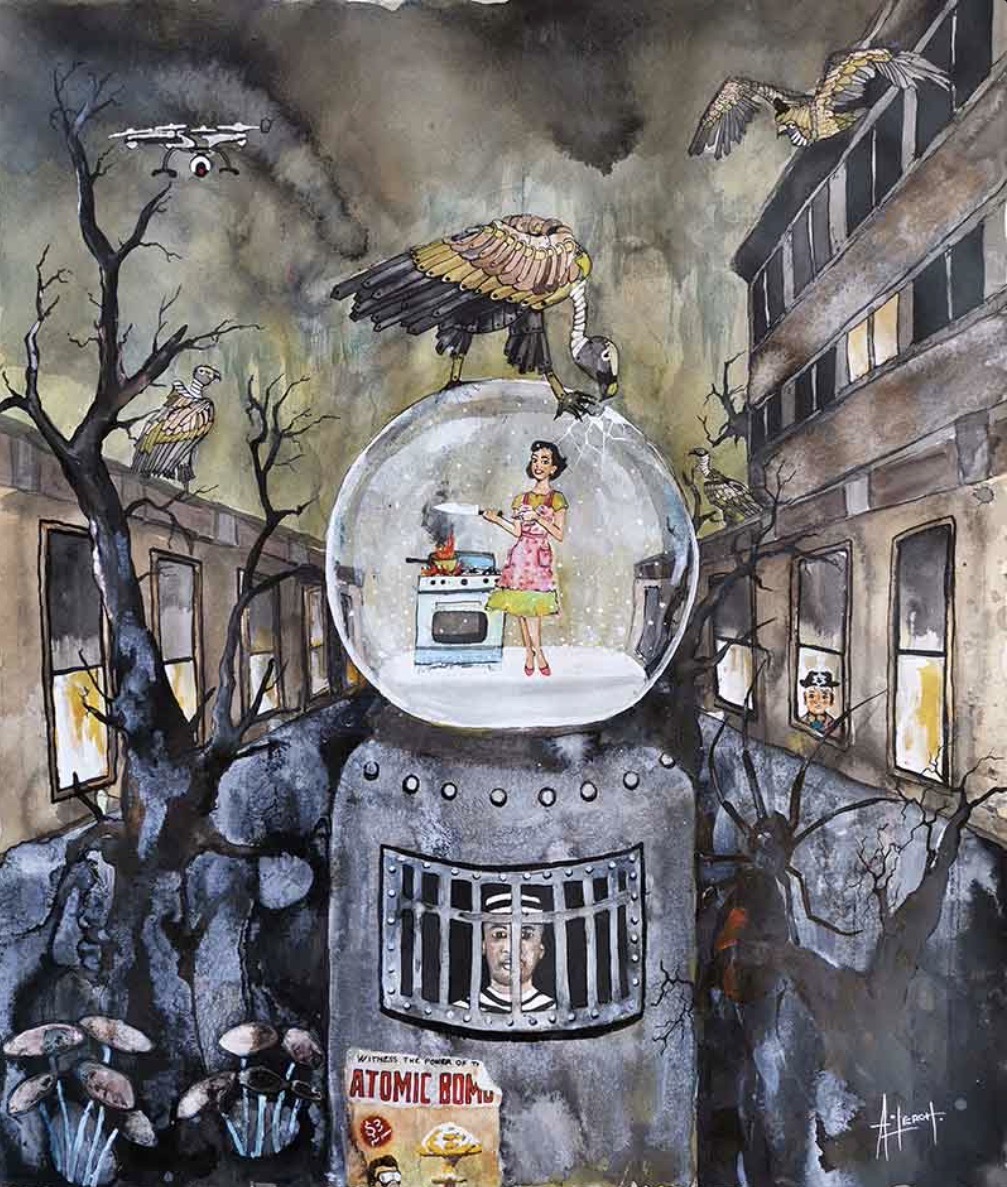
Abigail was introduced to me by Art Eye Gallery in South Africa. She was born and raised in the country during apartheid, she has witnessed racism and all sorts of prejudices. Her parents separated early and Abigail recalls moving home and spending her time backstage at theatres sets with her mother and stepfather who were both actors. Her parents’ move included living and running a farm. Abigail, describes her parents living the dream, the reality with the responsibility of animals was quite different, “It was a cultural shift for me, about to enter my teens, and coming to the countryside from the world of late night city theatre” she tells me. She also talks about spending large chunks of her childhood with her grandmother an art teacher and an artist herself. She describes the influences of being given paper and paints and encouraged to paint with her cousins. She recalls at school being told that she can definitely draw, and after matriculation, encouraged to go into graphic design, that way you will at least make money, she was advised. Abigail was getting the praise at school when she was being told she was able to draw, and she was asking herself what does that mean? “How do I achieve that out there? And in a weird way it became an intimidation” she emphasises. “So yes, I often would look at other fine artists and think, I’d love to, but it’s not for me, you’ve got to be a certain kind of person”.
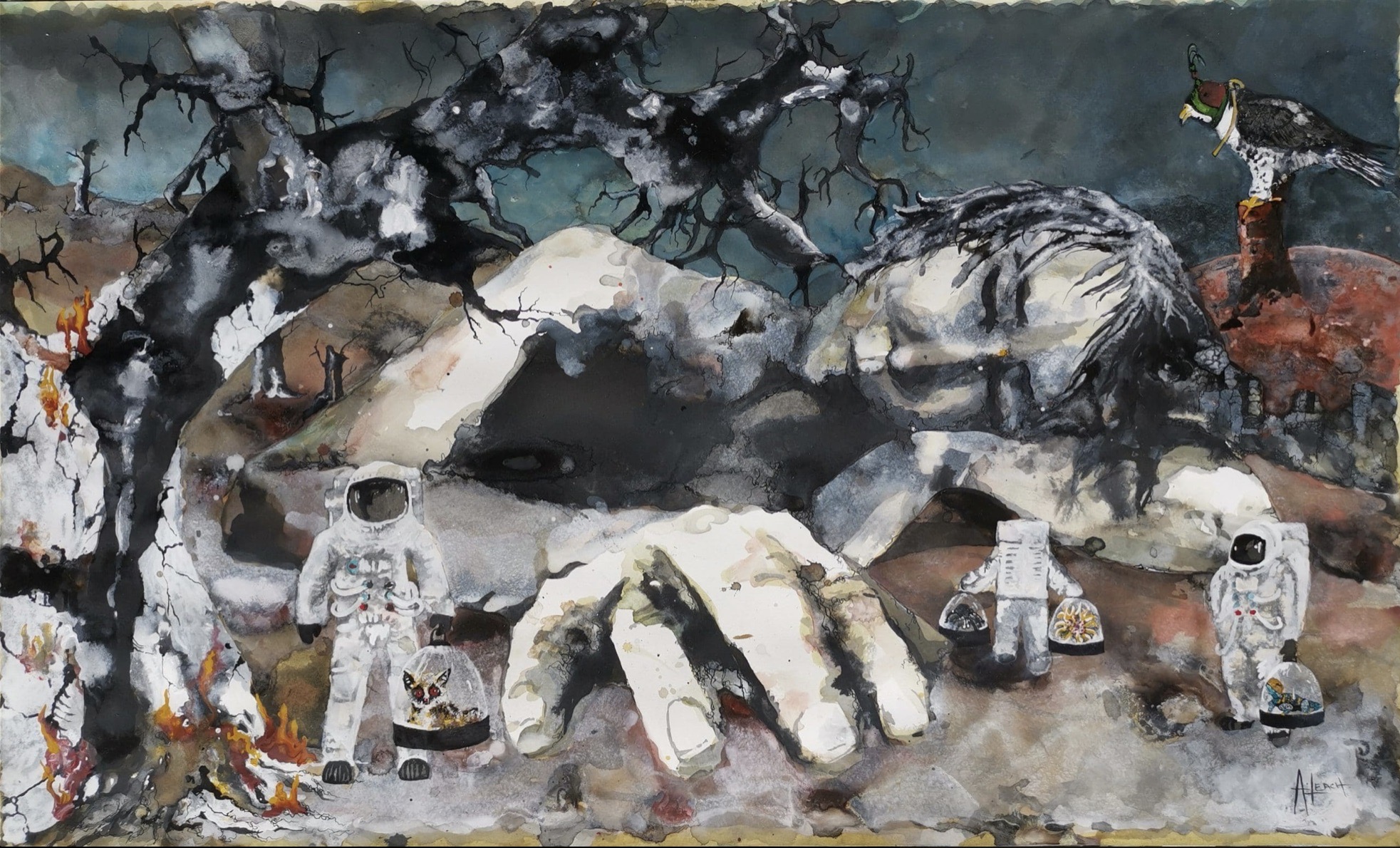
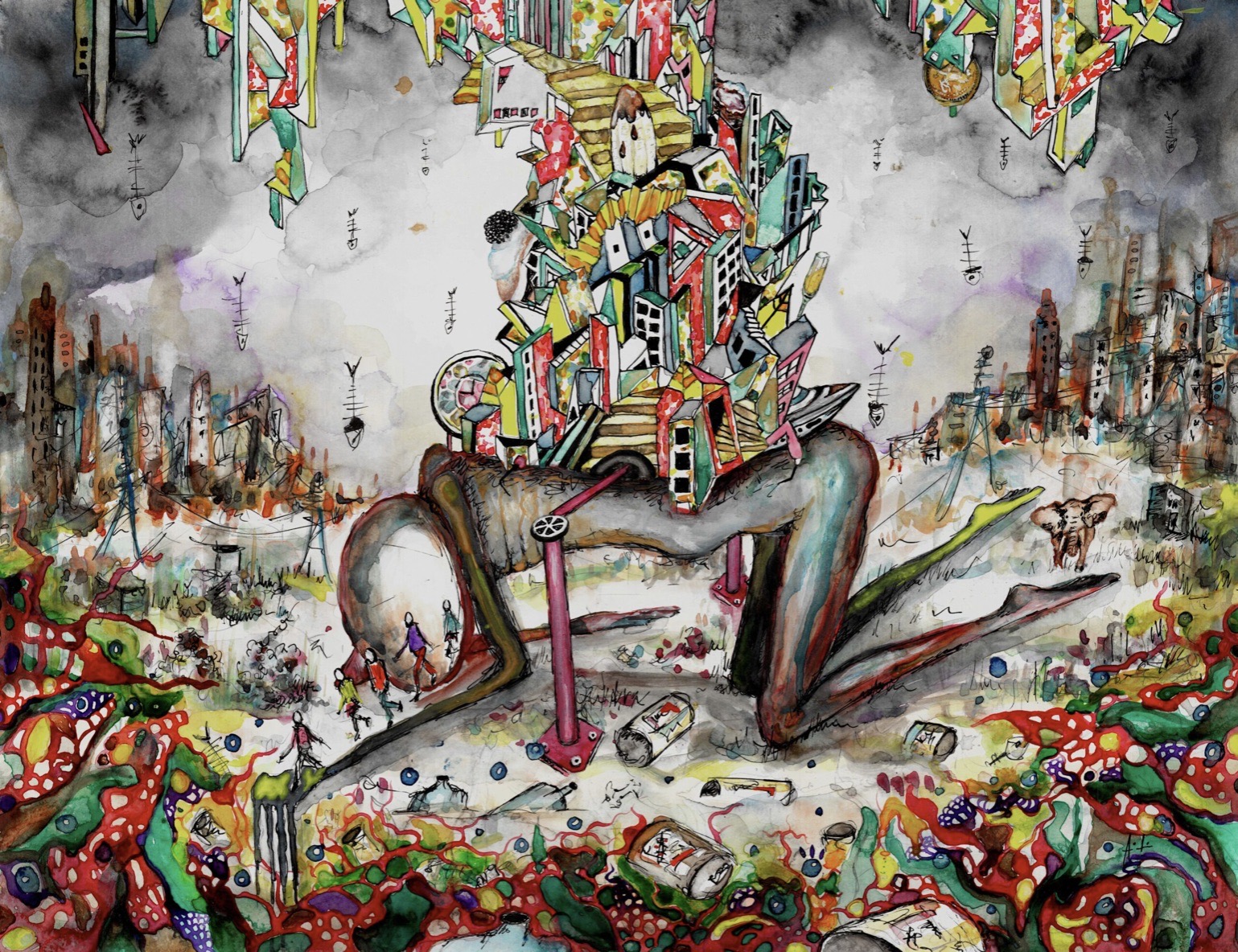
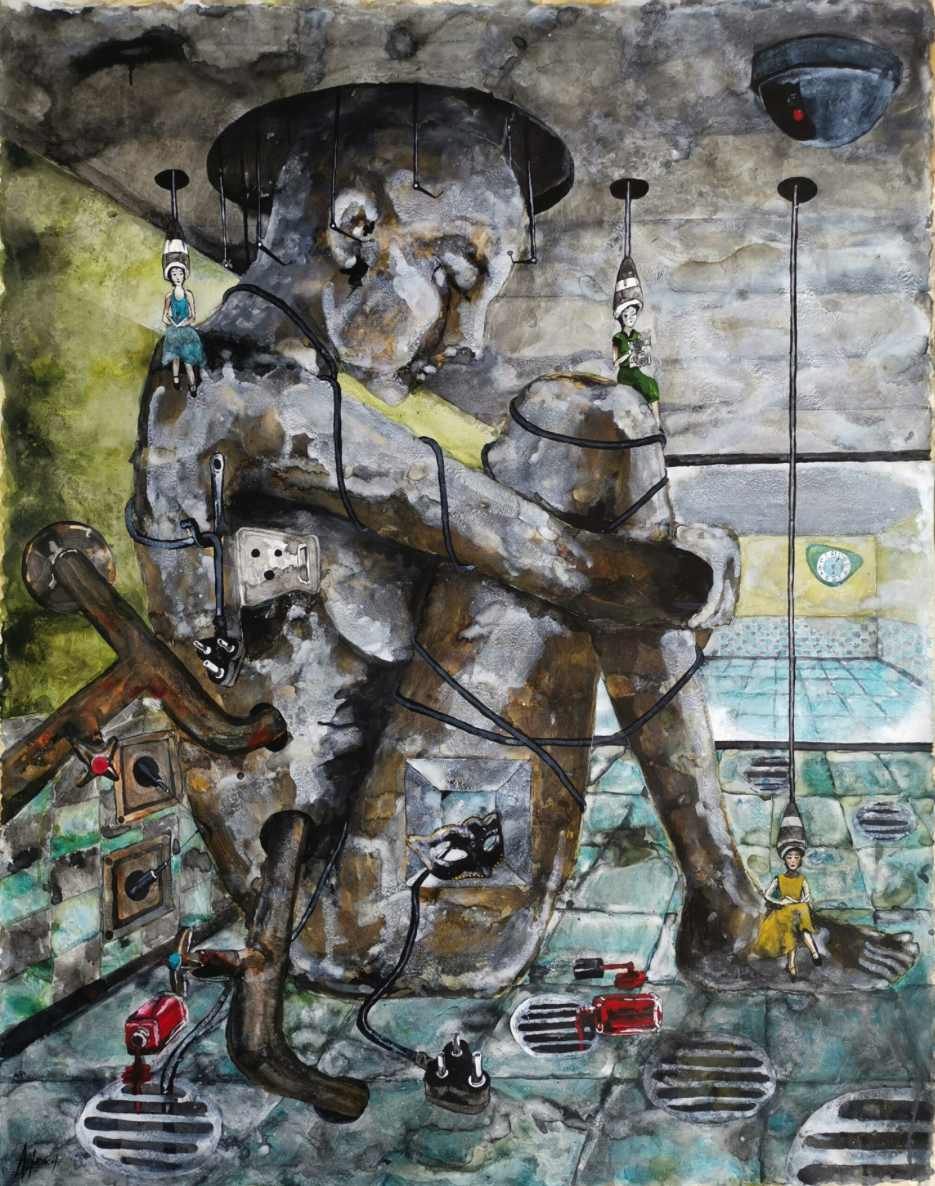
Her father a prominent film and theatre director, painted as well “He never painted professionally, but he painted for himself, and he was very good” Abigail emphasises. As I am trying to unfold the history of Abigail’s life, and her journey as an artist, she explains she been painting all her life, but that it was only the last eight years that she became professional. “No matter how hard things are out there, there is always an opportunity to learn something”. She references a poem by Mary Oliver:
Someone I loved once gave me a box full of darkness.
It took me years to understand that this too, was a gift.
She explains that life took hold, her children, her divorce, along with a career in advertising, which she felt wasn’t for her. So a lot of unraveling psychologically, Abigail explains. It was getting together with her closest friend who became her partner 13 years ago, who is an artist himself, who said, “You definitely are an artist.” She explains how he gave her some great advice, not to show anyone the work until she was ready, this took about a year. “It gave me internal permission to find out who I was an artist, but I painted, and he was the only one who saw those works, and I just put them away, and what that taught me was to keep going, to keep going without any feedback, to keep going without any praise.” She explains that it was because of praise when she was younger. “It’s the attention; it can be a little difficult” she emphasises. “Keeps you where you are, rather than moving forward where you need to go,” she continues to explain. “Because it’s not really about praise, it’s about you, you also paint for yourself, you paint for others but you are painting for yourself” she clarifies. What her partner taught her is to keep the momentum, doing it for yourself, “You must live like an artist”. She explains that as a poet, filmmaker and musician, he is an artist himself.
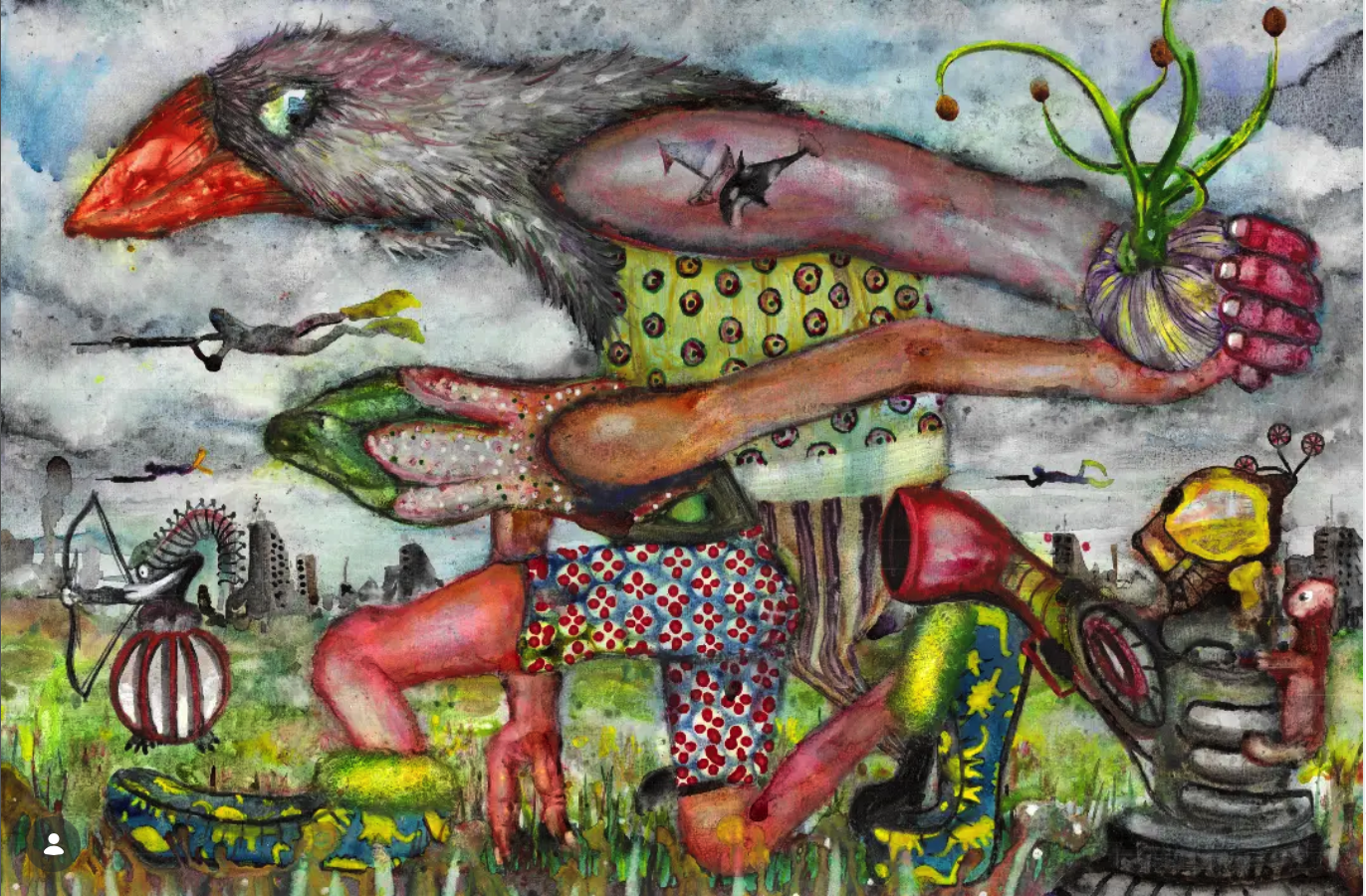
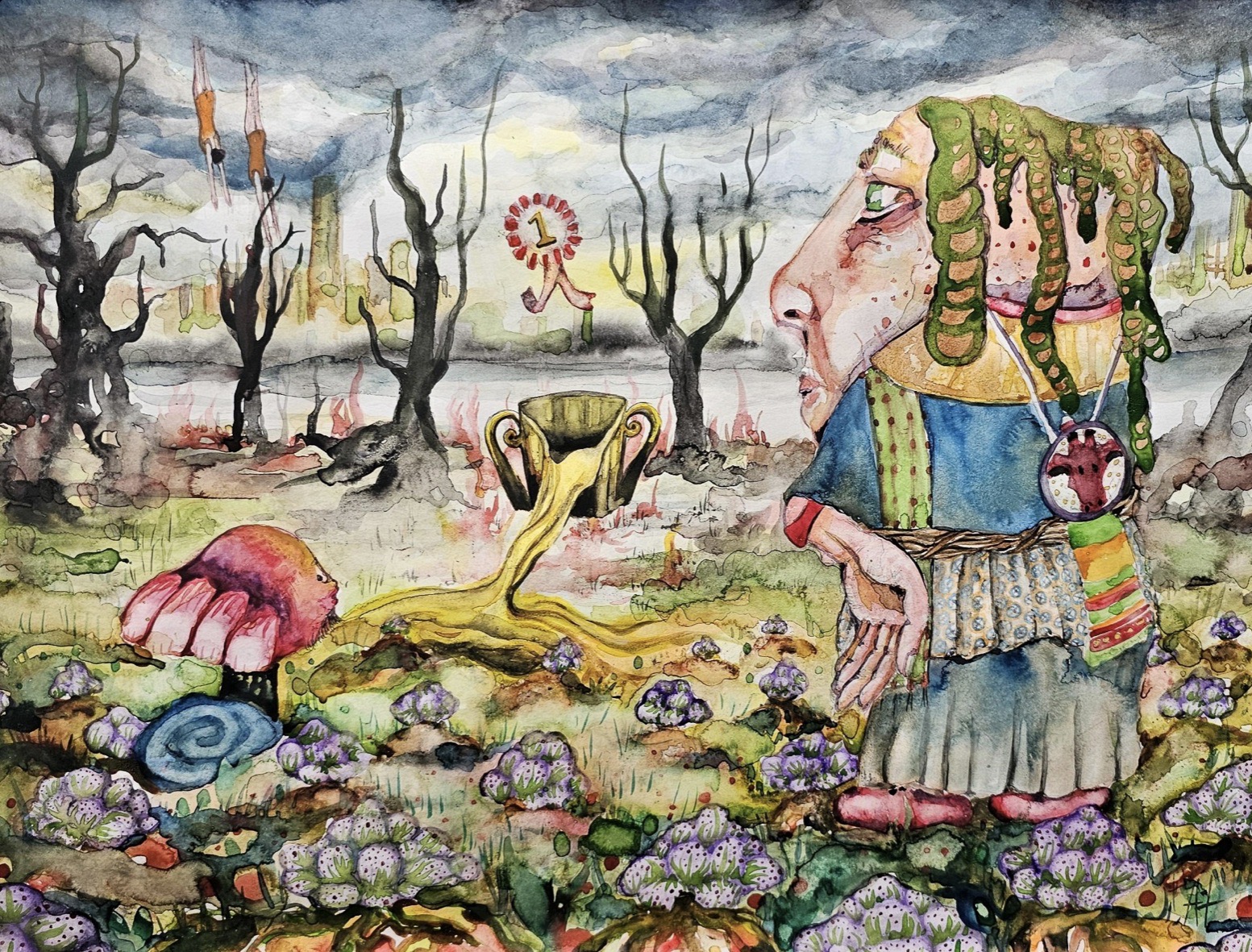
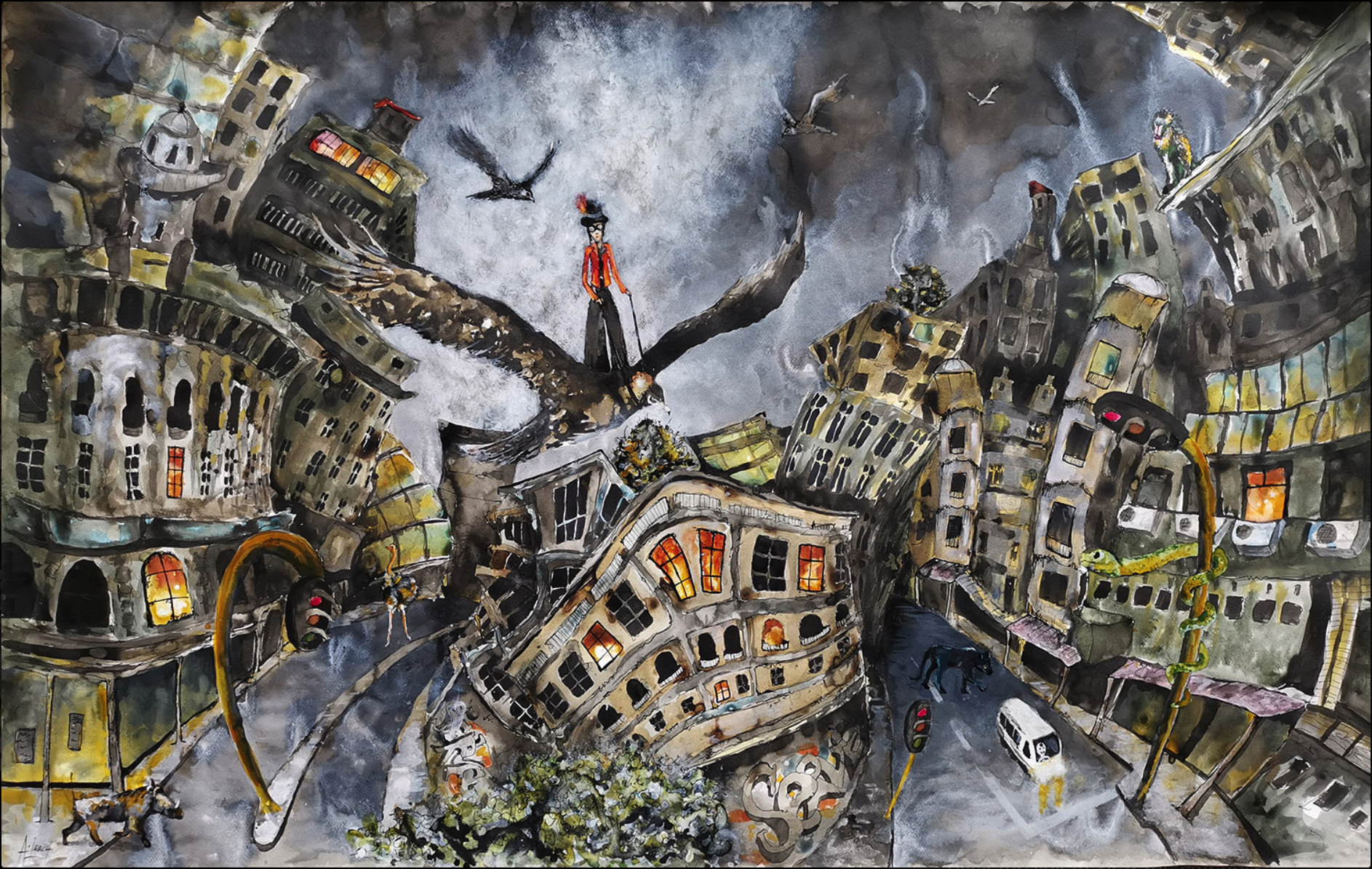
As we start delving into the surrealism of her work, Abigail remembers they were asked to paint some self-portraits at school, “I painted my head on an ant’s body, with blood dripping, and I was failed,” she smiles wryly. “They liked my woodcuts but I was already drawn to the surreal and I’m very pleased that I followed my love rather than the attention of the institution”. She characterises her insecurities as a young woman and describes the rebellion with pupils at school and a revolt against the oppressive system at the time, and the uprising that was taking place politically. We discuss the confines of growing up in a society such as apartheid in South Africa and having to accept it as a reality. She mentions her family owning Garlicks, a prestigious large department store, opened by her great great grandfather in 1905, which ran for many years, the last store closed in 1993, “It made me, in the end, find some awareness about the workings of global politics. Whatever the heritage is, it’s helped me find out who I am as an artist”. Now she questions everything, “When people feel they have the right to tell others what they should be doing, it’s really what they want you to do, what makes them feel comfortable. I believe all people have the right to be who they are as long as they do others no harm” she explains.
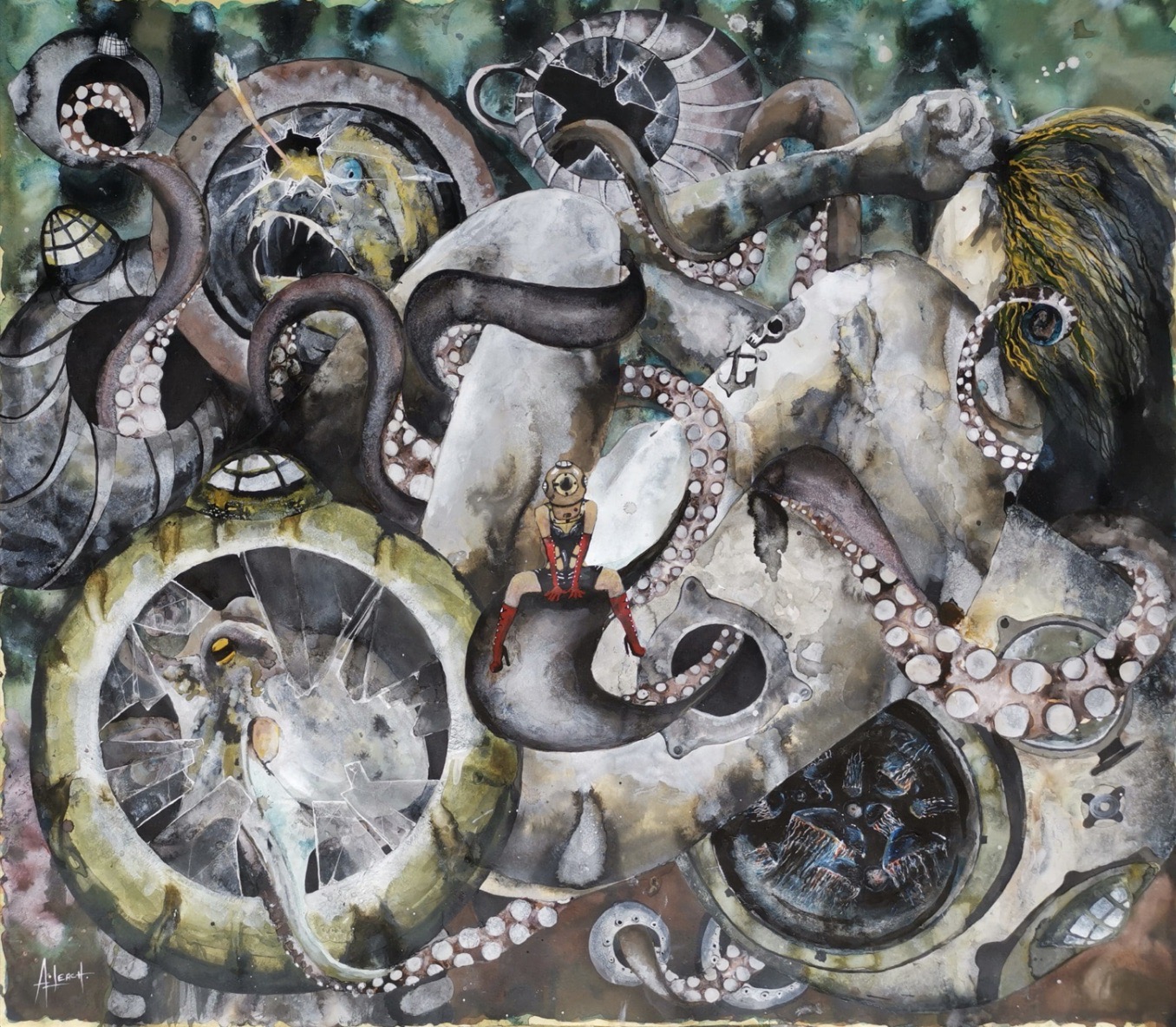
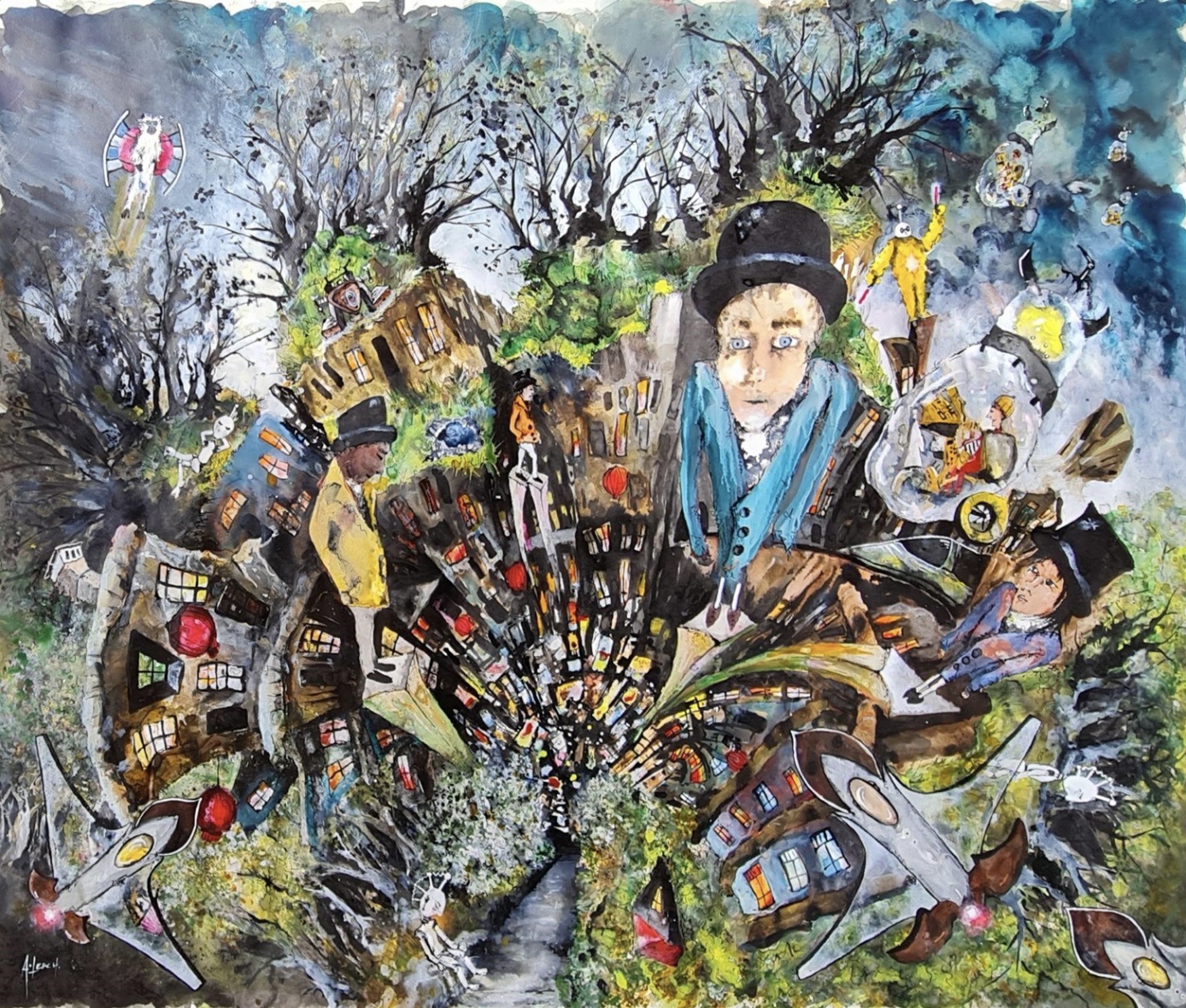
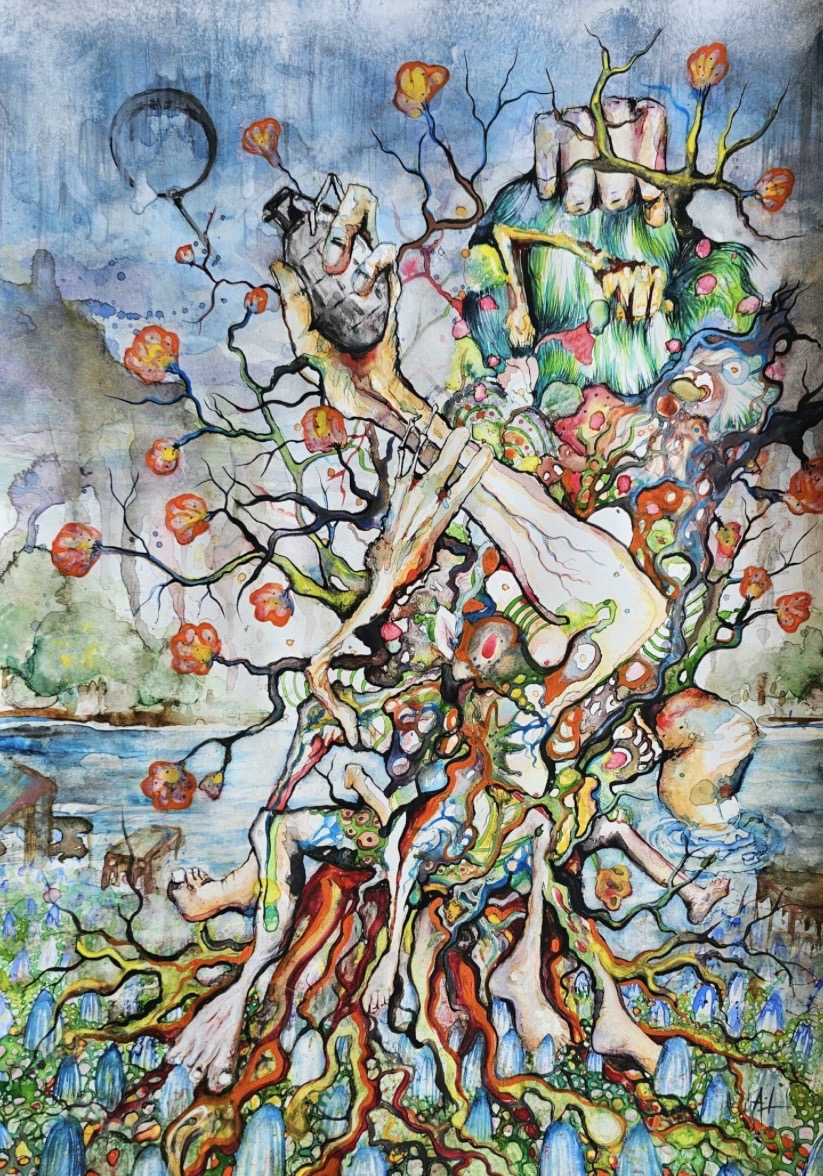
Abigail discusses the idea, that probably some artists don’t understand fully what they are expressing. She thinks of the word intuitive but doesn’t like it in this context, because she explains her process isn’t fixed. “Sometimes I will approach a painting by throwing some paint on the paper and then see what arrives, or I sketch very quickly and afterwards I can see these were ideas in my mind, these things I have been thinking about lately”. She relates “These are global events, and personal events and it’s all in there, but other people can see even more”. She explores the idea that what artists don’t realise we are really putting ourselves out there, “Even if you are someone who paints and you think you are not putting yourself out there, you are putting yourself out there”. She reflects on all forms of art, whether it’s music, film or poetry, it’s a way to connect.
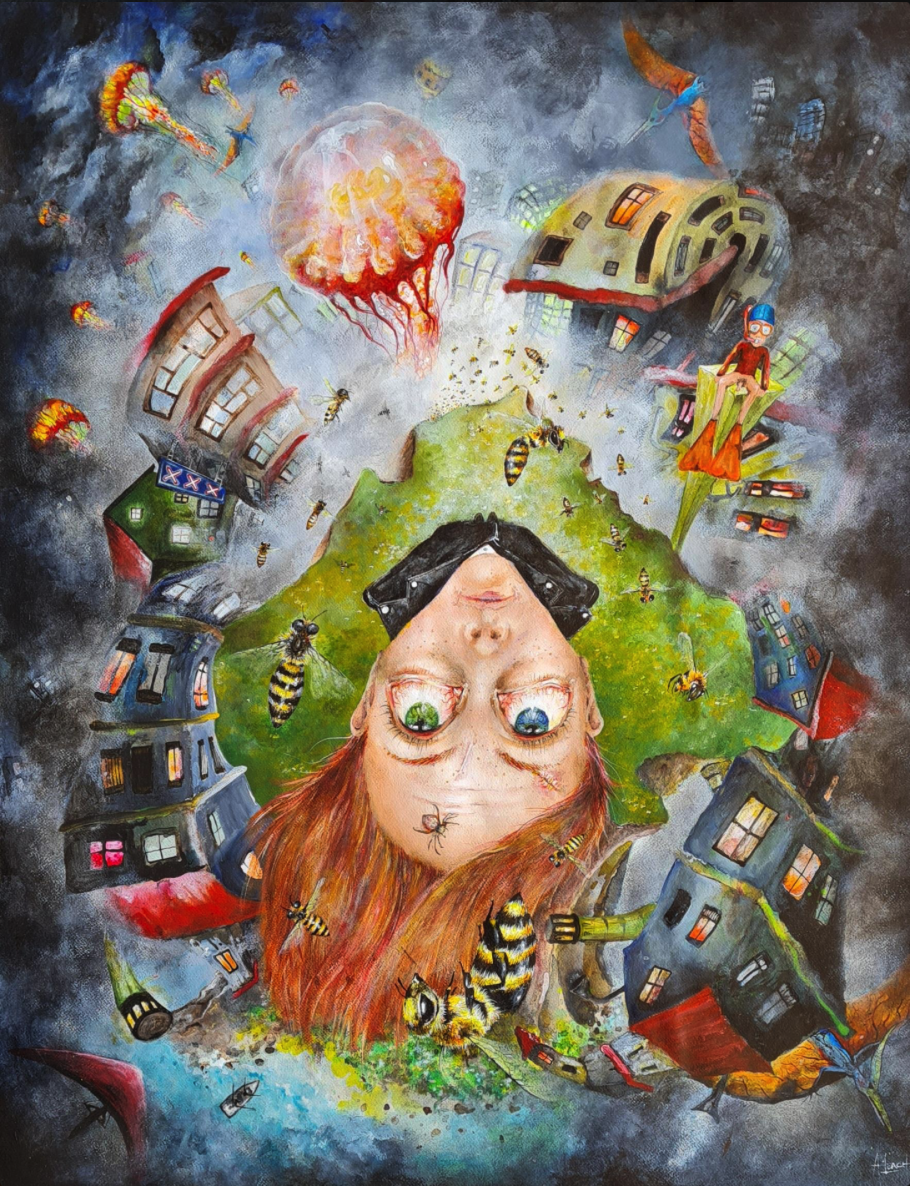
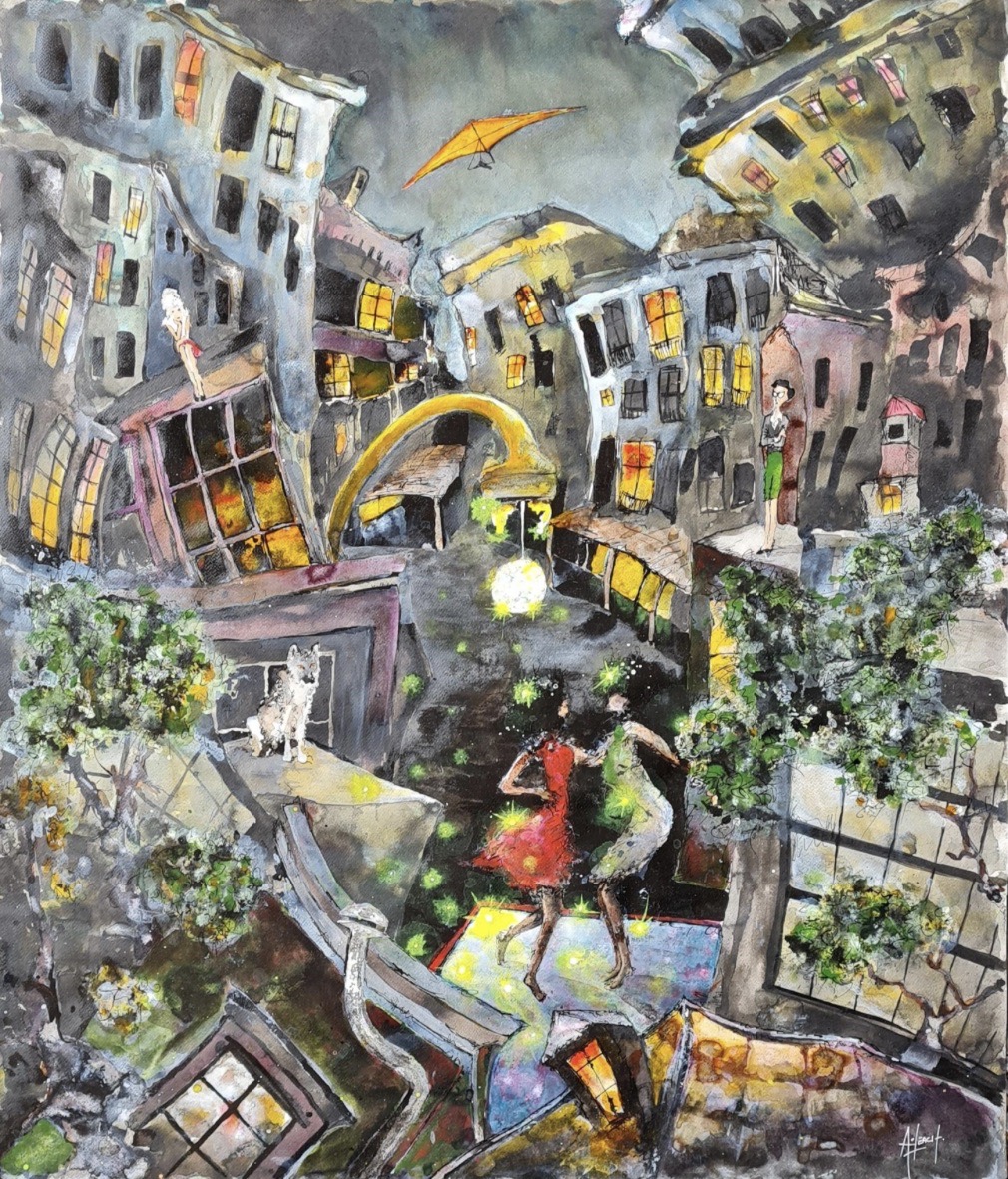
I asked how she thinks her childhood and her life impacted her art, she reflects on the question, “It made me who I am today” she replies. She explores the artists that have impacted her and chief amongst her list are Dorothea Tanning, Leonora Carrington and Hieronymus Bosch. I asked what motivates her, “Everything that comes my way motivates me, which includes everything from philosophy to music to the people I say hello to in the shops”. We discuss how she developed her style, Abigail tells me her journey from working with oil, she describes how she is terribly messy and would forget to clean her brushes and inspired by Japanese art, she started moving into ink, then to watercolours, gouache and gesso. She describes her style as a surrealist, “With maybe a bit of Impressionism”. If she could own one artwork, what would it be, and she tells me Hieronymus Bosch, his triptych of Earthly Delights, “I would want to look at it all day,” she exclaims.
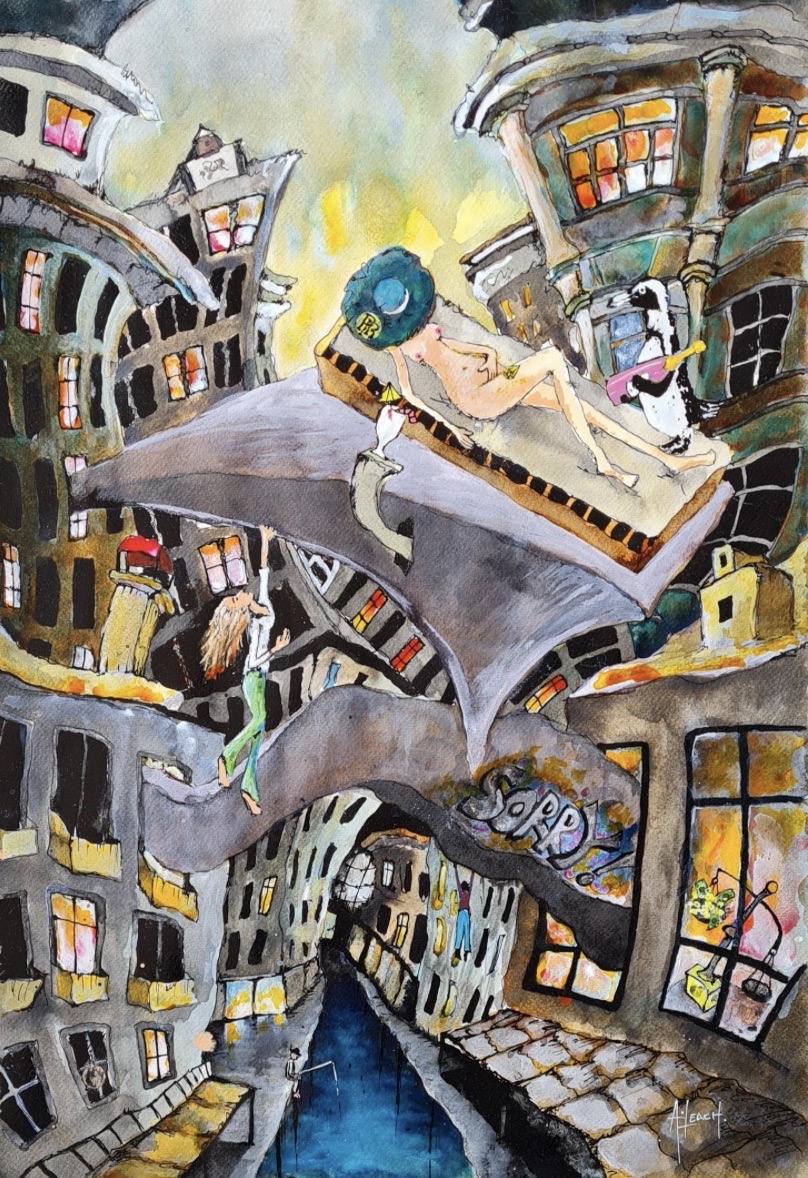
As we come to the end of our chat, Abigail discusses her views on the best and he worst in the art world, she reflects when she explains that much of it is about money, and media presence and it all feels loud and noisy, “People who love art have to navigate turbulent waters in order to find something authentic” she explains. “However, on a positive note, the social media and internet mean that the world is smaller and everyone around the world can see your work, the only pressure the social media presence” she tells me. “But you know, if I am spending too much time online, now you need to get into the space to create, You have to get out of your own way, getting out of my own way is a big one for me. Her ambitions are to keep going. When we discuss the concept of perfection; she tells me, “I don’t think there is such a thing as perfection, it doesn’t exist. You know, in Japan, they have something called the art of Kintsugi, which means golden joinery. They put broken ceramics back together using urushi lacquer mixed with powdered gold, silver or platinum the idea is that it’s always more valuable”. She clarifies her thoughts further, that she doesn’t believe in perfection. “I feel that things that are flawed are beautiful. It’s what makes this planet so beautiful, nothing’s the same”.
Interview: Antoinette Haselhorst
©️ C-A-K-E Contemporary Art Keen Enthusiast Ltd. All rights reserved.
Excerpts permitted with credit and direct link. Full reproduction prohibited.
2 Replies to “Abigail Leach”
Very interesting! Thanks for sharing. Love love love “Beautiful Mutant”!
Thank you